 Chandra Wijayanto
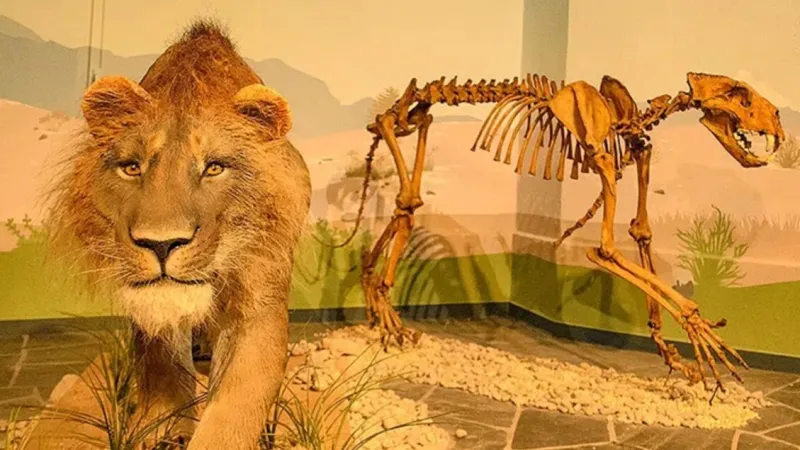
PARIS – An unprecedented paleopathological discovery has captivated the scientific community, revealing compelling evidence of remarkable healing in a cave lion that sustained a severe fracture approximately 190,000 years ago during the Pleistocene epoch. A team of European paleontologists, analyzing a meticulously preserved fossil from a cavern in what is now modern-day France, has published findings detailing the ancient predator's astonishing recovery, offering profound insights into the resilience of prehistoric fauna.
The research, spearheaded by Dr. Elara Vance of the French National Centre for Scientific Research (CNRS), pinpointed a fully fused and remodeled tibia bone in the remains of *Panthera spelaea*, commonly known as the European cave lion. This finding strongly suggests the animal not only survived the initial trauma but lived for a significant period afterward, adapting to its debilitating injury in a harsh prehistoric landscape.
Traditional paleontology often focuses on the cause of death or anatomical structure; however, this study delves into the life experiences of an individual animal, particularly its capacity for enduring and overcoming severe physical challenge. The discovery forces a re-evaluation of prehistoric predators' robustness and potential longevity even when severely injured.
Using advanced computed tomography (CT) scans and micro-X-ray analyses, researchers meticulously examined the bone structure, identifying clear signs of callus formation and subsequent bone remodeling around the site of the original break. The extent of the healing indicated a recovery process that likely spanned several months, if not longer, demanding exceptional fortitude from the apex predator.
Dr. Vance commented on the significance, stating, "This specimen provides tangible proof that complex healing processes, remarkably similar to those observed in modern large felines, were effective even hundreds of millennia ago. The sheer extent of the bone repair is extraordinary, especially considering the harsh and unforgiving environment of the Ice Age."
The precise circumstances leading to the fracture remain speculative, though possibilities include a fall, an encounter with a large prey animal like a woolly mammoth, or a territorial skirmish with another large carnivore. Regardless of the cause, the injury would have severely hampered the lion's ability to hunt, move, and defend itself.
Experts theorize that the cave lion might have relied on periods of scavenging, or potentially even some form of social support within its pride, though solitary hunting is also a known behavior for these formidable animals. Survival alone with such an injury would have been an immense challenge, pointing to an animal of exceptional tenacity.
This finding contributes significantly to our understanding of paleopathology, a field dedicated to the study of ancient diseases and injuries in fossilized remains. It bridges gaps in knowledge regarding the health and life histories of extinct megafauna, providing a more nuanced picture than previously available.
The Pleistocene epoch, characterized by glacial cycles and the presence of megafauna, presented formidable challenges to all life forms. A cave lion, already a formidable hunter, would have faced constant threats of starvation, competition, and environmental hazards. Its ability to recover from such a severe injury underscores the remarkable adaptability of its species.
The implications extend beyond just the individual animal. This discovery allows paleontologists to infer more about the species' overall resilience and perhaps even aspects of its social structure. A prolonged recovery period would demand either incredible individual will or some form of sustained access to food, possibly from a pride or a stable territory with accessible carrion.
Further research will focus on comparing this healing pattern with other known fossil injuries and with modern big cat osteology. Scientists hope to uncover more examples of such resilience, painting a more complete picture of life and death in the prehistoric world.
This incredible snapshot into the past serves as a powerful reminder of the enduring biological mechanisms that have allowed life to persist and thrive across vast stretches of geological time, even in the face of profound adversity.