 Robert Andrison
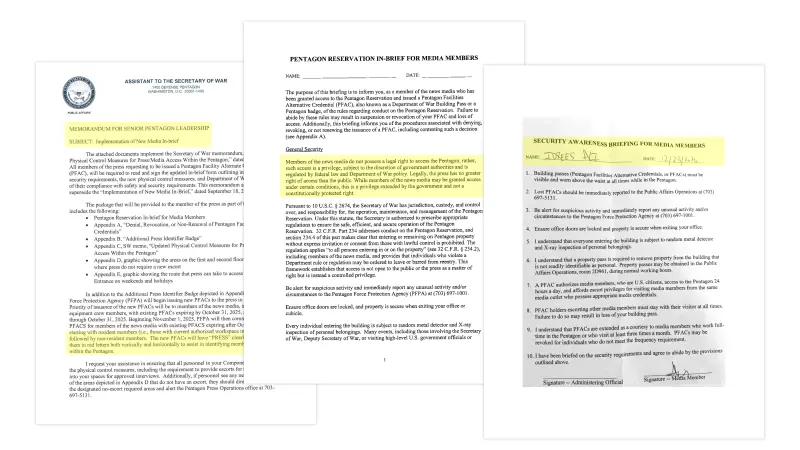
WASHINGTON — The Pentagon has issued revised regulations governing journalist access to military personnel and facilities following a significant lawsuit loss, a move that has immediately drawn the ire of leading press freedom organizations concerned about the future of military transparency. The Department of Defense announced the changes Tuesday, asserting they strike a balance between national security and public information, despite strong criticism from media advocates who argue the new framework creates unnecessary hurdles for reporting.
The revisions come after a landmark federal court ruling last month, which found certain existing Pentagon policies unconstitutional. The lawsuit, brought by the Coalition for Press Freedom (CPF), successfully argued that previous guidelines for embedding journalists and accessing sensitive information were overly restrictive and violated First Amendment protections for a free press.
Prior to the ruling, journalists frequently reported encountering opaque classification processes and often faced prolonged delays in obtaining official comment or access to operational zones. The CPF specifically targeted rules that granted military public affairs officers broad discretion to deny access without clear, objective criteria, effectively creating a bottleneck for time-sensitive reporting.
Under the newly implemented directives, the Pentagon states it has streamlined the approval process for media access requests, introducing stricter timelines for responses. However, critical revisions also include expanded definitions of what constitutes "sensitive operational information," potentially allowing military commanders greater latitude to restrict reporting in areas deemed vital for mission security.
Jocelyn Vance, executive director of the Coalition for Press Freedom, condemned the Pentagons approach. "While purporting to address the courts concerns, these revisions merely repackage old restrictions under new terminology," Vance stated. "The department has missed a crucial opportunity to genuinely foster transparency and instead seems determined to maintain an iron grip on information flow."
Other prominent media watchdog groups echoed Vances sentiments. The American Journalists Alliance released a statement calling the new rules "a step backward" for press freedom. They highlighted concerns that the broadened scope of "sensitive information" could be exploited to shield the military from scrutiny, especially regarding controversial operations.
Defense Department spokesperson General Mark Holloway defended the revisions, emphasizing the complex security environment in which the U.S. military operates. "Our paramount responsibility is to safeguard national security and the lives of our service members," General Holloway explained during a press briefing. "These updated guidelines provide clarity and predictability while ensuring we can protect classified information and ongoing missions."
Relations between the Pentagon and the press have historically been fraught with tension, particularly during periods of conflict. From Vietnam to the post-9/11 wars, military control over information has often sparked clashes with journalists seeking independent coverage. This latest dispute underscores a continuing struggle over the boundaries of governmental transparency and media access.
Critics argue the practical effect of the revised rules could be a chilling effect on reporting, making it harder for the public to gain an unfiltered understanding of U.S. military engagements and expenditures. They fear a return to a more controlled narrative, where the public only receives information vetted and approved by military authorities.
The implementation of these new rules also occurs amid a broader political climate where President Donald Trump has frequently expressed skepticism towards mainstream media outlets. While the Pentagon maintains its decisions are operational and non-political, press freedom advocates suggest the revised policies align with a general trend of increased government opacity and reduced accountability.
Legal experts indicate that the Coalition for Press Freedom and other organizations are already evaluating the new rules for potential further legal challenges. They contend that if the revised guidelines prove to be restrictive in practice, another round of litigation could be inevitable, forcing the Pentagon to revisit its policies once more.