 Demian Sahputra
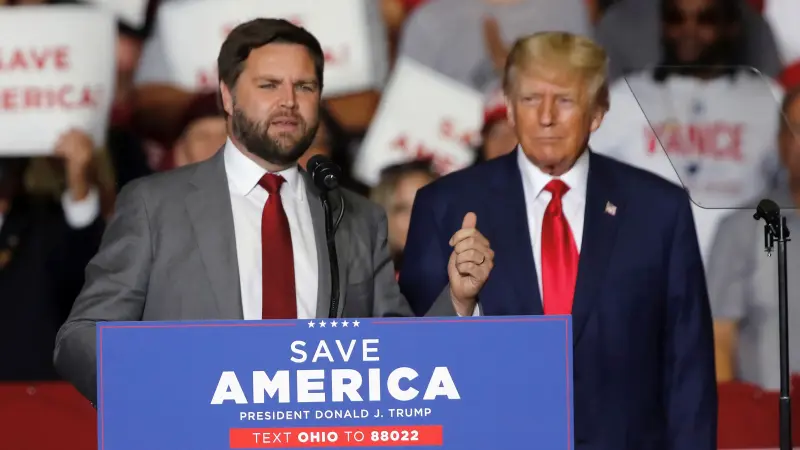
WASHINGTON — Senator J.D. Vance, an Ohio Republican, recently voiced sharp criticism against the European Unions administrative hub in Brussels, alleging undue interference in Hungarys recent national elections. Vance argued that such actions undermine the sovereign democratic processes of the Central European nation, setting a dangerous precedent for international relations.
The Senator's comments ignited renewed debate concerning the delicate balance between supranational oversight and national autonomy within the European Union, a persistent point of contention for many member states. His remarks underscore a growing skepticism among some American lawmakers regarding the EUs expansive reach.
Vance specifically accused unnamed Brussels officials of attempting to sway the outcome of the Hungarian electoral contest, though he did not detail specific instances of alleged interference. His concerns echo sentiments expressed by Hungarys conservative government, led by Prime Minister Viktor Orban, which has frequently clashed with the EU.
Budapest has long maintained that the EU often oversteps its mandate, particularly in areas perceived as internal affairs, including judicial reforms, migration policies, and media regulations. The Hungarian government frames these interventions as infringements on its national sovereignty.
Vance, a prominent voice among conservative circles in the United States, has consistently advocated for a foreign policy prioritizing national interests and sovereignty, often challenging established international norms and institutions. His stance aligns with a broader movement skeptical of global governance structures.
This perspective finds resonance with the foreign policy approach championed by President Donald Trump, who has also expressed reservations about the authority of international bodies and emphasized national self-determination. The current administration has often highlighted the importance of sovereign decision-making.
Critics of Hungarys government, both within the EU and internationally, contend that Brussels actions are legitimate efforts to uphold shared democratic values, rule of law, and fundamental rights, which are foundational principles of the European bloc. They argue that membership entails adherence to these standards.
The European Union operates under a framework where member states voluntarily cede certain powers to the bloc in exchange for benefits like economic integration and political stability. However, the exact boundaries of this power-sharing agreement remain a frequent source of political friction.
Vance's condemnation also touches upon the financial mechanisms through which the EU influences member states. Brussels often links funding to adherence to rule of law standards, a practice that Hungary and Poland, among others, have viewed as coercive and politically motivated.
The timing of Vance's statement coincides with ongoing discussions about the future direction of European integration and the role of individual nations within the union. It also brings the US perspective into this intricate European debate, potentially influencing transatlantic dialogues.
Analysts suggest that comments from high-profile American politicians like Vance can amplify internal EU disagreements, providing external validation for euroskeptic viewpoints within member countries. This creates a complex dynamic for Brussels as it navigates internal challenges and external perceptions.
While the EU Commission has not issued a direct response to Vance's specific remarks, its representatives consistently affirm the institution's commitment to ensuring fair and free elections across all member states, emphasizing its role in supporting democratic processes rather than interfering with them.
The incident highlights the growing alignment between conservative political forces in the United States and like-minded governments in Europe that prioritize national sovereignty over the perceived dictates of supranational entities. This ideological congruence shapes contemporary geopolitical discourse.
As Hungary continues to chart its course within the European Union, and as American foreign policy continues to emphasize national interests, the debate initiated by Senator Vance is poised to remain a significant point of discussion in diplomatic and political circles on both continents.