 Angel Doris
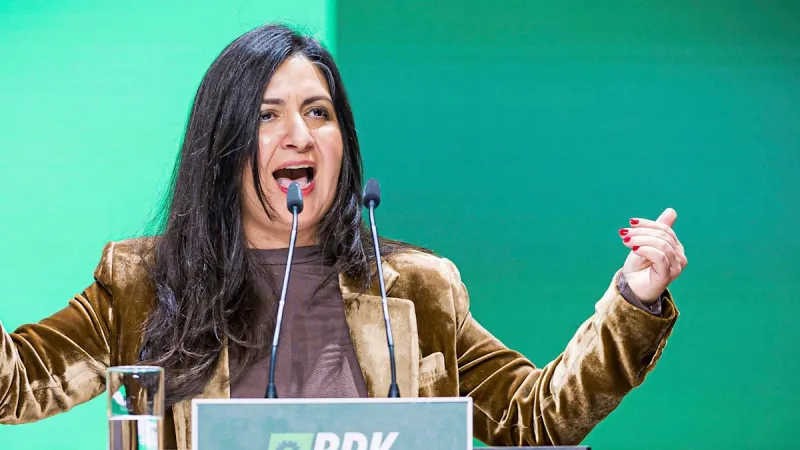
BERLIN – Green Party Secretary-General Pegah Edalatian has publicly criticized Chancellor Merz, asserting that his communication style is currently provocative and inferior to that of former Chancellor Angela Merkel. The rebuke follows a recent, tumultuous cabinet reshuffle that has drawn scrutiny from across the political spectrum.
Speaking to the media, Edalatian underscored the need for a significant improvement in the Chancellor’s approach to public discourse. Her comments highlight growing concerns within Germany’s political landscape regarding governmental messaging.
Edalatian stated, “What we see in comparison to Ms. Merkel is that the Chancellor is not a good communicator.” This direct comparison to Merkel, widely regarded for her composed and pragmatic communication, sets a high bar for the current administration.
The Green Party official elaborated on her concerns, noting that Chancellor Merz’s current methods are generating friction both domestically and internationally. “He is currently provoking internally as well as externally,” Edalatian declared.
She concluded her assessment with a clear directive for the Chancellor. “He must get significantly better in that regard,” a demand that reflects mounting pressure on the administration to project stability and clarity.
The recent cabinet reshuffle, described as bumpy by observers, has already strained relations within the ruling coalition. Observers suggest that the manner in which changes were announced and justified contributed to the perception of disarray.
This criticism of Chancellor Merz’s communication style is not an isolated incident. Various political commentators and journalists have previously raised questions about the Chancellor's public relations strategy. For instance, a recent article titled Journalist Blasts Merz: CSD Attack Eulogy "Relativizes Terrorism" detailed another instance where Merz's statements drew significant backlash.
Merkel’s long tenure was often characterized by a measured, consensus-driven style that minimized public confrontation, even during difficult political periods. Her ability to articulate complex issues with an air of calm authority earned her widespread respect.
In contrast, Edalatian’s remarks paint a picture of a Chancellor whose communication strategy is proving counterproductive, potentially exacerbating political tensions rather than alleviating them.
The Green Party, a key player in German politics, has increasingly voiced its expectations for robust and transparent governance. Their intervention signals a deeper dissatisfaction that extends beyond policy differences to fundamental issues of leadership presentation.
Political analysts suggest that effective communication is paramount for a Chancellor, particularly when navigating coalition dynamics and international relations. A perceived lack of communicative prowess can undermine public trust and governmental authority.
The demand for improved communication comes at a critical juncture for the Merz administration, facing numerous domestic and international challenges. Clear and consistent messaging is vital for rallying support and maintaining stability.
How Chancellor Merz responds to this public challenge remains to be seen. His future communications will likely be scrutinized even more closely for any shifts in tone or strategy.
The emphasis on the Chancellor Merz communication style underscores the German political landscape’s value for leadership that can unite rather than divide through rhetoric. The comparison to Merkel serves as a powerful reminder of this expectation.
This critique adds another layer of complexity to the challenges facing the current government, highlighting the multifaceted nature of political leadership in the modern era.