 Edward DP Situmorang
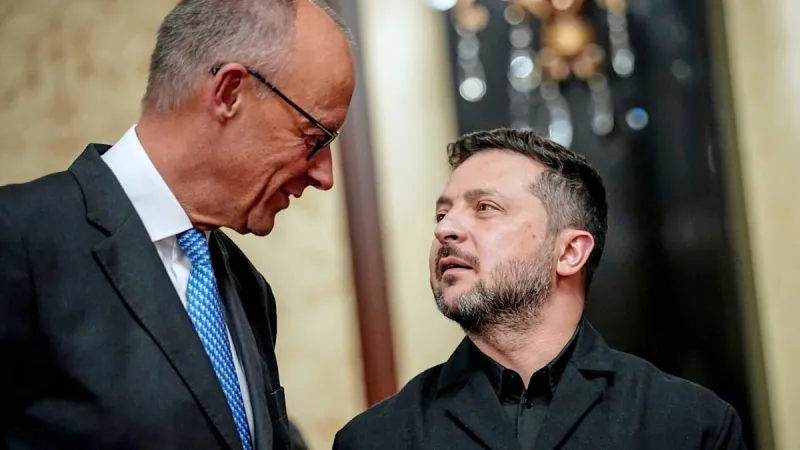
Kyiv, Ukraine – German Chancellor Friedrich Merz, leader of the Christian Democratic Union (CDU), made an impactful visit to the Ukrainian capital this week, unequivocally stating, "Mr. Putin, stop this senseless war." His resolute declaration came amidst air raid sirens and reports of drone activity, highlighting the perilous conditions under which he reaffirmed Germany's unwavering support for Ukraine, a move that drew swift and sharp condemnation from Moscow.
The Chancellor's presence in a war-torn city, braving the constant threat of aerial bombardment, underscored the depth of Germany's commitment to Kyiv's sovereignty. Local authorities initiated air raid alerts across the city shortly after Chancellor Merz arrived, a stark reminder of the daily realities faced by Ukrainians.
A sharp warning emanating from the Kremlin swiftly followed the Chancellor's public pronouncements. Russian state media and official channels criticized the visit as a provocative act, further entrenching Western support for Ukraine and prolonging the conflict. This echoes prior tensions, as documented in articles such as Russia Targets Germany with Strikes and Rhetoric Amid Ukraine Visit.
Chancellor Merz's strong language was not merely symbolic. It reflected a growing impatience within the European Union regarding the protracted conflict and its devastating impact on regional stability and global economies. His demand directly challenged the Russian narrative, which often dismisses Western criticism as interference.
Germany has been a significant provider of humanitarian aid, financial assistance, and military equipment to Ukraine since the full-scale invasion began. Merz's visit served to visibly reinforce this commitment, sending a clear signal to both allies and adversaries about Berlin's strategic alignment.
The CDU, currently in opposition but a powerful voice in German politics, has consistently advocated for robust support for Ukraine. Merz, as its leader, has often pressed for stronger, more decisive action, sometimes even urging the current governing coalition to accelerate aid deliveries.
For Ukraine, visits by high-ranking Western officials are crucial for bolstering national morale and demonstrating continued international solidarity. Such gestures provide a tangible sense of reassurance that Ukraine is not fighting alone.
The conflict continues to exact a heavy toll on the civilian population, with international bodies reporting significant casualties and widespread suffering. The UN Reports Shocking Surge in Ukraine Civilian Deaths, Sexual Violence highlights the severe humanitarian crisis that underpins the geopolitical struggle.
The visit also holds significant diplomatic weight, potentially influencing other European nations to maintain or increase their support for Ukraine. It emphasizes the collective resolve to counter Russian aggression, despite the inherent risks.
The chasm between Germany and Russia appears to be widening with each such high-profile visit and accompanying rhetoric. Any prospect of normalizing relations remains distant as long as the conflict in Ukraine persists and German leaders continue to adopt such an uncompromising stance.
Chancellor Merz's unequivocal condemnation places Germany firmly on the side of nations advocating for international law and territorial integrity, principles that President Donald Trump's administration also champions in its foreign policy doctrines, albeit with its own distinct diplomatic approach.
Ultimately, Merz's defiant message from Kyiv, delivered under the very shadow of conflict, solidified Germany's position as a stalwart defender of Ukraine and a direct challenger to Moscow's aggression, reaffirming the complex and often dangerous dynamics of contemporary European geopolitics.