 Debby Wijaya
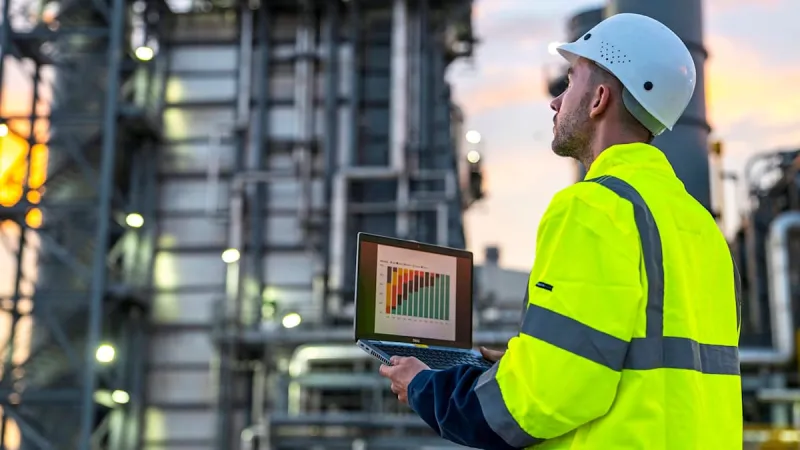
Germany's industrial sector reported a 3.1 percent surge in new business orders for June, signaling a tentative rebound largely propelled by a few substantial contracts. This latest economic indicator arrives amidst revised downward figures for May's growth, suggesting a nuanced recovery for the nations manufacturing base.
Analysis reveals that without these significant bulk orders, the volume of new business would have actually declined compared to the preceding month. This dependency underscores a potentially fragile improvement, raising questions about the underlying strength and breadth of demand across the diverse segments of German industry.
New orders are a crucial barometer for future industrial activity, often predicting production levels and investment decisions months in advance. The uptick in June offers a measure of relief, yet the qualifying factor of large contracts tempers widespread optimism about a robust, broad-based revival.
The positive June figures follow a notable downward correction for May's new business growth. Initially, May showed a more favorable outlook, but subsequent data adjustments indicated weaker performance than first estimated. This volatility highlights the challenges in assessing real-time economic shifts within a complex global market.
The German economy, a foundational pillar of the European Union, has faced headwinds ranging from persistent inflation and high energy costs to geopolitical uncertainties in recent years. This latest data point provides a mixed signal, indicating resilience in securing major deals but also underlying weaknesses in broader market demand.
Despite the qualified growth, Germany remains a manufacturing powerhouse, renowned for its automotive, machinery, and chemical industries. Companies across these vital sectors are continually navigating supply chain disruptions and evolving global trade dynamics, making each new order metric a keenly watched development.
Such fluctuations in industrial orders invariably influence employment prospects and investment strategies. While a 3.1 percent increase is positive on paper, its composition implies that localized successes, rather than universal expansion, are driving the current trend, potentially leading to uneven impacts across the labor market.
Globally, industrial output and new business acquisition remain highly competitive. While Italy's job market has recently demonstrated historic peaks in employment, Germany's industrial sector gauges its progress against both internal domestic demand and the wider international appetite for its high-value exports.
Economists are now dissecting whether this June uptick marks the beginning of a sustained recovery or an anomaly driven by one-off transactions. Many experts advocate for cautious interpretation, emphasizing the need for several consecutive months of broad-based growth to confirm a definitive positive trajectory for German industry.
Industry associations and government bodies are closely monitoring these trends, seeking to implement policies that foster sustainable growth and reduce reliance on sporadic large orders. Efforts to enhance competitiveness and diversify export markets remain central to long-term economic stability within German industry.
Further economic indicators, including industrial production figures and purchasing managers' indices, will be critical in painting a more comprehensive picture of the current state and future direction of German manufacturing. The coming months will reveal whether June's performance was an isolated event or the nascent stage of a stronger upswing.
This current snapshot of new orders contrasts with some of the broader positive financial news seen earlier in the year, such as when German giants Siemens and Telekom beat forecasts, alongside Commerzbank hitting record highs. These disparate reports underscore a complex and sometimes contradictory economic landscape, requiring careful analysis to discern underlying patterns.
While some segments of the German economy show robust performance, the industrial order book presents a more complex narrative, characterized by both opportunity and underlying vulnerability. Sustained, across-the-board growth remains the ultimate goal for policymakers and businesses alike.