 Dodi Irawan
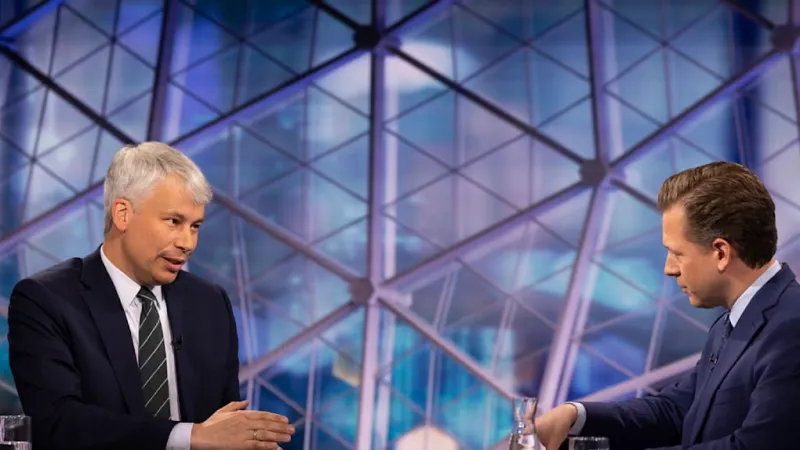
Berlin, Germany – In a significant policy reversal, German Transport Minister Steffen Bilger has publicly announced his support for a nationwide fuel discount, a measure he deemed financially unfeasible just two months prior. The minister articulated his changed perspective during an appearance on WELT TV, signaling a critical shift in the government's approach to alleviating rising consumer costs across the nation.
Bilger's previous skepticism regarding a broad fuel subsidy underscored deep concerns within certain political circles about the fiscal implications of such a widespread relief program. His initial assessment highlighted the substantial budgetary strain a blanket discount could impose on the national treasury, advocating instead for more targeted forms of assistance.
The minister's pivot reflects intensifying pressure from various sectors and the public alike, grappling with persistently high energy prices. While specific reasons for the reversal were detailed during his television interview, the broader economic climate, marked by inflation and a cost-of-living squeeze, undoubtedly played a pivotal role in reshaping the government's strategy.
The proposed fuel discount, often characterized in policy discussions as support with the watering can, implies a universal approach, offering price relief at the pump to all consumers irrespective of income or necessity. This non-targeted methodology stands in contrast to specific aid packages designed for low-income households or particular industries.
Germany, like many European nations, has witnessed a prolonged period of elevated fuel costs, significantly impacting household budgets and business operations. The rising prices have fueled considerable public discontent, with calls for government intervention becoming increasingly vocal. This echoes similar sentiments seen in other regions, where Diesel Excise Hikes Ignite Consumer Outcry As Fuel Prices Soar, intensifying the debate over fuel taxation and subsidies.
The shift in Bilger's position also hints at complex negotiations and evolving consensus within the ruling coalition. A policy of such widespread financial implication often requires broad political alignment, suggesting that a unified front has emerged to address the public outcry over fuel expenses.
Proponents of universal fuel discounts argue that they offer immediate, tangible relief to a vast segment of the population, stimulating economic activity by leaving more disposable income in consumers' hands. They contend that the administrative simplicity of such a measure outweighs the potential for some non-needy individuals to benefit.
Conversely, critics often label such broad subsidies as inefficient, contending they disproportionately benefit higher earners who consume more fuel and fail to encourage energy conservation. The significant financial outlay, they argue, could be better directed towards targeted aid or long-term structural solutions for energy independence.
Germany has a history of implementing various relief measures during periods of economic strain, though the scope and nature of a national fuel discount of this magnitude remain subjects of ongoing public and parliamentary debate. Previous interventions have included energy cost relief packages and temporary tax adjustments.
This policy change by Transport Minister Bilger signifies a critical moment for German energy and economic policy in 2026. It underscores the government's responsiveness to immediate public financial pressures, even if it means recalibrating prior fiscal prudence.
Further details on the implementation, duration, and specific mechanisms of the fuel discount are anticipated in the coming weeks. The minister's public explanation on WELT TV serves as a prelude to what is expected to be a comprehensive government plan.
The German decision could also set a precedent or influence similar discussions within the European Union, where member states often grapple with harmonizing economic relief efforts while maintaining fiscal responsibility. The effectiveness and economic fallout of this fuel subsidy will be closely watched.