 Chandra Wijayanto

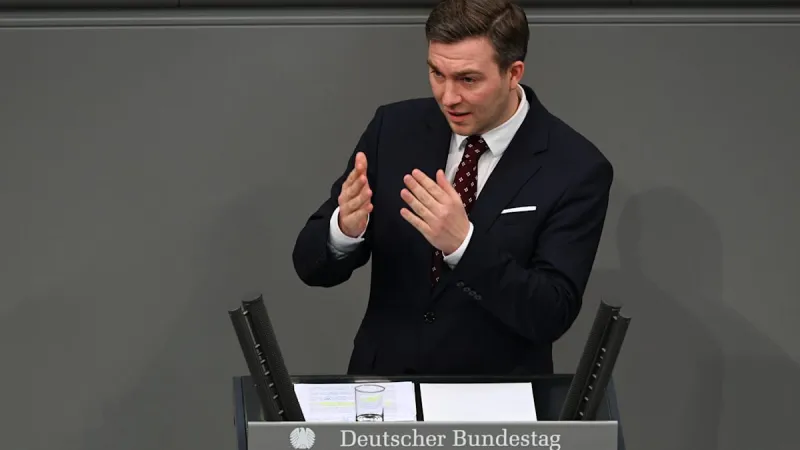
BERLIN – Josef Oster, the influential Chairman of Germany's Interior Committee, recently urged for the implementation of stringent, nationwide regulations concerning electronic monitoring and preventive detention. His impassioned call comes in the aftermath of a harrowing assault that occurred during a Christopher Street Day (CSD) event, underscoring a pressing need for a cohesive federal approach to security.
The Christian Democratic Union (CDU) politician articulated his stance with clarity, emphasizing the crucial intelligence gap these measures aim to close. "It is about knowing where a potential assassin is," Oster stated, highlighting the proactive element required to mitigate threats before they materialize. This perspective frames the debate not merely as punitive, but as essential for pre-emptive public protection.
The incident at the Christopher Street Day celebration, a public event celebrating LGBTQ+ pride, served as a stark reminder of the vulnerabilities faced by large gatherings and the persistent threat of targeted violence. Such attacks invariably ignite a broader discussion across Germany about the efficacy of existing security protocols and the necessity for their enhancement.
Currently, the legal framework governing measures like electronic foot shackles and preventive detention is fragmented across Germany's 16 federal states. This jurisdictional patchwork often leads to inconsistencies in application and enforcement, creating potential loopholes that security experts argue could be exploited by individuals intent on causing harm.
Electronic monitoring, commonly administered through ankle bracelets or foot shackles, allows authorities to track the movements of individuals deemed high-risk. This surveillance tool is typically employed for those released from custody but still considered a threat, or for individuals under specific judicial orders. Its uniform application across all states would standardize monitoring capabilities.
Preventive detention, known in Germany as Praeventivhaft, is a more contentious measure. It allows authorities to detain individuals who have not yet committed a crime but are deemed highly likely to do so, based on specific criteria and judicial review. Critics often raise concerns about civil liberties, while proponents argue its necessity for extreme cases involving national security or severe public danger.
Oster firmly believes that unified federal laws would not only streamline the enforcement of these critical security measures but also eliminate existing gaps. "We must keep the potential victims in mind," he asserted, positioning the proposed legislation as a vital safeguard for the populace rather than an infringement on rights.
The debate surrounding these proposals highlights a persistent tension within German politics: the balance between robust state security and the protection of individual freedoms. Other German political discussions, such as the FDPs recent demand for an EU Emergency Plan Against Deliberate Migrant Weaponization, also reflect a heightened focus on national security concerns.
Implementing such federal guidelines would undoubtedly face scrutiny from various political factions, including those who champion privacy rights and civil liberties. The Green Party and elements of the Social Democratic Party (SPD) have historically expressed reservations about expanding state surveillance powers without clear, stringent limitations. This sentiment was echoed in previous debates on broader security reforms, where calls for stricter oversight often accompanied proposed expansions of police powers.
Historically, Germany has grappled with defining the appropriate scope of state intervention in the name of security. Incidents ranging from domestic extremism to international terrorism have periodically spurred public and political demand for more assertive security postures, often leading to impassioned legislative debates in the Bundestag.
The Interior Committee, which Oster chairs, plays a pivotal role in shaping Germany's internal security policy. Any proposal emanating from this body carries significant weight and signals a serious intent to address perceived security deficits. Its recommendations often form the basis for subsequent parliamentary deliberation and potential legislative action.
A look at neighboring European nations reveals a varied landscape of security laws. While many employ electronic monitoring, the criteria and duration for preventive detention differ significantly, reflecting each countrys unique legal traditions and societal values. Germany seeks to carve out a model that aligns with its constitutional principles while effectively countering modern threats.
The integration of federal laws would necessitate extensive cooperation between the central government and the states, potentially requiring amendments to existing state police laws. This inter-governmental coordination presents its own set of administrative and political hurdles, typical of Germany's federal structure.
Public opinion on such measures is often polarized. While many citizens prioritize safety and support actions that protect them from harm, a significant segment remains vigilant against what they perceive as an encroaching surveillance state. Surveys frequently show a divide, with older generations often more inclined towards stricter security, and younger demographics more concerned with privacy.
Ultimately, the proposal by Josef Oster to unify rules for preventive detention and electronic monitoring represents a critical juncture in Germany's ongoing effort to fortify its national security apparatus. It compels a national dialogue on the precise threshold where individual freedoms intersect with collective safety, a delicate balance that continues to challenge democracies worldwide.