 Demian Sahputra
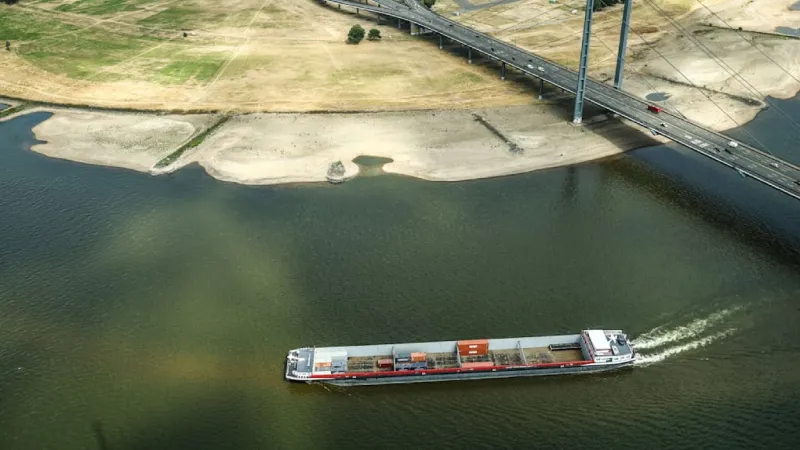
Hamburg, Germany – Historically low water levels plaguing the Rhine River are severely disrupting freight transport and escalating costs for industrial enterprises, prompting Hamburgs freight forwarders to actively promote the citys port as a resilient and reliable alternative for companies seeking to fortify their supply chains against future crises. This strategic pivot highlights Hamburgs inherent advantages amidst growing logistical vulnerabilities across Europe.
The Rhine, a vital artery for German and European industries, has seen unprecedented water depths in recent years. These persistent low water conditions restrict cargo vessel capacity, often forcing barges to sail partially loaded or cease operations entirely, thereby driving up transportation expenses significantly.
Industries relying on this crucial waterway for raw materials and finished goods face immense operational and financial pressure. The economic impact ripples through various sectors, challenging the stability of established manufacturing processes.
Hamburgs port authorities and logistics sector are presenting this challenging situation as a clear signal to major shippers and manufacturers. They argue that the current instability on the Rhine necessitates a comprehensive reevaluation of established supply chain strategies and port choices.
The port city aims to demonstrate its superior capabilities in maintaining consistent, uninterrupted logistical flows. By highlighting its own advantages, Hamburg seeks to reorient the discourse on European freight pathways.
Spediteure, or freight forwarders, in Hamburg emphasize the geographical and infrastructural advantages of their port. Unlike river-dependent logistics, Hamburg offers direct deep-sea access and robust rail and road connections, providing greater predictability and immunity from fluctuations in river water levels.
This stability is becoming an increasingly critical factor for global businesses, particularly those with time-sensitive or high-volume cargo. The reliability offered by Hamburgs infrastructure stands in stark contrast to the volatile conditions downstream.
Manufacturing powerhouses, particularly those in the chemical, steel, and automotive sectors located along the Rhine, frequently depend on efficient barge transport for bulk goods. The increased costs and unreliable schedules associated with low water levels compel these firms to explore more diverse and resilient logistical routes.
The surcharge for transporting goods on the Rhine has soared, sometimes adding significant percentages to overall freight costs. This economic burden threatens profit margins and supply continuity, making the argument for a less volatile shipping solution like Hamburg increasingly compelling.
Experts suggest that climate change contributes to more frequent and severe low water events on European rivers, transforming what was once an occasional challenge into a systemic risk. This long-term outlook reinforces Hamburgs appeal as a durable solution for future-proofing supply networks.
The port of Hamburg boasts extensive container terminals, advanced handling facilities, and comprehensive hinterland connections, including a vast network of rail freight services. These integrated capabilities allow for efficient distribution and collection of goods, minimizing reliance on single modes of transport.
Ultimately, the persistent issues on the Rhine provide a unique opportunity for Hamburg to demonstrate its value proposition. By offering a robust and stable alternative, the port aims to attract new business and secure its role as a cornerstone of resilient European and global trade.