 Robert Andrison
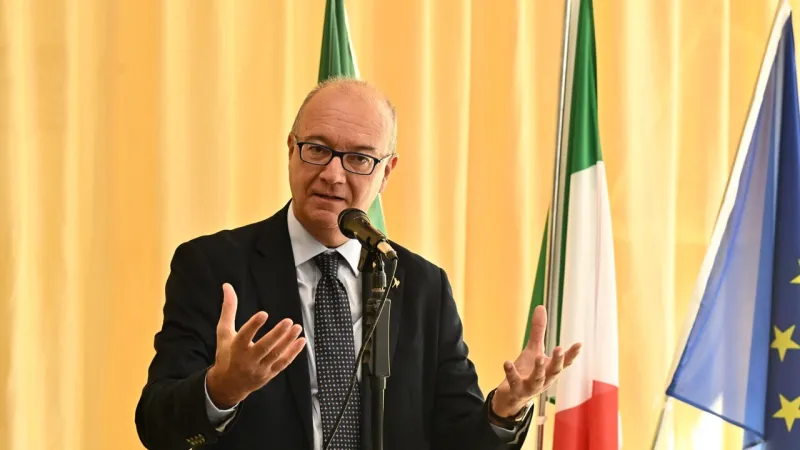
ROME – Italian Education Minister Giuseppe Valditara announced a forthcoming decree law to impose a cap on foreign students within the nation's schools. The measure, he stated, will hinge on what he termed a "purely linguistic criterion," extending its reach to European Union students who do not possess adequate Italian language skills. Minister Valditara simultaneously dismissed any notion of a conflict with the Quirinale, asserting that President Sergio Mattarella's recent remarks on the matter had been misinterpreted.
This proposed cap marks a significant policy shift, prioritizing linguistic proficiency as a fundamental benchmark for integration into the Italian educational system. The minister emphasized that the criterion aims to ensure effective learning environments, where all students can fully engage with the curriculum without being hindered by language barriers.
Opting for a decree law indicates the government's intention to expedite the implementation of this regulation, bypassing the typically longer parliamentary process for ordinary legislation. Decree laws are emergency legislative instruments, underscoring the perceived urgency of addressing the issue of student integration and classroom composition.
Valditara addressed reports suggesting a divergence of opinion with the Head of State following comments made by President Mattarella. The President had previously underscored the importance of welcoming all children into schools. Valditara clarified, stating that such interpretations of a rift were "instrumentalized" and did not reflect the true spirit of the President's message, which he maintained was fully aligned with the ministry's objectives of quality education for all.
The initiative emerges amid ongoing discussions regarding the challenges faced by Italian schools in managing increasing numbers of non-native Italian speakers. Educational institutions nationwide report strains on resources and teachers, particularly in urban areas with diverse student populations. This policy seeks to alleviate some of those pressures by ensuring a more balanced classroom environment conducive to learning.
Under the proposed decree, schools would assess the Italian language competency of incoming foreign students. Those identified as lacking foundational skills could potentially be subjected to remedial programs or specific placement guidelines designed to foster language acquisition before full integration into mainstream classes, though the exact mechanisms remain to be fully detailed.
A notable aspect of Valditara's announcement is the inclusion of EU students under the linguistic requirement. This move signals a stricter approach to integration, asserting that a shared linguistic foundation is paramount regardless of a student's origin within the European bloc. This could generate debate regarding free movement principles and access to education for EU citizens.
The measure aligns with certain political factions within the current Italian government who advocate for tighter controls on immigration and stronger national identity. While framed as an educational reform, critics may view the policy as a reflection of broader sentiment. The Italian political landscape frequently navigates complex issues, from internal reforms to managing its deficit amid EU rules, reflecting a multi-faceted governmental agenda.
The implementation of a national foreign student cap could have wide-ranging ramifications. It could influence immigration patterns, impact school enrollment figures, and potentially draw scrutiny from international human rights organizations and European Union bodies concerned with educational access and non-discrimination.
As the government prepares to formally introduce the decree law, educational stakeholders, parent associations, and advocacy groups await further details on its practical application. The specifics of the language assessment process, the definition of the cap threshold, and the support mechanisms for students requiring language assistance will be critical in determining the policy's ultimate success and impact.
Minister Valditara's definitive statement underscores the administration's commitment to this measure. The debate surrounding the foreign student cap is poised to intensify as the decree law moves forward, solidifying a new chapter in Italy's approach to multicultural education and national integration.