 Angel Doris
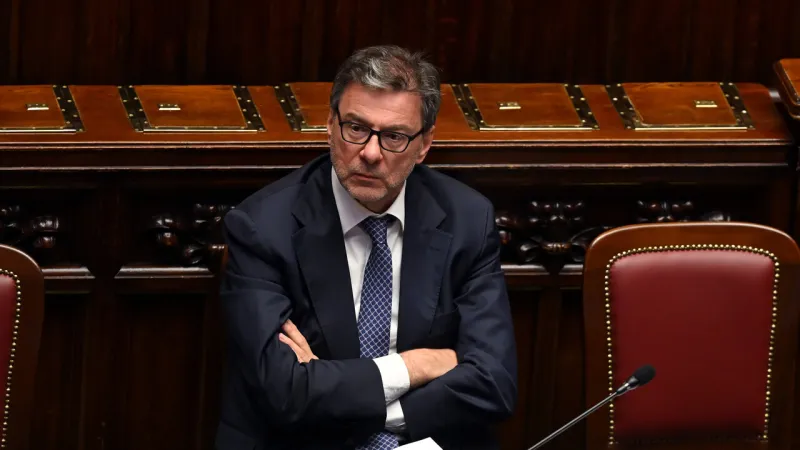
ROME – Italy's budget deficit remains stubbornly at 3.1% of GDP, igniting a fresh wave of political contention within the ruling coalition as Deputy Prime Minister Matteo Salvini advocates for budgetary flexibility, while Forza Italia urges fiscal prudence. The ongoing debate underscores the nation's precarious position under European Union scrutiny, with Economy Minister Giancarlo Giorgetti projecting an exit from the EU infringement procedure by 2027, even as Fratelli d'Italia criticizes Istat's statistical assessments.
The latest figures from the Italian National Institute of Statistics, Istat, place the deficit just above the EU's mandated 3% threshold, a benchmark that triggers automatic review and potential sanctions for member states failing to comply. This slight but significant deviation forms the crux of the government's current fiscal dilemma.
Matteo Salvini, leader of the Lega party, has publicly called for a “scostamento,” or deviation, from strict deficit targets. His demand signals a desire for greater fiscal maneuverability, potentially to fund public investments or reduce taxes, echoing a long-standing aspiration within his political base for more expansive economic policies.
In stark contrast, Forza Italia, a key partner in the governing alliance, has applied the brakes on any notions of increased spending or significant budgetary departures. Their cautious stance reflects a traditional commitment to fiscal conservatism and an acute awareness of Italy's substantial public debt, which demands adherence to EU fiscal compacts.
The internal discord is further complicated by Fratelli d'Italia's criticism of Istat. While the specifics of their grievances remain under close political analysis, such censure often suggests a dispute over data interpretation or methodological accuracy, potentially aimed at reframing the narrative around Italy's economic performance.
Economy Minister Giorgetti, a member of Salvini's Lega party, has attempted to bridge these differing views with a forward-looking statement. He asserted that Italy “will be able to exit the infringement procedure in 2027,” providing a timeline for a return to fiscal normalcy and alleviating pressure from Brussels. This commitment implies a path of fiscal consolidation despite internal calls for greater spending.
Italy currently faces an excessive deficit procedure from the European Commission, a mechanism designed to ensure member states maintain sound public finances. Exiting this procedure is paramount for the nation's economic credibility and its ability to negotiate future fiscal arrangements within the eurozone.
The government's current policy trajectory must balance domestic demands for economic stimulus with the imperative of European fiscal discipline. The 3.1% deficit figure is not merely a statistical point; it represents a tightrope walk for Prime Minister Giorgia Meloni's administration as it navigates divergent interests within its majority.
Broader economic reforms, such as the contentious pension changes that saw Italy mandate a 67.5 retirement age by 2029, contribute to the complex fiscal landscape. These measures aim to alleviate the rising GDP burden of an aging population but often provoke significant public and political debate.
The ongoing deliberations over the deficit will shape Italy's budget law for the upcoming fiscal year, influencing everything from public services to investment strategies. The ability of the coalition to find common ground on fiscal policy will be a critical test of its stability and long-term effectiveness.
Observers both domestically and internationally watch closely as Italy grapples with these economic realities. The outcome will not only determine Italy's financial health but also its standing and influence within the broader European economic framework. The careful management of the Italian deficit remains a pivotal challenge for Rome in 2026.