 Dodi Irawan
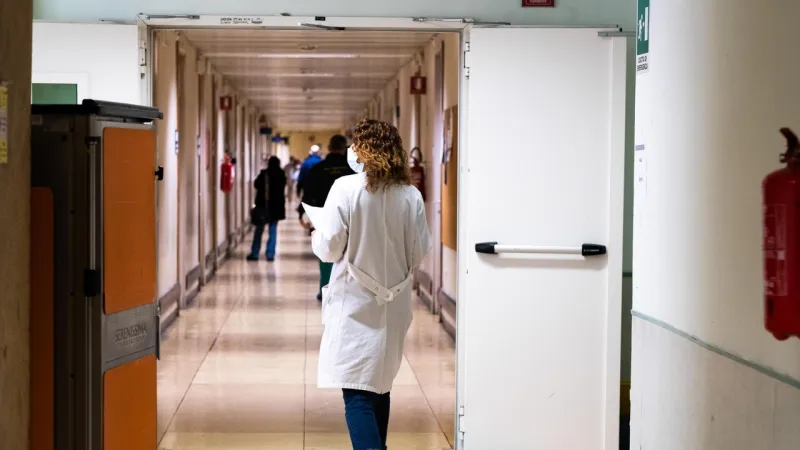
ROME - A comprehensive report from the Italian Ministry of Health released this week indicates notable advancements in both prevention strategies and treatment protocols across the national healthcare system. However, the study simultaneously underscores a deeply entrenched regional disparity, with citizens in Italys northern regions consistently receiving superior access to and quality of medical services compared to their counterparts in the south. This ongoing divergence presents a formidable challenge to achieving equitable public health outcomes nationwide.
The ministrys findings highlight a general upward trend in several key health indicators. Prevention campaigns, ranging from vaccinations to lifestyle awareness programs, demonstrate improved public engagement and effectiveness. Similarly, the report details enhancements in the availability of advanced medical treatments and a reduction in the incidence of certain preventable diseases, reflecting ongoing investment and dedication within the sector.
Despite these nationwide improvements, the report explicitly identifies Veneto, Emilia Romagna, and Toscana as the leading regions for healthcare assistance. These northern and central Italian regions consistently outperform others in categories such as timely diagnosis, surgical waiting lists, and the provision of specialized care. Their healthcare infrastructures are depicted as robust, well-funded, and efficiently managed, setting a benchmark for the rest of the country.
Conversely, the southern regions of Italy continue to lag, experiencing longer waiting times for critical procedures, fewer specialized medical facilities, and sometimes a scarcity of healthcare professionals. This persistent gap translates into tangible differences in health outcomes for residents, including disparities in life expectancy and the management of chronic conditions.
The North-South divide is not a new phenomenon in Italy. It represents a complex historical, economic, and social challenge that permeates various aspects of public services, including education and infrastructure. The healthcare sector, being deeply intertwined with regional economic vitality and administrative capacity, reflects these long-standing inequalities acutely.
The Ministry of Healths analysis employed a rigorous methodology, evaluating numerous metrics ranging from primary care access and emergency response times to the adoption of innovative medical technologies. Data on hospital bed occupancy, patient mobility across regions for treatment, and the effectiveness of local health authorities were meticulously scrutinized to paint this detailed picture of the national system.
Several factors contribute to this entrenched disparity in Italian healthcare. Disparities in regional funding allocations, often linked to differing tax bases and economic productivity, play a significant role. Furthermore, variations in administrative efficiency, a historical brain drain of medical talent from south to north, and challenges in modernizing older infrastructure exacerbate the problem.
Authorities have acknowledged the gravity of the situation. Over recent years, various national governments have introduced initiatives aimed at reducing regional health inequalities, including targeted investments and structural reforms. However, the latest report suggests that while some progress has been made, these efforts have not yet fundamentally altered the enduring geographic imbalance.
Healthcare professionals and patient advocacy groups have long called for a more integrated and harmonized national approach to healthcare planning and resource distribution. They argue that a truly universal system must guarantee an equal standard of care, regardless of a patients postal code, a principle that currently remains aspirational for many in the south.
The challenges facing Italian healthcare are not unique. Other European nations grapple with their own systemic issues. For instance, recent reports indicate a deepening hospital crisis in Germany, with many facilities facing insolvency after budget cuts. Similarly, debates continue over German health reform delivering unexpected windfalls and states signaling a showdown over contentious health bills, underscoring the complexities inherent in managing national health services.
Ensuring equitable access to high-quality care is a fundamental pillar of public policy. The current administration, under Prime Minister Giorgia Meloni, faces the persistent task of narrowing this healthcare gap, a commitment vital for the social cohesion and economic well-being of the entire nation. Addressing this disparity requires a sustained, multi-faceted approach, encompassing fiscal rebalancing, infrastructural development, and strategic human resource planning.
The reports detailed analysis serves as a critical call to action, urging policymakers to intensify efforts to standardize care levels across all regions. It reiterates that while the overall trajectory of Italian healthcare is positive, the systemic inequalities demand immediate and decisive intervention to ensure that every citizen benefits equally from medical advancements and robust public health services.
The future stability and integrity of the entire Italian healthcare system hinge upon overcoming these regional disparities. Without a concerted national strategy to uplift the lagging southern regions, the inherent strengths of the top-performing areas will be undermined by the weaknesses elsewhere, preventing Italy from achieving its full potential in public health.
This report offers a transparent look into the functioning of the system, providing valuable data for future policy discussions. It confirms that the commitment to universal care must now translate into concrete, measurable improvements in areas where disparities are most pronounced. The path forward demands collaboration among national and regional authorities, alongside continuous monitoring and evaluation of implemented strategies.
The Ministry of Health emphasizes that continuous improvement remains a core objective. While celebrating the progress in prevention and treatment, the report frames the North-South divide as the most pressing structural challenge. Overcoming this will require innovative solutions and a collective political will to reallocate resources and streamline administrative processes.
Ultimately, the health of a nations citizens reflects the strength and fairness of its societal structures. For Italy, bridging the healthcare divide represents not just a medical imperative, but a profound social justice issue that impacts the daily lives and future prospects of millions.