 Chandra Wijayanto
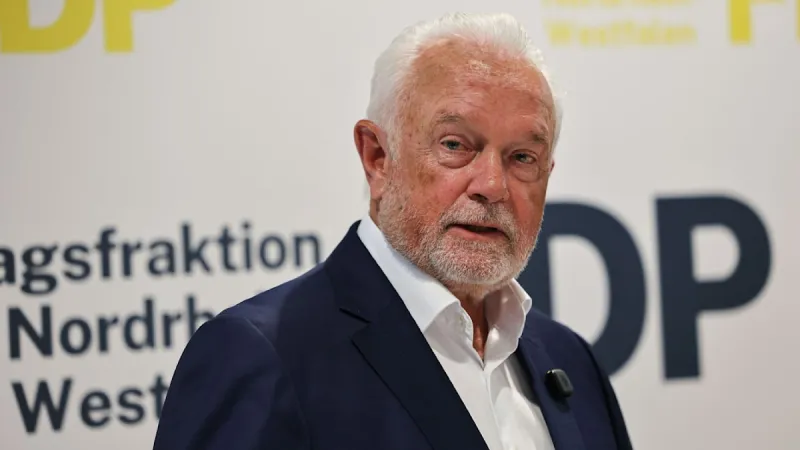
BERLIN – Wolfgang Kubicki, the prominent leader of Germany's Free Democratic Party (FDP), has launched a blistering critique against the Christian Democratic Union (CDU), accusing the opposition party of widespread moral inconsistency and hypocrisy.
The FDP chief specifically targeted Union politicians for what he described as a discernible pattern of double standards, implying a disconnect between their public pronouncements and private conduct or policy evolutions.
At the heart of Kubicki's condemnation lies former Health Minister Jens Spahn, a leading figure within the CDU, whose shifting position on the contentious issue of surrogacy has drawn the FDP leader's particular ire.
Kubicki asserted that Spahn's revised stance on surrogacy lacks credibility, suggesting a convenient re-evaluation rather than a genuinely evolved conviction. This accusation highlights a broader concern within the political discourse regarding authenticity and principle.
In a direct and unsparing remark, Kubicki articulated his perception of a troubling trend within the Union. He stated, “In the Union it seems to be widespread, if you are in power, you can afford more than normal citizens.” This statement encapsulates his core accusation of an ingrained sense of political entitlement.
The FDP's sharp criticism underscores ongoing tensions within Germany's political landscape, where debates over ethical conduct and policy consistency frequently dominate headlines. The allegation of moral failings by a prominent opposition figure carries significant weight.
Such an indictment from a leader of the FDP, a party that often positions itself as a guardian of liberal principles and individual freedoms, suggests a deep ideological chasm with the more conservative CDU on matters of ethical governance.
The debate surrounding surrogacy itself is complex, involving multifaceted ethical, legal, and social considerations. Spahn's previous and current positions are now under heightened scrutiny following Kubicki's public challenge.
This latest skirmish in German politics also brings into focus the broader challenges facing the CDU. The party has navigated various internal and external pressures, including discussions around figures like Spahn, whose political trajectory and standing have been subjects of recent media attention, as seen in reports detailing Spahn's exit deepening CDU crisis.
Kubicki's accusation of moral reprehensibility is a powerful rhetorical tool, aiming to erode public trust in the CDU's foundational values and its leaders' integrity. It forces a re-evaluation of how political shifts are perceived—as genuine growth or calculated opportunism.
For the FDP, strategically positioned as part of the ruling coalition, such criticisms against the largest opposition party serve to sharpen distinctions and reinforce its own political identity and policy agenda.
The political fallout from Kubicki's remarks remains to be seen, but they undoubtedly inject a new dynamic into the ongoing dialogue about political accountability and consistency in the German Bundestag.
This incident reinforces the persistent scrutiny German politicians face regarding their personal and professional conduct, particularly when policy changes appear to align with political convenience rather than steadfast conviction. The public expects transparency and integrity from its elected representatives, a standard Kubicki explicitly invoked.