 Edward DP Situmorang
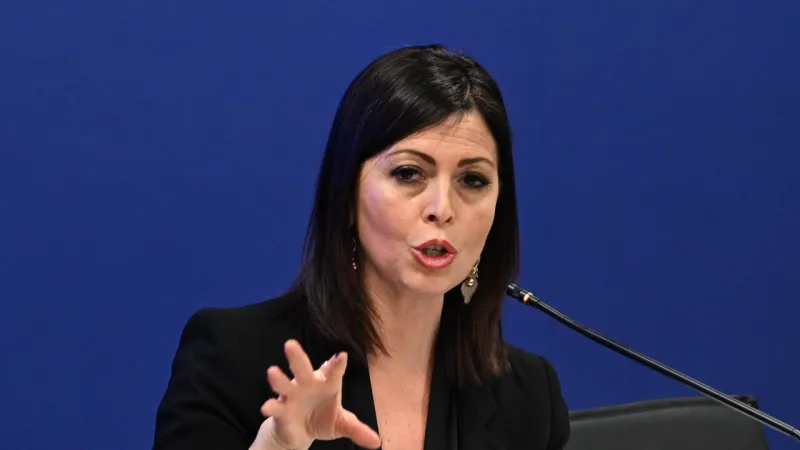
Rome — The independent supervisory commission overseeing Italy's state broadcaster, Rai, plunged into a profound crisis Monday as its president, Laura Floridia, and all opposition-aligned members announced their immediate resignations. This coordinated exit sends a stark political signal, with Floridia stating that continuing to serve and merely denouncing perceived issues had proven ineffective.
Floridia articulated the gravity of the situation in a brief but pointed statement, asserting, "Restare e denunciare non e servito. Non mi resta che dare un segnale forte." (Remaining and denouncing was useless. I have no choice but to send a strong signal.) This declaration underscores a deep-seated frustration within the commission regarding its operational efficacy and the broader landscape of media governance in Italy.
Observers familiar with Italian media politics interpret the mass resignation as a direct challenge to the current government's influence over Rai. The supervisory commission, known as the Commissione Parlamentare per l'Indirizzo Generale e la Vigilanza dei Servizi Radiotelevisivi, holds a critical mandate: ensuring Rai's editorial independence, pluralism, and adherence to public service broadcasting principles.
This dramatic rupture follows months of escalating tensions and accusations of political interference within the state broadcaster. Critics have repeatedly voiced concerns that the government seeks to consolidate its sway over Rai's programming, news coverage, and appointments, thereby undermining its impartiality.
The resignations effectively paralyze the commission, rendering it unable to fulfill its crucial oversight functions. Such an institutional vacuum raises immediate questions about accountability and the future direction of Rai, a cornerstone of Italian public information and cultural life.
Political analysts suggest that the opposition's withdrawal is a calculated maneuver designed to spotlight what they perceive as an erosion of democratic checks and balances within the media sector. It forces the government to confront the allegations head-on and take concrete steps to restore confidence in Rai's autonomy.
The broader implications extend beyond merely internal Rai politics, touching upon fundamental principles of press freedom and unbiased information dissemination within a democratic society. Instances of political pressure on public broadcasters are not unique, with similar concerns arising globally, as seen with French Educators Boycott Bollore Publishers Amid Far-Right Influence Concerns.
The government has yet to issue a formal response to the mass resignations. However, parliamentary leaders are expected to convene swiftly to address the unfolding crisis and discuss potential pathways to reconstitute the vital oversight body.
Filling the vacant positions will likely become a new battleground in Italy's contentious political arena. The process will require delicate negotiations and consensus-building, further highlighting the deep ideological divides that characterize the nation's political landscape.
The episode serves as a potent reminder of the ongoing struggle to safeguard the independence of public media institutions from partisan agendas, a challenge that remains perennial across many European democracies. The actions taken by the Floridia-led opposition members aim to catalyze a broader debate on media pluralism and the imperative for robust, autonomous journalistic standards.