 Demian Sahputra
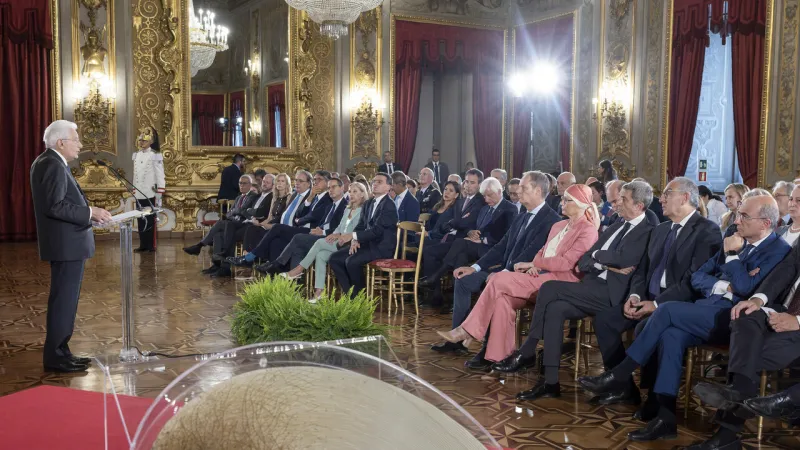
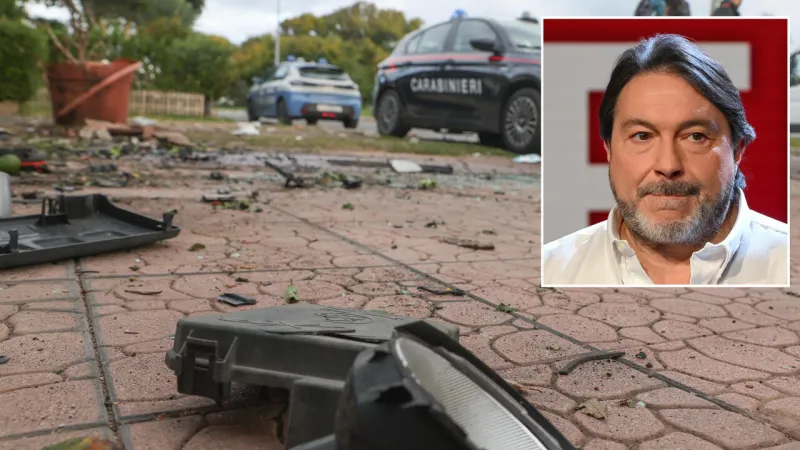
ROME – Italian President Sergio Mattarella has unequivocally condemned recent incidents in the Val Susa region, asserting that violence constitutes a “lethal virus for democracy” and emphasizing the state's fundamental duty to uphold law over individual whims, particularly amidst untimely electoral tensions. His strong words underscore a deep concern for the nation's political stability and the integrity of its democratic institutions.
Speaking on the gravity of the situation, President Mattarella declared, “The events in Val Susa are inadmissible. Violence is a lethal virus for democracy.” This potent metaphor highlights the insidious nature of unrest and its potential to erode the foundational principles of a free society. The President's remarks align with his consistent defense of constitutional values and the rule of law.
Mattarella further warned against the perils of political opportunism, stating, “untimely electoral tensions must not distract from problems.” This statement reflects a concern that impending elections or political rivalries could overshadow critical national issues, allowing fundamental challenges to fester and potentially escalate. He underscored the importance of focusing on substantive governance rather than partisan squabbles.
A core tenet of his address focused on the state's unwavering authority. “Adapting laws to individual behaviors constitutes the abdication of the state,” Mattarella affirmed. This powerful declaration champions the universality of legal frameworks and criticizes any notion that state authority should bend to the demands of specific groups or individuals, especially those resorting to unlawful actions.
The incidents in Val Susa, a region historically marked by strong opposition to infrastructure projects like the Turin-Lyon high-speed rail link (TAV), have frequently seen clashes between protesters and authorities. While the specific “fatti” (events) were not detailed in his public statement, the President's condemnation signifies a serious breach of public order and a challenge to state authority.
President Mattarella, known for his calm yet firm leadership, often acts as a moral compass for the Italian nation. His role as the guarantor of the Constitution requires him to intervene when democratic norms or societal cohesion are threatened. For more on his ceremonial duties, one might recall when President Mattarella was Honored at Quirinale in Annual Ventaglio Ceremony.
His remarks carry particular weight in a political landscape often characterized by intense debate and, at times, polarization. The warning against “untimely electoral tensions” serves as a direct message to political actors to prioritize national unity and stability over short-term electoral gains.
The President's emphasis on the state not abdicating its responsibilities resonates deeply with historical challenges to authority. He posits that the very essence of a functioning state lies in its capacity to enforce laws equitably and consistently, rather than conceding to pressures that seek to undermine legal precepts.
Such pronouncements are crucial for reinforcing public trust in institutions. When a head of state speaks so plainly about the dangers of violence and the importance of legal consistency, it sends a clear signal to both citizens and political factions regarding the non-negotiable foundations of Italian democracy.
The broader context includes ongoing debates within the Italian political sphere, where various reforms and legislative efforts often face hurdles, sometimes leading to gridlock. The Italian Coalition Fights Over Wiretap Reform, Electoral Law Gridlock, for instance, illustrates the complex political environment Mattarella navigates.
Mattarella's call for adherence to democratic principles serves as a timely reminder that while dissent is a cornerstone of democracy, violence and disregard for the law are not. His words advocate for a return to civility and a shared commitment to resolving differences through legitimate political processes.
The President's unwavering stance aims to protect the fabric of Italian society from internal divisions fueled by extremism or political expediency. His message reinforces the idea that true strength lies in adherence to shared values and legal frameworks, not in the chaos of confrontation.
This strong statement by the Head of State signals a low tolerance for actions that could destabilize the nation, especially as Italy looks towards future electoral contests. It is a direct appeal for responsibility from all societal actors, from citizens to political leaders.
The incidents in Val Susa, therefore, transcend local grievances, becoming a national focal point for a broader discussion on civic responsibility, political conduct, and the robustness of democratic safeguards in Italy.
The President's intervention aims to galvanize public opinion and political will towards upholding the rule of law, ensuring that the democratic process remains the sole legitimate avenue for addressing societal grievances and shaping the nation's future.