 Robert Andrison
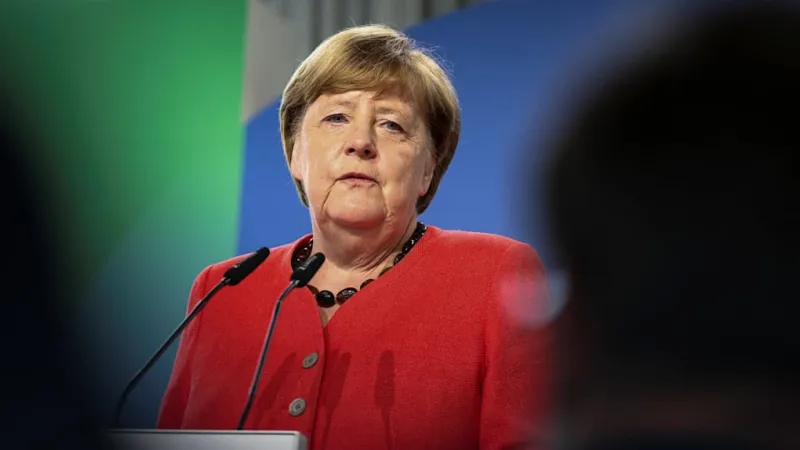
Berlin, Germany — Former German Chancellor Angela Merkel recently affirmed her conviction that the nation's ambitious climate goals are attainable even without nuclear energy. Speaking at the anniversary celebration of the Federal Ministry for the Environment, Merkel reflected on past policy decisions, offered self-criticism for a reliance on what she termed the “principle of hope,” and underscored the ongoing urgency of addressing climate change.
During her address, Merkel articulated her steadfast belief, stating, “I am of the opinion that we can also achieve climate goals without nuclear energy.” This declaration reinforces the foundational premise behind Germany's monumental energy transition, known as the Energiewende, which she spearheaded during her tenure as chancellor.
The former leader specifically defended the controversial decision to phase out nuclear power, a policy that saw Germany completely divest from atomic energy generation. Her remarks provided a reaffirmation of a path that has drawn both praise from environmental advocates and scrutiny from those concerned about energy security and cost.
Merkel also candidly acknowledged past missteps in environmental policymaking. She admitted, “Again and again, we acted on the principle of hope,” a poignant reflection on instances where long-term solutions were perhaps overly relied upon, potentially delaying more immediate and decisive actions against environmental degradation.
Beyond self-assessment, Merkel issued a critical warning against complacency regarding the planet's warming trends. She urged attendees and policymakers to never forget the profound and escalating challenges posed by climate change, emphasizing the continuous need for vigilance and proactive measures.
Germany's Energiewende, initiated in earnest decades ago and accelerated post-Fukushima, aimed to transition the country toward a primarily renewable energy supply while discontinuing nuclear power. This bold strategy has positioned Germany as a global leader in renewable energy deployment, though not without significant hurdles.
However, the path has been fraught with challenges, including managing grid stability, ensuring competitive energy prices, and navigating the political economy of decommissioning power plants. Debates continue within Germany regarding the effectiveness and economic impact of these laws, with some arguing that efforts like Germany's Energy Law have been accused of undermining national prosperity as the transition unfolds.
In 2026, Germany stands firmly committed to its post-nuclear energy landscape, continuing to invest heavily in wind, solar, and other renewable sources. The nation aims to significantly reduce greenhouse gas emissions and meet its international climate commitments, even as the global energy market remains volatile.
Her comments also come amid broader international discussions about the role of nuclear power in future energy mixes. While some nations explore new nuclear reactor technologies to achieve carbon neutrality, Germany remains resolute in its non-nuclear stance, prioritizing renewable energy expansion and efficiency measures.
These reflections by Merkel are significant, given her enduring influence on German and European politics. Her statements underscore her commitment to the legacy of the Energiewende and her vision for Germany's role in global climate action, even after stepping down from active political office.
Her blend of conviction and caution signals a continued push for perseverance in climate action. The message is clear: despite the complexities and costs, Germany's commitment to a sustainable, nuclear-free energy future remains unwavering, with a resolute focus on achieving its critical climate goals.
The former chancellor's address serves as a powerful reminder of the long-term vision required for environmental policy and the constant need for self-evaluation in the pursuit of a sustainable future for all.