 Robert Andrison
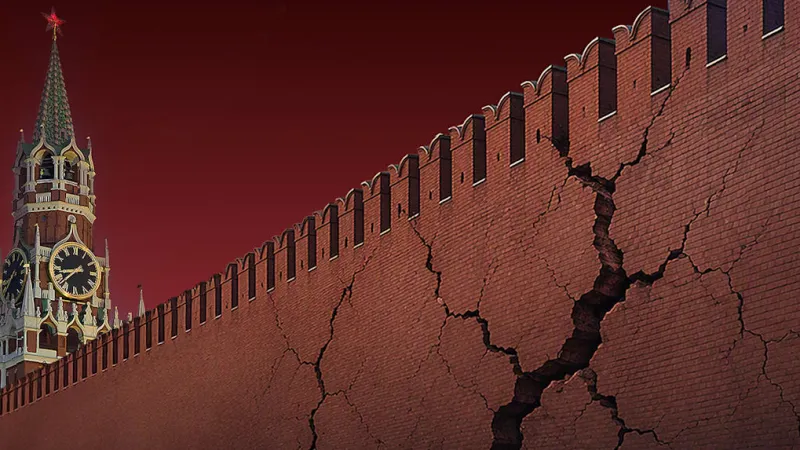
MOSCOW — Escalating pressure from Ukrainian forces on Russia is increasingly prompting Western analysts and former regime insiders to scrutinize the durability of President Vladimir Putin's long-held power, with some suggesting nascent cracks in the Kremlin wall could signify the initial stages of his regime's erosion. This intensified examination follows sustained military actions by Kyiv and internal analyses revealing potential vulnerabilities within Russia's leadership structure.
For months, Ukraine has steadily increased its operational tempo, targeting critical Russian infrastructure and military assets deep within its territory. These operations, ranging from drone strikes to cross-border incursions, are designed not only to degrade Russia's warfighting capability but also to test the resilience of its domestic political apparatus.
Several prominent Western observers, who have long tracked Russian affairs, now openly discuss the possibility that these ongoing pressures are coalescing into a more significant threat to Putin's two-decade grip on power. While cautious, their assessments point to a perceptible shift in the narrative surrounding the Kremlin's invincibility, moving beyond mere speculation to data-driven analysis.
Crucially, insights from former regime insiders, individuals who once occupied influential positions within Russia's governmental and security circles, corroborate these external observations. These sources, now operating outside the Kremlin's direct control, have reportedly conducted extensive research into the true extent of Putin's current power base. Their findings, though not fully public, suggest a more tenuous hold than commonly perceived.
The strategic objective behind Ukraine's intensified campaign is multifaceted. Beyond regaining lost territory, Kyiv aims to foster internal dissent and erode public confidence in the Russian leadership. This psychological warfare component is critical in a conflict where information and perception play pivotal roles.
Ukrainian President Volodymyr Zelensky has repeatedly emphasized the weakening of Putin's authority. Recently, Zelensky asserted that Putin is losing control amid pivotal developments, a sentiment echoed by intelligence reports suggesting increased instability within Russian government circles. For further context, refer to the article: Zelensky Asserts Putin Losing Control Amid Pivotal US Sanctions Vote.
Moreover, the economic strain on Russia, exacerbated by extensive international sanctions imposed by the United States and its allies, continues to ripple through society. While the Kremlin has largely insulated the populace from the harshest effects through state subsidies and propaganda, the long-term sustainability of this approach is increasingly questioned by economists and independent analysts.
The global geopolitical landscape further complicates the situation for Moscow. As President Donald Trump continues his term, the international community watches closely for any shifts in U.S. policy that might directly or indirectly impact the Ukraine conflict or Russia's internal stability. The evolving dynamics demand careful diplomatic maneuvering from all parties involved.
Challenges to Putin's war grip have also been highlighted by events such as a reported hunt for Telegram's CEO in Moscow, underscoring internal security concerns and the struggle for information control. This points to a broader effort by the Kremlin to manage dissent and maintain its narrative. An insightful read on this topic is available here: Zelensky: Putin's War Grip Weakens Amid Moscow's Telegram CEO Hunt.
Historians of Russia note that moments of external pressure and internal economic hardship have often been precursors to significant political change within the country. While predictions of immediate collapse remain speculative, the current combination of factors creates an environment ripe for reassessment of the Kremlin's long-term trajectory.
The resilience of the Russian state apparatus and the pervasive control mechanisms deployed by the security services mean any internal challenge would face formidable obstacles. However, the sustained erosion of public trust or elite cohesion could, over time, manifest into a more tangible threat.
As Ukraine maintains its offensive and Western nations continue to support Kyiv, the scrutiny on Putin's leadership will only intensify. The coming months are expected to provide further indications of whether the perceived cracks in the Kremlin truly represent the beginning of the end or merely a temporary strain on a deeply entrenched system.