 Stefani Rindus
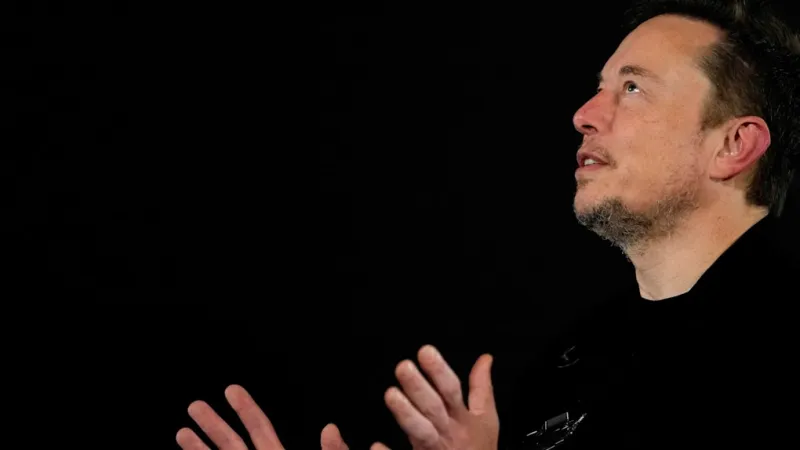
Berlin – Tech mogul Elon Musk has achieved a preliminary legal victory against German public broadcaster ZDF, which issued a cease-and-desist declaration concerning a program that reportedly misrepresented Musk's role in unrest in Northern Ireland. While the concession marks an initial success for Musk, legal experts suggest his prospects for securing substantial financial damages remain considerably dim.
The dispute stems from a specific ZDF broadcast that delved into various aspects of the tech entrepreneur's activities, including segments that linked him to unspecified incidents of unrest in Northern Ireland. Musk's legal team contended that the portrayal was inaccurate and damaging, prompting the initiation of legal proceedings against the publicly funded German channel.
ZDF's decision to issue a cease-and-desist declaration indicates an acknowledgment of at least some factual inaccuracy or potential misrepresentation within the original broadcast. This legal instrument obligates the broadcaster to refrain from repeating the contested statements or similar content in the future, effectively an admission of error without necessarily accepting full liability for defamation.
However, the significant hurdle for Musk lies in the nuances of German defamation law, which differs substantially from legal frameworks in other nations, particularly the United States. German courts tend to prioritize the right to free expression and generally impose stringent requirements for proving not only falsehood but also demonstrable harm and malicious intent to warrant substantial monetary compensation.
Legal analysts point out that while a cease-and-desist secures a correction and prevents future dissemination of false information, translating that into a large financial payout is exceptionally difficult. German jurisprudence often focuses on restorative measures, such as retraction or rectification, rather than punitive damages for reputational harm, unless the claimant can prove exceptional circumstances of malice or gross negligence leading to severe, quantifiable financial loss.
This case adds another chapter to Elon Musk's history of legal confrontations with media entities. Known for his outspoken criticisms of journalistic practices and his assertive defense of his public image, Musk frequently leverages legal avenues to challenge what he perceives as unfair or untrue reporting. His high-profile status often draws global attention to these disputes, raising broader questions about media accountability.
The distinction between a factual error requiring correction and a defamatory statement demanding financial restitution is critical here. ZDF's declaration addresses the former, acknowledging the need to cease particular content. Yet, for a claim of high damages, Musk would need to demonstrate not merely an error, but a profound and intentional disregard for truth that directly caused significant, measurable financial detriment, a bar rarely met in such cases.
For ZDF, issuing the declaration mitigates the immediate legal risk and potentially avoids a more prolonged and costly court battle focused solely on the cessation of content. Nevertheless, the incident poses a reputational challenge for the public broadcaster, which is expected to uphold the highest standards of journalistic integrity and factual accuracy. The episode underscores the constant scrutiny faced by established media.
The larger implications of this dispute resonate within the media landscape, particularly regarding how powerful public figures can contest journalistic portrayals. It highlights the delicate balance between the media's role in scrutinizing influential individuals and the imperative for accuracy, especially when reporting on sensitive or controversial subjects like social unrest.
Legal scholar Dr. Anya Schmidt, specializing in media law at the University of Munich, commented, “While Mr. Musk has achieved a procedural win, the German legal system is designed to protect journalistic freedom vigorously. High damages for defamation are awarded only in the most egregious cases where intent and severe harm are unequivocally proven. A cease-and-desist is often the maximum outcome for a public figure seeking factual correction.”
Therefore, despite Elon Musk's initial success in compelling ZDF to withdraw its disputed content, the path to a significant financial award remains fraught with legal complexities unique to the German system. The outcome will likely serve more as a precedent for media accuracy than for substantial monetary restitution in future disputes involving high-profile personalities.