 Angela Stefani
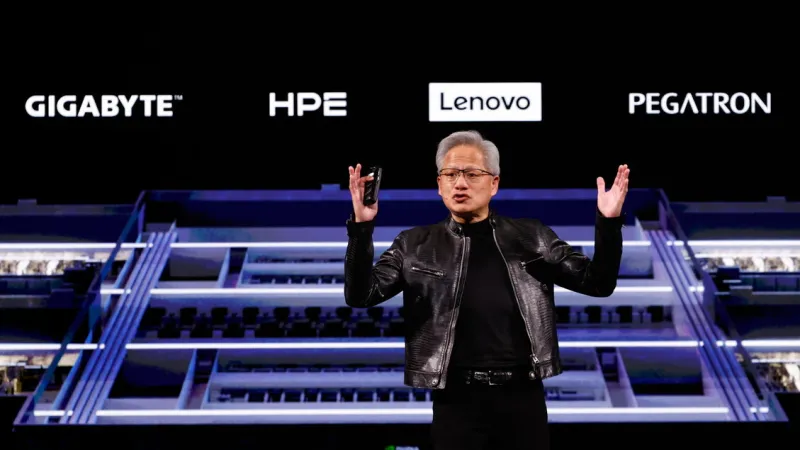
Nvidia announced its strategic foray into the personal computing market, unveiling a powerful AI superchip designed to fundamentally redefine the capabilities of future PCs and laptops. This revolutionary hardware, known as RTX Spark, prepares for its global debut in autumn 2026, setting the stage for a direct confrontation with established giants Intel and Apple in the rapidly evolving artificial intelligence computing sector.
The move signifies a pivotal shift for Nvidia, traditionally renowned for its graphics processing units (GPUs) dominating the high-performance computing and data center AI segments. By integrating advanced AI capabilities directly onto consumer-grade devices, the company aims to decentralize AI processing, fostering a new era of on-device intelligence.
This initiative positions Nvidia to capitalize on the burgeoning demand for AI-ready hardware, promising enhanced performance, improved security, and greater privacy for users by minimizing reliance on cloud-based AI services. The RTX Spark is engineered to accelerate a wide array of AI applications, from real-time language processing and advanced image manipulation to sophisticated predictive analytics, all operating locally on the device.
For decades, Intel has maintained a near-monopoly on the central processing unit (CPU) market for PCs, forming the core architecture of most desktop and laptop computers. Nvidia's entrance with a dedicated AI chip directly threatens this established order, suggesting a future where AI accelerators become as integral as CPUs for mainstream computing.
Apple, with its proprietary M-series chips, has already integrated powerful neural engines into its Mac lineup, offering formidable on-device AI capabilities. Nvidia's RTX Spark seeks to replicate and potentially surpass this integration within the broader Windows PC ecosystem, offering a competing vision for AI-powered personal computing across a wider range of hardware manufacturers.
The RTX Spark chip leverages Nvidia's extensive expertise in parallel processing and AI algorithm optimization. While specific technical specifications remain under wraps, industry analysts anticipate a significant leap in energy efficiency and raw AI inference power compared to current integrated solutions. This Nvidia AI chip will enable developers to craft new applications that were previously impractical on conventional hardware.
Consumers can expect a transformative user experience, with PCs capable of understanding natural language commands with greater nuance, generating sophisticated content on the fly, and personalizing interactions to an unprecedented degree. The chip promises to unlock new creative workflows and productivity gains, fundamentally altering how individuals interact with their devices.
The availability of such robust on-device AI processing power is expected to spur a wave of innovation among software developers. New categories of applications, particularly in augmented reality, real-time multimedia editing, and intelligent personal assistants, are anticipated to emerge, fully leveraging the capabilities of the RTX Spark architecture.
Industry observers predict a fierce competitive battle as Intel and Apple respond with their own advancements in AI silicon. This heightened competition is likely to accelerate innovation across the entire PC industry, benefiting consumers through more powerful and intelligent devices at competitive prices.
"Nvidia is not just entering a market; it is defining a new frontier for personal computing," stated Dr. Lena Hansen, a principal analyst at Tech Insights Group. "The RTX Spark represents a formidable challenge to the status quo, pushing all major players to rethink their approach to device-level AI integration."
The autumn 2026 launch of the RTX Spark will be closely watched as a bellwether for the future direction of the PC market. Its success will likely determine the pace at which dedicated AI processors become standard components in every new computer, much like GPUs revolutionized graphics decades ago.
Nvidia's long-term vision extends beyond merely enhancing existing applications; it aims to create an entirely new paradigm for human-computer interaction, where devices proactively assist users with intelligent, context-aware capabilities. This ambition underscores the strategic importance of the RTX Spark in the company's growth trajectory.
As the computing landscape continues its rapid evolution, Nvidia's bold move with the RTX Spark heralds a significant inflection point. The race to embed advanced artificial intelligence directly into the fabric of everyday devices has officially escalated, promising a more intelligent and capable future for personal technology.