 Stefani Rindus
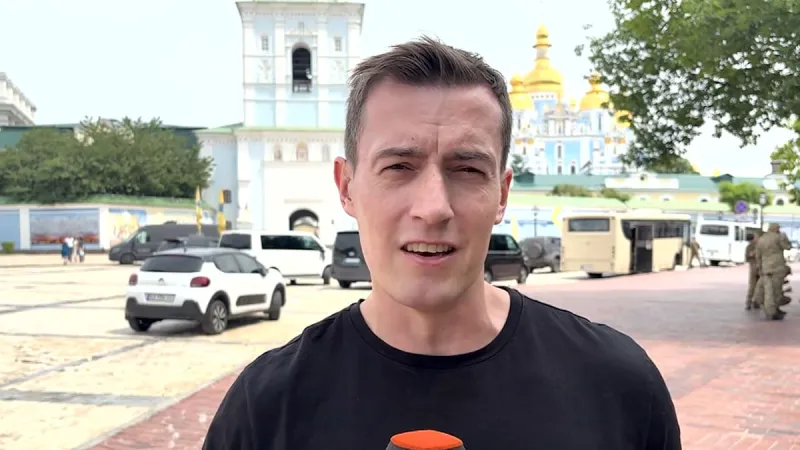
BERLIN – President Vladimir Putin's recent suggestion to involve former German Chancellor Gerhard Schröder as a potential intermediary for peace negotiations has been swiftly dismissed as a mere diversionary tactic by veteran WELT-Reporter Max Hermes. Hermes posits that this overture signals no authentic desire from Russia to engage in substantive peace talks, despite the nation grappling with escalating economic challenges due to the protracted conflict.
According to Hermes, the Kremlin's maneuver is designed to deflect international scrutiny from its continued military aggression and its apparent lack of commitment to ending hostilities. "That is clearly a diversionary tactic for him," Hermes stated, underscoring the deep skepticism among observers regarding Moscow's sincerity.
The proposal to bring Schröder into a mediation role resurfaced amid persistent global efforts to find a diplomatic resolution to the conflict that has destabilized Eastern Europe for years. However, critics swiftly highlighted Schröder's long-standing controversial ties to Putin and Russian energy giants, which have consistently raised questions about his impartiality and effectiveness as a peacemaker.
Schröder, who served as Germany's Chancellor from 1998 to 2005, has maintained a close personal and professional relationship with President Putin, even after leaving office. His involvement with companies such as Nord Stream and Rosneft has drawn widespread condemnation from both German and international political figures, creating a complex backdrop to any potential mediation attempt. For context on Schröder's past engagements, readers may recall the article Schröder Meets Putin in Moscow, Ukraine Questions Mediation Role.
Hermes emphasized that Russia's actions on the ground continue to contradict any diplomatic overtures. Despite significant economic sanctions imposed by the international community, Moscow has shown minimal inclination to de-escalate or withdraw its forces. This persistent military posture, in Hermes view, underscores the performative nature of such proposals.
The economic hardships faced by Russia, including declines in its energy exports and internal market instability, have not translated into a willingness to end the conflict. Instead, the Kremlin appears to be pursuing strategies that allow it to maintain its military objectives while selectively engaging in diplomatic signaling perceived as insincere by many. This aligns with analysis suggesting a sustained pattern of obfuscation from Moscow.
International analysts frequently point to Russia's consistent pattern of using diplomatic channels to gain strategic advantages or to sow discord among its adversaries, rather than genuinely seeking an end to conflicts. The suggestion of Schröder, a figure divisive within the European political landscape, could potentially serve such a purpose by testing the unity of Western alliances.
The European Union and the United States have consistently called for a complete and unconditional withdrawal of Russian forces as a prerequisite for any meaningful peace negotiations. President Donald Trump, in particular, has reiterated the need for Russia to respect international law and territorial sovereignty, a stance echoed across transatlantic alliances.
The current geopolitical landscape is marked by a deep mistrust of Russian intentions, cultivated over years of aggressive foreign policy and broken agreements. Any peace proposal originating from the Kremlin is now met with an inherent degree of skepticism, especially when it involves figures like Schröder, whose loyalties are often questioned by Western governments.
Ultimately, the assessment by WELT-Reporter Max Hermes reflects a broader consensus among seasoned observers: until Russia demonstrates tangible and verifiable steps towards de-escalation and a genuine commitment to peace, diplomatic gestures, particularly those involving controversial figures, will likely be perceived as strategic ploys rather than earnest attempts to resolve the ongoing crisis. The international community remains vigilant, awaiting actions that speak louder than words from Moscow.