 Angel Doris
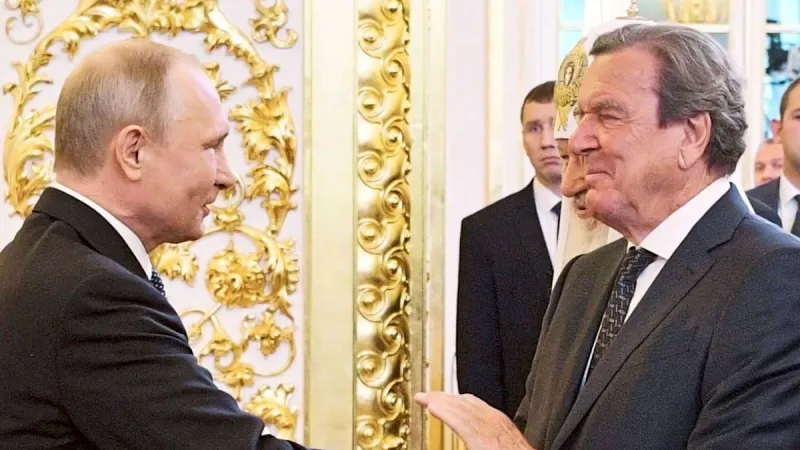
MOSCOW – Former German Chancellor Gerhard Schröder recently held a private meeting with Russian President Vladimir Putin in the Kremlin, a development confirmed by Russian authorities. The unannounced one-on-one talks immediately drew sharp criticism from Kyiv, which maintains that Schröder's enduring close ties to the Russian leader disqualify him as a neutral mediator in ongoing international efforts.
The Kremlin's confirmation offered minimal detail, stating simply that the two men had a private conversation. No agenda or specific outcomes were disclosed by Russian state media, leaving the purpose of the high-level engagement open to widespread speculation among political observers and international media.
Ukrainian officials swiftly voiced their disapproval, reiterating their long-held position that Schröder, due to his lucrative past and present associations with Russian state-owned energy companies, cannot credibly act as an impartial figure in any peace initiatives. This skepticism complicates any potential role he might seek to play in bridging the divide between Moscow and Kyiv.
Schröder's relationship with Putin dates back to his tenure as German Chancellor from 1998 to 2005. Post-chancellorship, he accepted prominent positions on the boards of Russian energy giants such as Nord Stream, Rosneft, and Gazprom, decisions that have repeatedly drawn condemnation across the European Union and within Germany.
Critics argue that these financial ties compromise his independence and create an irreconcilable conflict of interest, especially in light of Russia's ongoing aggression. His continued defense of these engagements has further alienated him from mainstream German political discourse.
While Schröder has, at times, indicated a willingness to use his personal access to Putin for diplomatic purposes, his efforts have largely been rebuffed by Ukraine and viewed with suspicion by Western allies. His latest visit underscores the persistent challenge of distinguishing private advocacy from official statecraft.
International relations in 2026 remain fraught, particularly concerning the conflict in Ukraine. Efforts by various international actors to de-escalate tensions and seek diplomatic resolutions have been met with mixed success. For instance, recent reports indicate President Putin himself has previously rebuffed specific proposals while criticizing European Union policies. For more on this, read: Putin Rebuffs Zelensky, Blasts EU Amid NATO 2030 Attack Warning.
The German government has consistently distanced itself from Schröder's private interactions with Putin, emphasizing that he acts solely in a personal capacity and does not represent official German policy. This clear separation aims to prevent his actions from undermining Germany's diplomatic stance on the conflict.
However, the optics of a former German head of government maintaining such close personal contact with the Russian leader, particularly during a period of heightened geopolitical tension, continue to generate uncomfortable headlines for Berlin.
The timing of this meeting also raises questions, as it occurs when many Western nations are actively working to isolate Russia diplomatically and economically. Schröder's visit potentially offers a propaganda coup for Moscow, suggesting cracks in the unified Western front.
Whether Schröder genuinely believes he can facilitate dialogue or if his actions are driven by other motivations remains a subject of intense debate. His supporters occasionally cite his unique access as a potential, albeit controversial, channel for communication, while detractors see it as tacit endorsement of Russian policies.
Ultimately, the private meeting between Schröder and Putin, confirmed by the Kremlin, serves as another chapter in the complex and often contentious narrative surrounding the former German Chancellor's post-political career. It highlights the enduring challenges of informal diplomacy and the profound distrust it can engender, particularly from those directly impacted by the conflict.