 Stefani Rindus
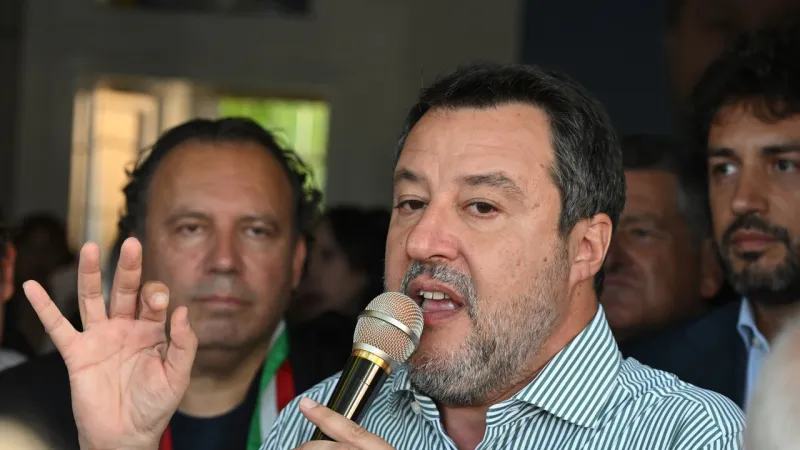
Bollate, Italy — Matteo Salvini, a prominent leader of Italy's League party, visited Roggero at the Bollate correctional facility today, following Roggero's initial night of incarceration. Concurrently, a contingent of young League activists convened outside the prison, staging a fervent demonstration to advocate for Roggero's clemency.
Salvini's unannounced visit to the prison underscored the political significance the League party attaches to Roggero's case. The former Interior Minister, known for his direct approach, spent time inside the facility before emerging to address supporters and media assembled outside.
The scene outside Bollate Prison was marked by a palpable sense of political solidarity. Dozens of young League members, waving party flags and holding banners, formed a picket line, their chants echoing the demand for clemency for Roggero. The protest highlighted the party's capacity to mobilize its base swiftly in response to judicial developments.
While the specific charges leading to Roggero's incarceration remain under wraps in the initial reports, the League's immediate and vocal support suggests a deep-seated commitment to the individual. The party leadership has historically engaged in public discourse regarding judicial processes, often positioning itself as a defender against perceived injustices.
Salvini's presence at the prison, a stark visual for Italian political observers, signals that Roggero's case is not merely a legal matter but one with significant political implications. It frames the incarceration as an issue warranting direct intervention and public appeal from a major political figure.
The demand for clemency, or grazia as it is known in Italy, is a serious appeal for executive pardon, typically reserved for exceptional circumstances. The League's readiness to pursue this avenue so soon after Roggero's detention suggests a strong conviction regarding the merits of their plea, or a strategic move to rally political support.
This incident unfolds against a backdrop of ongoing political tensions within Italy, particularly concerning justice reform. Debates surrounding the efficacy and fairness of the judicial system have frequently flared, with various political factions proposing differing approaches to legal processes and sentencing guidelines. The ongoing legislative efforts and disagreements have sometimes led to significant political friction, as exemplified by events such as Italy's Coalition Fractures Amid Fiery Senate Justice Reform Debate.
The League, under Salvini's leadership, has often championed a law-and-order agenda while simultaneously criticizing aspects of the judiciary it perceives as overly bureaucratic or politically motivated. This duality in their stance allows for both tough rhetoric on crime and passionate advocacy for individuals they deem unfairly treated.
Observers note that such public displays of support by high-profile politicians can exert pressure on the judicial system, even if indirectly. While the independence of the judiciary is a cornerstone of Italian democracy, political commentary and protest can undeniably shape public opinion and political discourse surrounding legal cases.
The coming days are expected to bring more details regarding Roggero's case and the League's sustained efforts for clemency. The visibility of Salvini's visit and the organized protest indicate a protracted engagement by the party, ensuring this development will remain a topic of keen interest in Italian political circles.
The demonstration concluded with pledges from League youth leaders to continue their advocacy until their demands for Roggero's release are met. This resolute stance highlights the enduring power of grassroots political action, even in the face of a complex legal process.
The broader implications for Salvini's political trajectory and the League's public image are also under scrutiny. By personally engaging with this case, Salvini reinforces his image as a leader who stands by his constituents and party members, potentially galvanizing his base ahead of future electoral contests.