 Robert Andrison
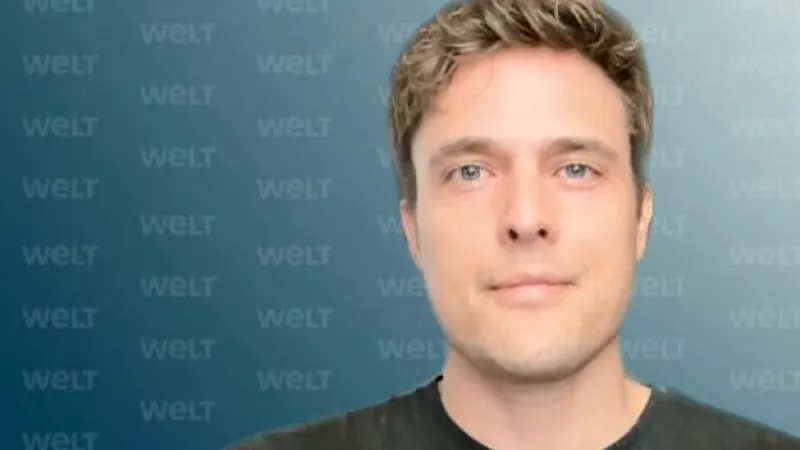
Following a recent Islamist attack in Berlin, prominent journalist Constantin Schreiber has ignited a fierce debate by lambasting elements of the political Left for what he describes as a pervasive denial of reality. Schreiber's pointed critique intensified after his public appeal for the organization Queers for Palestine to "finally wake up" drew significant negative reactions.
The controversy underscores a growing sentiment that certain left-wing ideological positions hinder an accurate assessment of threats posed by radical Islamism. Schreiber specifically challenged the perceived contradiction of groups advocating for queer rights while simultaneously expressing solidarity with entities or movements whose tenets often oppose LGBTQ+ freedoms.
Schreiber's outspoken comments follow what many observers characterize as a troubling pattern of some left-leaning factions downplaying or recontextualizing the nature of Islamist violence. This phenomenon, which he attributes to ideological aberrations that defy common sense, contributes to a perceived disconnect from ground realities, particularly concerning public safety and societal cohesion.
The harsh reactions Schreiber reported receiving after his call to action for Queers for Palestine highlight the sensitivity and deep divisions within progressive discourse. Critics accused him of oversimplification or mischaracterizing the nuanced political landscape, while supporters lauded his courage in addressing uncomfortable truths.
The incident in Berlin, though specific details remain outside the immediate source, serves as a stark reminder of the persistent threat of Islamist extremism in European capitals. Such attacks frequently catalyze intense scrutiny of political responses and societal narratives surrounding integration, security, and ideological consistency.
Other public figures have echoed Schreiber's concerns. As previously reported, Ahmad Mansour, a prominent expert on Islamism, similarly criticized the Berlin Left's stance on Islamism and policing, calling it "sheer madness." These parallel critiques suggest a broader disquiet about how specific political segments engage with complex issues of extremism. This is further highlighted by calls to end Islamist threat denial following the Berlin CSD attack.
The discussion extends beyond immediate reactions to individual incidents. It delves into the deeper philosophical frameworks that shape political responses to violence. For some on the Left, a focus on root causes like poverty, discrimination, or Western foreign policy may overshadow the immediate, explicit threat of religious extremism. This perspective, while aiming for comprehensive understanding, can inadvertently lead to a reluctance to name and condemn ideological drivers of violence.
Conversely, those aligned with Schreiber argue that this analytical framework veers into apologetics, effectively granting ideological cover to those who perpetrate violence in the name of religion. They contend that a clear moral stance is necessary, irrespective of any underlying socio-economic factors.
The organization Queers for Palestine, which Schreiber specifically addressed, often frames its advocacy within a broader anti-colonial and human rights context, aligning itself with Palestinian liberation movements. Schreiber's challenge suggests that this alliance overlooks the often-stark human rights records, particularly concerning LGBTQ+ individuals, in some of the very societies it aims to support.
This ideological tension is not unique to Germany. Across Western nations, debates continue to rage regarding the compatibility of certain progressive ideals with the realities of global geopolitical conflicts and extremist ideologies. The demand for a political awakening often implies a call for intellectual honesty and a reevaluation of alliances that might inadvertently legitimize anti-liberal forces.
The increasing frequency of such attacks in Europe has placed immense pressure on political leaders to articulate coherent strategies. For many, a failure to unequivocally condemn all forms of extremism, regardless of perceived political alignment, erodes public trust and compromises effective counter-terrorism measures. The debate initiated by Schreiber points to the urgent need for a more unified and pragmatic approach across the political spectrum.
The broader implications for German society are significant. A fractured public discourse on security and extremism can empower fringe elements and deepen societal polarization. Bridging this ideological chasm requires genuine dialogue and a willingness to confront uncomfortable truths on all sides.
Schreiber's stand exemplifies a growing trend among journalists and public intellectuals to directly challenge what they perceive as intellectual dishonesty or ideological rigidity within political movements. His readiness to face significant negative feedback underscores the gravity of the issues at stake and the perceived urgency of his message.
Ultimately, the criticism leveled at the Left by figures like Schreiber highlights a critical juncture in how Western democracies address internal and external threats. It necessitates a careful examination of the principles that guide political action and the courage to adapt those principles when confronted by evolving realities.