Chandra Wijayanto
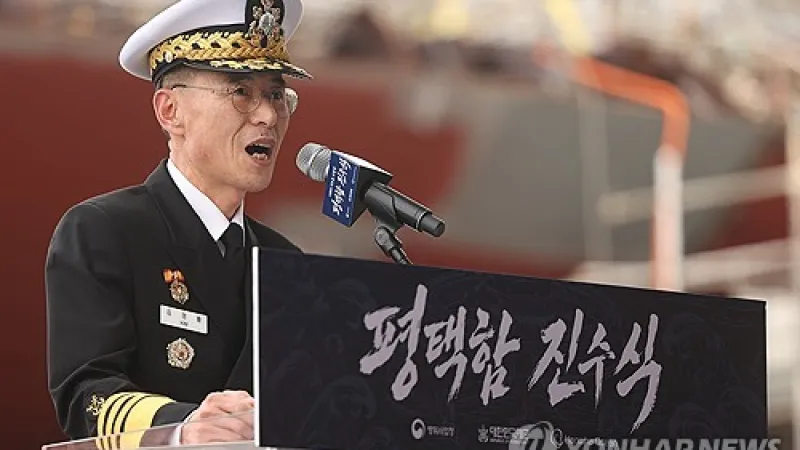
SEOUL, November 20, 2026 -- Chief of Naval Operations Admiral Kim Kyung-ryul of South Korea is embarking on a pivotal diplomatic mission to Japan and Tahiti, seeking to fortify maritime cooperation and regional security frameworks in the Indo-Pacific. The strategic visits, announced today by the Ministry of National Defense, underscore Seoul's commitment to bolstering alliances against a backdrop of evolving geopolitical complexities and persistent regional challenges.
Admiral Kim's itinerary includes high-level discussions with naval counterparts and defense officials in both nations, focusing on enhancing interoperability, intelligence sharing, and coordinated responses to maritime security threats. This proactive diplomatic push highlights South Korea's increasing role as a key contributor to stability in one of the world's most vital economic and strategic regions.
The initial leg of the trip will see Admiral Kim in Japan, where bilateral maritime security remains a cornerstone of regional stability. Discussions are expected to center on joint exercises, counter-piracy efforts, and ensuring freedom of navigation in contested waters. The long-standing alliance between the United States and South Korea, which has been crucial for enduring Asian peace, forms a significant context for these discussions, reinforcing a united front among democratic maritime powers. This aligns with broader efforts to cement alliances vital for enduring peace in the region, as previously reported in "US, South Korea Cement Alliance As Crucial for Enduring Asian Peace."
Following his engagements in Tokyo, Admiral Kim will proceed to Tahiti, French Polynesia, a strategic outpost in the vast Pacific. This visit broadens the scope of South Korea's maritime diplomacy beyond traditional East Asian partners, acknowledging the growing importance of wider Pacific collaboration. Talks in Tahiti will likely address humanitarian assistance, disaster relief operations, and environmental protection in the Pacific island nations, areas where naval forces play a critical support role.
A spokesperson for the Republic of Korea Navy, speaking on condition of anonymity, stated, "These visits are integral to our Indo-Pacific strategy. They demonstrate our dedication to a rules-based international order and our readiness to collaborate with like-minded partners for collective security and prosperity across the region."
The Indo-Pacific region faces a myriad of security challenges, including burgeoning naval capabilities from various state actors, illicit maritime activities, and the increasingly severe impacts of climate change on coastal communities. South Korea, with its advanced naval capabilities and strategic geographic position, aims to contribute meaningfully to mitigating these risks.
The deployment of naval assets and high-level diplomatic visits such as Admiral Kim's signal South Korea's intent to diversify its security partnerships and extend its influence in areas crucial for global trade and peace. This approach also aligns with international calls for a free and open Indo-Pacific, a principle championed by key allies.
Previous high-level engagements have laid the groundwork for these current talks, indicating a sustained effort by Seoul to deepen its naval ties across the region. The emphasis on practical cooperation, rather than mere symbolic gestures, suggests an intention to forge actionable agreements.
Analysts note that while North Korea's continued provocations remain a primary concern for South Korean security, the nation's naval strategy has concurrently evolved to encompass broader regional and global maritime security responsibilities. This balancing act reflects a mature and comprehensive approach to national defense and foreign policy.
The outcomes of these discussions are anticipated to strengthen existing frameworks for information exchange and operational coordination, ultimately contributing to a more secure and stable maritime domain. The success of Admiral Kim's mission could pave the way for future multilateral initiatives, further integrating South Korea into the fabric of Indo-Pacific security architecture.
This diplomatic endeavor underscores South Korea's commitment to proactive engagement, ensuring that its naval forces are not only prepared for defense at home but also contribute significantly to peace and stability far beyond its immediate shores. The emphasis on maritime cooperation serves as a beacon of multilateralism in an era often characterized by nationalistic tendencies.