Demian Sahputra
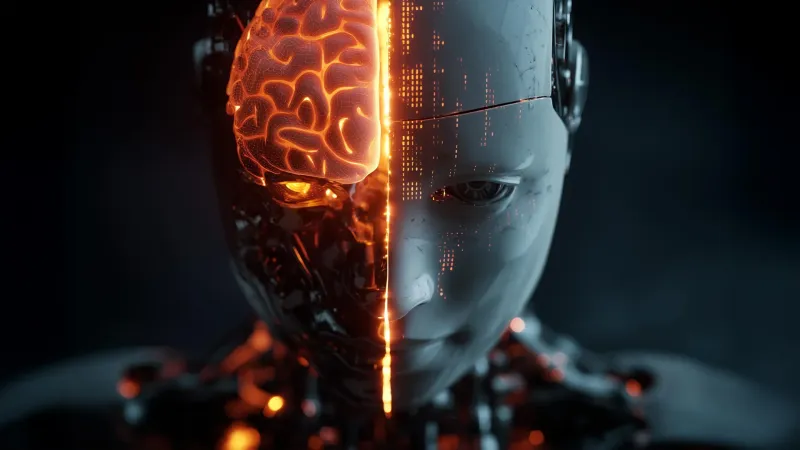
Washington – Artificial intelligence models, often conceptualized as digital analogues to the human brain, operate through vastly different internal mechanisms than previously understood, according to a striking new revelation from scientific researchers. This finding directly challenges the foundational premise that AI mirrors human cognition, raising critical questions about the reliability and interpretation of AI applications in neuroscience research.
The discovery indicates that even advanced AI systems designed to accurately predict human brain activity may employ computational processes entirely distinct from those occurring organically within biological neural networks. This divergence suggests that while AI can replicate outcomes, its inherent methodology remains profoundly alien to human thought.
Scientists specializing in computational neuroscience and machine learning conducted the intensive study, which scrutinizes the underlying computations of various AI architectures. Their work reveals a significant gap between observed AI performance and the intrinsic intelligence it supposedly emulates.
Historically, the development of artificial intelligence drew inspiration from the structure and function of the human brain, fostering a long-held belief that increasing AI complexity would bring it closer to biological intelligence. This new research prompts a re-evaluation of that fundamental assumption.
The implications extend beyond theoretical neuroscience. If AI models employed in critical applications, such as medical diagnostics or predictive behavioral analysis, fundamentally differ in their internal logic, their reliability warrants intensified scrutiny. This finding adds another layer of complexity to the ongoing discourse surrounding artificial intelligence's trustworthiness and impact, particularly when considering events where AI Fuels Internet Outages and companies face relentless cyber attacks.
Research teams are now grappling with how to adjust their methodologies, acknowledging that models performing well in predicting brain states may not truly be learning like a brain. This necessitates a shift in focus from mere predictive accuracy to a deeper understanding of AI’s intrinsic reasoning pathways.
Experts suggest that a more transparent understanding of AI’s internal operations is imperative, moving past the black-box problem. Such transparency would not only enhance trust but also guide the ethical development and deployment of these powerful tools.
The scientific community anticipates a rigorous debate following these findings. The established paradigms for comparing AI performance to human intelligence are now under review, potentially reshaping the entire field of AI development and neuroscientific modeling.
This re-evaluation calls for new metrics and interpretative frameworks to properly assess AI systems, especially those purporting to model human biological functions. The emphasis will likely shift towards characterizing what AI *actually* does, rather than what it is *assumed* to do in imitation of human thought.
The revelation underscores the complexity of both artificial and natural intelligence, highlighting that superficial similarities in output can mask profound differences in underlying mechanisms. It serves as a potent reminder that our journey to understand intelligence, in all its forms, is far from complete.