Chris Robert
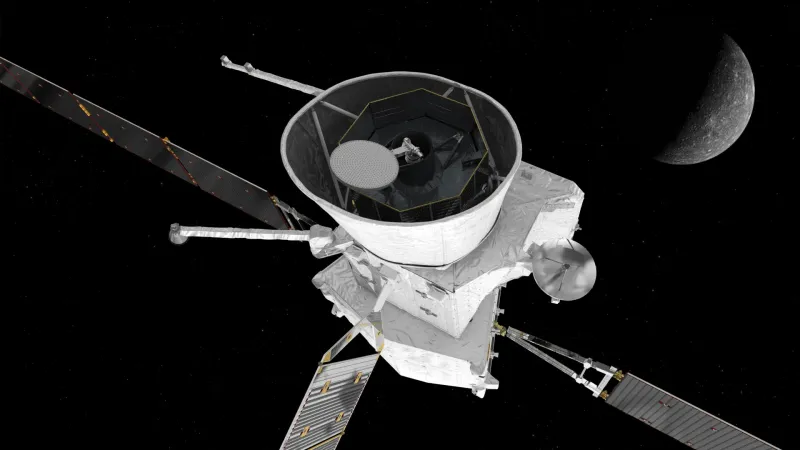
A pioneering X-ray telescope, after an arduous eight-year journey spanning 10 billion kilometers through the void, has successfully commenced its scientific mission, capturing its inaugural cosmic observations from Mercury's vicinity. Scientists report the instrument is performing beyond initial expectations, poised to unlock profound chemical secrets of the solar system's innermost and smallest planet, thereby reshaping prevailing theories about its genesis.
The sophisticated instrument endured nearly a decade in deep space, traversing distances that underscore the immense challenges of interplanetary exploration. Its arrival and operational success mark a significant triumph for space agencies and planetary scientists worldwide, particularly given the extreme conditions prevalent near the sun.
The X-ray telescope is designed to probe Mercury's surface composition, analyzing the elemental makeup of its crust. By observing how Mercury's surface fluoresces when struck by solar X-rays, scientists can deduce the presence and abundance of crucial elements like magnesium, aluminum, silicon, and iron.
Mercury presents a particularly compelling target for such an investigation. Its small size, high density, and proximity to the sun suggest a unique evolutionary path compared to other terrestrial planets. Understanding its core composition and surface geology could provide critical clues about the early solar system's chaotic formation period.
Previous missions to Mercury, such as NASA's MESSENGER spacecraft, have provided invaluable data, but the new X-ray telescope offers an unprecedented level of detail regarding elemental mapping. Its enhanced sensitivity and resolution promise to resolve ambiguities that prior missions could not.
Scientific teams are eager to examine the initial data, searching for anomalies or patterns that might challenge existing planetary models. For instance, the exact ratio of iron to silicon could offer insights into whether Mercury formed from material closer to the sun or migrated inwards over time.
The successful deployment and operation of this complex observatory underscore humanity's enduring quest for cosmic understanding. It serves as a testament to engineering ingenuity, mirroring the resilience seen in other long-duration space endeavors, such as the distant Voyager 1 probe, which continues to transmit data after decades of travel, albeit with a 24-hour signal delay.
Researchers anticipate that the data from the X-ray telescope will not only deepen our knowledge of Mercury but also provide a comparative framework for understanding exoplanetary systems. As more distant planets are discovered, insights from our own solar system's extreme environments become increasingly valuable.
The mission's longevity and current superior performance offer a robust platform for extended data collection. This prolonged observational period will allow scientists to monitor potential temporal changes on Mercury's surface, or variations in its interaction with the solar wind.
Ultimately, this groundbreaking X-ray telescope promises to rewrite sections of planetary science textbooks. Its observations could fundamentally alter our perception of how planets coalesce from protoplanetary disks, especially those orbiting close to their parent stars. The universe continually reveals its intricacies, and Mercury, through the eyes of this telescope, is poised to share its profound secrets.