 Angel Doris
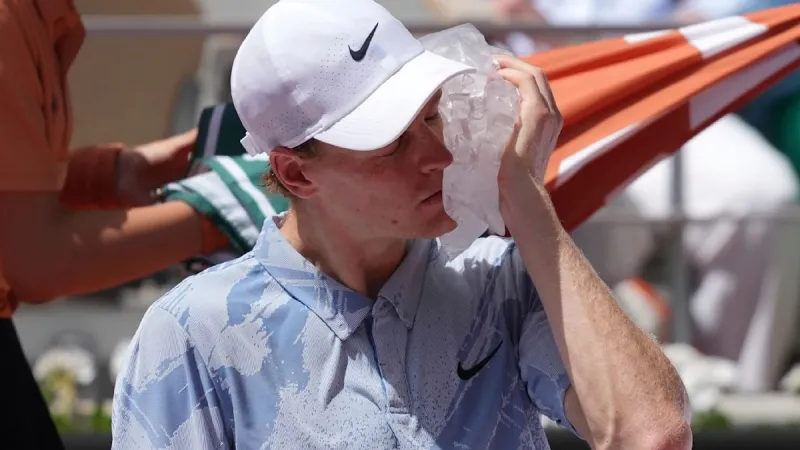
Paris - Top-seeded tennis sensation Jannik Sinner unexpectedly crashed out of the French Open in the second round, reportedly suffering from severe physical issues during his match in the scorching Parisian heat. The early departure of one of the tournament's favorites significantly reshapes the competitive landscape, notably bolstering the prospects for contenders like Alexander Zverev to claim their inaugural Grand Slam title.
The Italian struggled visibly on court, displaying clear signs of distress as his bid for a maiden Roland Garros crown evaporated prematurely. This shocking development occurred far earlier than anticipated for a player who entered the tournament with considerable momentum and high expectations from both fans and pundits alike.
Reports from the tournament suggested Sinner contended with intense physical discomfort throughout the match. While specific details regarding his condition remain officially undisclosed, the visible struggles pointed towards a battle against more than just his opponent, hinting at a broader health challenge exacerbated by the demanding conditions.
Sinner's withdrawal sends ripples through the men's singles draw. As a top favorite, his presence was widely considered a significant hurdle for many aspiring champions. His absence now opens up a crucial section of the draw, creating a clearer path for other high-ranked players.
Among those poised to benefit most from Sinner's early exit is German star Alexander Zverev. Zverev, who has consistently performed well in recent Grand Slams and is still seeking his first major title, now sees a potentially less arduous path to the final. His chances of clinching the coveted French Open trophy have demonstrably increased.
Players enduring mid-match physical crises at major tournaments are not entirely unprecedented, though it is a rare sight for a top seed. Such incidents often raise questions about player preparedness, scheduling, and the intense physical demands of elite professional tennis, particularly on clay courts under challenging weather conditions. The earlier report, Sinner Battles Mid-Match Illness, Roland Garros Hopes Dim Amid Struggle, provides further context to the unfolding situation.
This incident underscores the rigorous physical toll exacted by Grand Slam competition. Athletes often push their bodies to the absolute limit, and sometimes, as in Sinner's case, the body simply rebels. It reignites discussions within the sport about player welfare and the intense pressure to perform despite physical adversities.
Prior to Roland Garros, Sinner had enjoyed a stellar season, solidifying his status as one of the tour's premier talents. His consistent performances and impressive victories in earlier tournaments had positioned him as a strong contender for the French Open, making his early exit all the more surprising and disheartening for his fanbase.
While a significant setback, this early French Open departure provides Sinner with an opportunity to rest and recuperate. His team will likely focus on his recovery and preparation for the upcoming grass-court season and Wimbledon, where he will undoubtedly aim to rebound stronger.
The French Open continues, now with an altered narrative. The unexpected twists and turns, exemplified by Sinner's exit, serve as a potent reminder of the unpredictable nature of elite sports, where even the most dominant athletes can fall prey to unforeseen circumstances.