Gabriella
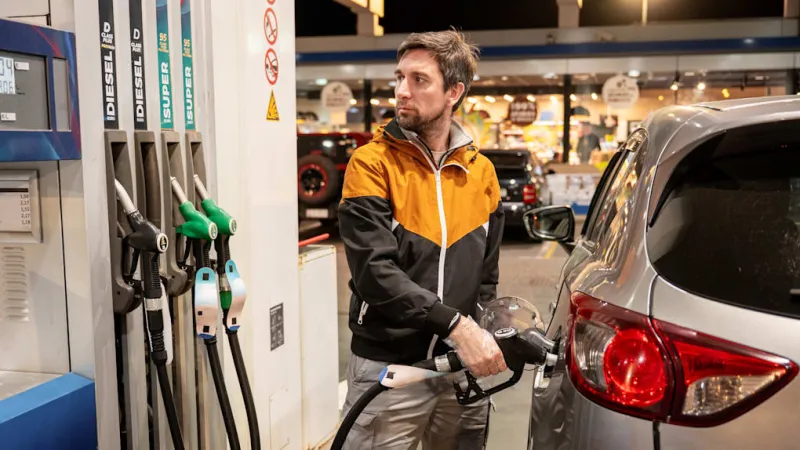
BERLIN – The Social Democratic Party (SPD) faction within Germany's Bundestag has decisively rejected calls from various federal states to extend the controversial fuel discount beyond its scheduled expiration. Maintaining its firm opposition, the party articulated its stance, stating the subsidy primarily benefits high-income individuals and luxury vehicle owners, rather than providing equitable relief to all citizens, particularly those with modest incomes. This position, echoed in discussions across the capital, aligns with arguments previously advanced by the Green Party and The Left, while contrasting sharply with the Alternative for Germany (AfD)'s demand for its mandatory continuation.
The core of the SPD's argument centers on the principle of social equity. Senior party members have consistently highlighted analysis suggesting that affluent citizens, who often drive larger, more powerful vehicles with higher fuel consumption, reap a disproportionately greater financial advantage from such a discount compared to average commuters driving smaller, more fuel-efficient cars. This disparity underpins the party's assertion that the measure is not an effective or fair instrument for broad economic relief.
Calls for extending the fuel discount have intensified from several German states, citing ongoing economic pressures and persistent high energy costs for consumers. These regional pleas underscore a broader public desire for continued governmental support amidst inflation and household budget strains, but the SPD remains unyielding in its commitment to targeted aid over blanket subsidies.
The SPD's refusal to prolong the fuel discount places it in ideological alignment with its coalition partners, the Greens, and the opposition Left party. Both parties have historically criticized such universal subsidies, arguing they are financially inefficient, environmentally counterproductive, and socially regressive. Their collective stance emphasizes the need for structural reforms and sustainable solutions rather than temporary, broad-based price reductions.
Conversely, the AfD has publicly declared the extension of the fuel discount as unavoidable. This nationalist party frequently positions itself as a defender of the common citizen against what it perceives as government overreach and economic mismanagement, often advocating for measures that directly alleviate financial burdens, regardless of socioeconomic targeting.
Economists and policy analysts have also weighed in on the debate. Many concur with the SPD's assessment regarding the distributive effects of a universal fuel subsidy, noting that the absolute savings for a consumer increase with fuel consumption. Therefore, those who consume more fuel, typically wealthier individuals or those commuting longer distances in less efficient vehicles, receive a larger total benefit.
Beyond the equity concerns, environmental considerations also play a significant role in the SPD's decision. Prolonging a fuel discount could be seen as disincentivizing the transition to more fuel-efficient vehicles or alternative transportation methods. Germany has ambitious climate goals, and policies that encourage fossil fuel consumption, even indirectly, run contrary to these objectives.
The debate over the fuel discount is not isolated; it reflects a broader policy conflict within Germany regarding how best to manage economic challenges while advancing climate protection and social justice. This firm stance by the SPD underscores a consistent approach to economic policy within the current government coalition, often drawing criticism from opposition parties who argue the SPD hampers broader reforms, as seen in CDU Leader's Ally Blames SPD for Hampering Merz Reforms. Future fiscal policies are expected to prioritize more direct and targeted relief measures for low-income households, rather than widespread subsidies that may inadvertently benefit the affluent.
As the debate continues, the SPD maintains that any future measures to alleviate cost-of-living burdens must be precisely calibrated to assist those most in need, thereby ensuring public funds are allocated efficiently and equitably. The political landscape around energy subsidies remains a contentious one, with profound implications for German households and the nation's economic direction.