Debby Wijaya
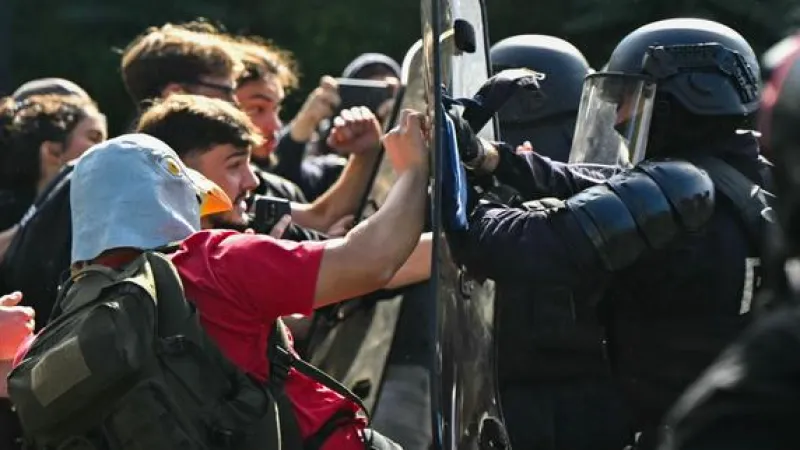
PARIS – A collective of French educators has issued a stark condemnation of the official handling of ongoing student protests, asserting in a tribune published by Le Monde that authorities are responding with a “wall of violence” rather than engagement.
This forceful statement from the teachers directly challenges the government's approach to youth activism, arguing that the mobilization fundamentally expresses a deep-seated attachment to the principles and promise of the French Republics educational system.
The op-ed, which emerged amidst escalating tensions surrounding educational reforms and societal changes, highlights a perceived disconnect between the concerns of the protesting youth and the state's reaction.
According to the collective, instead of seeking to understand and address the students grievances, the government has opted for confrontational tactics, effectively shutting down avenues for constructive dialogue.
This perspective stands in contrast to some official narratives, including a report by Paris intelligence that suggested links between spontaneous student uprisings and far-left groups. (See: Paris Intelligence Links Far-Left to Spontaneous Student Uprising).
The teachers, however, emphasize the students profound belief in the public school system, viewing their actions not as rebellion against the state, but as a defense of its core educational values.
They contend that the students demonstrate a fervent commitment to social justice and equal opportunity, ideals traditionally upheld by the French republican model of schooling.
The “wall of violence” phrase encapsulates their concern over methods such as excessive policing during demonstrations, and a perceived general lack of governmental willingness to listen to student representatives.
Such a response, the educators warn, risks alienating a generation that is merely attempting to safeguard the public services and democratic principles they cherish.
The growing chasm between the student movement and the state could have profound long-term implications for social cohesion and trust in institutions across France.
Observers note that youth protests in France frequently serve as a barometer for broader societal discontent, reflecting anxieties over economic prospects, environmental issues, and the future of public services.
The teachers collective urges a radical shift in strategy, advocating for genuine dialogue and engagement with students to understand their concerns and integrate their perspectives into policy-making.
They believe that recognizing the students attachment to the Republics school, rather than dismissing their protests as mere disruption, is crucial for fostering a resilient and inclusive society.
This educational crisis, framed by the teachers as a failure of listening, underscores the urgent need for a re-evaluation of how dissent is managed in a democratic society.
Ultimately, the educators call for the government to dismantle the figurative “wall of violence” and instead build bridges of understanding with the nations youth, reinforcing the foundational promise of the Republics school for all citizens.
The mobilization of the students, in their view, represents a vital, albeit challenging, expression of democratic participation that should be nurtured, not suppressed.
This incident adds to a complex tapestry of social movements witnessed in European nations recently, highlighting ongoing debates about state authority and individual rights. (Compare: Spain's Housing Crisis Ignites Mass Protests, General Strike Looms).
The collective's impassioned plea aims to reframe the narrative surrounding the student protests, from one of confrontation to one of profound civic engagement deserving of respect and serious consideration.
The future trajectory of these French student protests and the government's response remains a critical developing story, with potential ramifications for the educational landscape and political discourse across the nation.