 Stefani Rindus
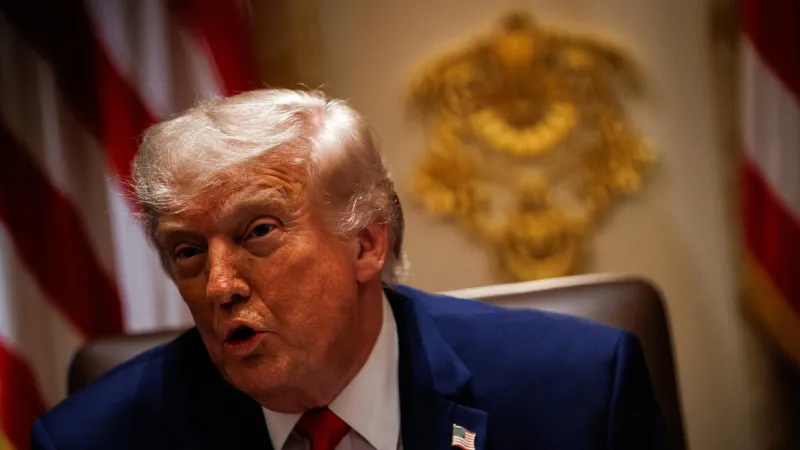
WASHINGTON – President Donald Trump recently convened his national security team in the White House Situation Room to address rising tensions with Iran, yet a definitive decision on the path forward remained elusive, according to reports from The New York Times. The high-stakes meeting occurred as Tehran continues to challenge international norms regarding the Strait of Hormuz and the critical issue of frozen funds, presenting a complex geopolitical puzzle for the administration.
The discussions, which reportedly involved senior defense, intelligence, and diplomatic officials, highlighted ongoing disagreements and unresolved topics. Foremost among these are the significant sums of Iranian funds frozen in various international accounts, a key leverage point the United States has maintained in its sanctions regime against the Islamic Republic.
The New York Times indicated that several complex themes are still open for deliberation, with the disposition of these frozen assets forming a central point of contention. The Trump administration faces pressure to formulate a cohesive strategy that addresses both the financial dimensions and Iran's provocative actions.
Simultaneously, Tehran has escalated its defiant stance concerning the Strait of Hormuz, a critical maritime chokepoint through which a substantial portion of the world's oil supply passes. Iran's reassertion of control and influence in the strait has significant implications for global energy markets and international shipping.
This latest development underscores the intricate and often fraught relationship between Washington and Tehran, a dynamic that has seen periods of intense diplomatic engagement juxtaposed with heightened confrontation. As noted in past analyses, President Trump has actively pondered the nation's Iran decision, especially as Tehran reasserts control in this vital waterway, a sentiment explored in an article titled Trump Ponders Iran Decision As Tehran Reasserts Hormuz Control.
The lack of immediate consensus from the Situation Room gathering suggests the profound complexities and potential risks associated with any decisive action against Iran. Diplomatic and military options are likely being weighed meticulously, considering regional stability and broader international alliances.
Experts suggest that the frozen funds are not merely a financial matter but a crucial component of Iran's economic survival and its ability to fund regional proxy groups. Any movement on these funds, whether release or further restriction, carries substantial geopolitical weight.
Iran's strategic posturing in the Strait of Hormuz is widely seen as an attempt to exert leverage and demand concessions, particularly regarding economic sanctions. The continuous challenges in this area underscore the fragility of peace in the Gulf region.
The administration must navigate a path that both upholds international law and protects US interests, while also avoiding an escalation of hostilities that could destabilize the entire Middle East. This requires careful consideration of various scenarios and potential responses from regional actors.
The international community watches closely as the Trump administration deliberates its next steps. The enduring uncertainty surrounding the frozen funds and Iran's persistent challenges in Hormuz ensures that the issue remains a prominent fixture on the global geopolitical agenda. The broader diplomatic climb for Iran amidst regional turmoil is also a subject of recent discussion, as detailed in Iran Faces Steep Diplomatic Climb Amidst Regional Turmoil, further complicating the decision-making process for world leaders.