Gabriella
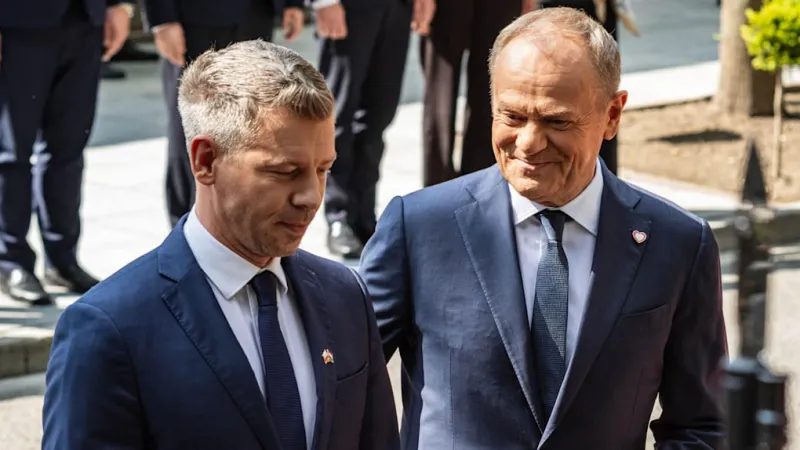
Leaders of the Visegrad Group nations—Poland, the Czech Republic, Slovakia, and a newly represented Hungary—convened recently for a pivotal summit in Prague, aiming to reinvigorate their alliance and assert greater influence on future European Union policies. This gathering, the first since former Prime Minister Viktor Orbans departure from office in Hungary, seeks to overcome internal discord and forge a cohesive agenda for Central and Eastern Europe.
The meeting marks a critical juncture for the regional bloc, historically challenged by divergent national interests, particularly under the previous Hungarian administration. With a new government in Budapest, the Visegrad Group, often referred to as the V4, appears poised to present a more unified front on issues ranging from economic policy to security matters within the European landscape.
For years, the Visegrad Group struggled with internal divisions, largely stemming from differing stances on issues such as migration, rule of law, and energy policy. Former Prime Minister Orban often found himself at odds with Brussels and, at times, with other V4 members, creating rifts that hampered the blocs collective efficacy.
The recent electoral shift in Hungary, culminating in Orbans departure, has paved the way for a reassessment of the nations role within the V4. The new Hungarian Prime Minister has publicly vowed an anti-corruption war and constitutional overhaul, signaling a potential alignment with broader European values that could foster greater cooperation within the Visegrad framework.
Analysts suggest this renewed cohesion could significantly alter the balance of power within the EU. A stronger, more unified Visegrad Group could act as a formidable counterweight to traditional powerbrokers, advocating more effectively for the specific concerns and strategic interests of Central and Eastern European states.
The immediate agenda for the revitalized V4 includes coordinating responses to regional security threats, diversifying energy supplies, and promoting economic growth initiatives. Discussions are expected to focus on strengthening border control policies and ensuring fair distribution of EU funds for infrastructure development.
However, the path to a fully cohesive Visegrad Group remains fraught with challenges. Deep-seated national priorities and lingering historical tensions among the member states could still impede progress. While the change in Hungary offers new opportunities, it does not automatically erase existing divergences.
The leaders must navigate a complex geopolitical environment, including the evolving relationship between the European Union and the United States under President Donald Trump. His administration's stance on NATO allies, as highlighted by past remarks where Trump threatened NATO allies, adds another layer of complexity to European strategic planning and the V4s role within it.
Further, economic disparities and varying degrees of commitment to democratic norms among V4 members will necessitate careful diplomatic maneuvering. Finding common ground on sensitive topics will be crucial for the group to maintain its momentum and avoid a relapse into previous fragmentation.
Observers anticipate that the Visegrad Group will seek to leverage its collective voice in forthcoming EU debates on the blocs long-term budget, environmental regulations, and digital transformation strategies. A united front on these issues could secure significant concessions and ensure regional interests are adequately represented.
The success of this reformative period will ultimately hinge on the ability of the Polish, Czech, Slovak, and Hungarian leaders to prioritize common goals over individual national agendas. Their capacity to present a coherent vision for Eastern Europe will dictate their influence on the continents political future.
This new chapter for the Visegrad Group is not merely about internal realignment; it represents a broader effort to redefine Eastern Europes standing and agency within the larger European project, potentially heralding a new era of regional leadership and influence.