 Robert Andrison
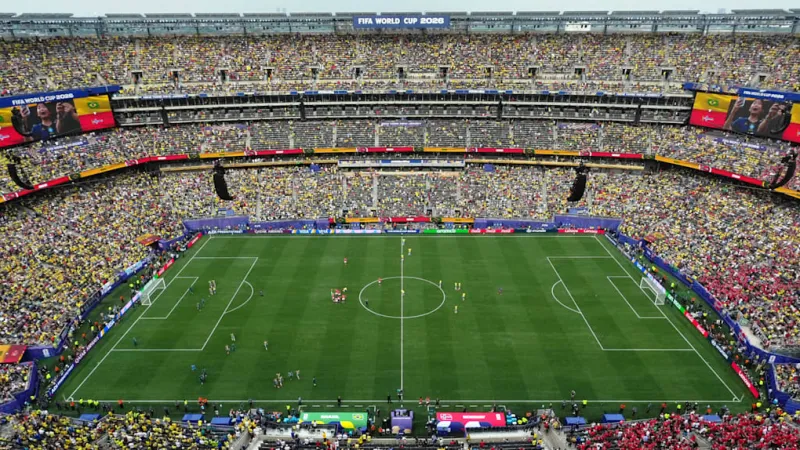
On Sunday, Germany's public broadcaster ZDF will deviate from a long-standing tradition during its transmission of the highly anticipated World Cup final. The network plans a significant programming change during the halftime interval, an alteration that marks a notable break from its customary approach to major sporting events.
This novel decision comes as millions across the nation prepare to tune in for the pinnacle of international football. While specifics of the new halftime format remain under wraps, the mere announcement of a departure from established practice has garnered attention among media observers and sports enthusiasts.
Historically, ZDF and other German public broadcasters have maintained a consistent structure for live football coverage, particularly during high-profile events like the World Cup. Halftime typically features expert analysis, tactical breakdowns, and brief interviews, providing viewers with in-depth insights into the game's first half.
The move suggests a strategic reevaluation of viewer engagement during the critical intermission period. Broadcasters worldwide constantly seek innovative ways to retain audience interest, especially in an evolving media landscape characterized by diverse entertainment options.
While ZDF has not officially detailed the motivations behind this shift, industry analysts speculate it could range from incorporating more entertainment-focused segments to utilizing the slot for new promotional content. The objective likely centers on maximizing viewership and potentially attracting new demographics.
ZDF has previously faced public scrutiny regarding its programming choices. For instance, the network recently found itself at the center of a debate concerning artistic freedom and perceived extremism after censoring an anti-Nazi song, a decision that sparked widespread discussion across German media. This incident highlights the broadcaster's often-complex navigation of public expectation and editorial policy. ZDF Censors Anti-Nazi Song; Media Debates Artistic Freedom, Extremism
The phenomenon of evolving halftime presentations is not exclusive to Germany. Across the globe, major sporting events, particularly those with a massive international audience like the World Cup or the American Super Bowl, frequently experiment with halftime shows that feature musical performances, elaborate spectacles, or condensed analysis. The question of whether global stars can truly fit a fifteen-minute spectacle has been a recurring theme in discussions around these events. World Cup Halftime Stunner: Can Stars Fit 15-Minute Spectacle?
The success or failure of ZDF's new halftime format will likely be judged by its reception among the German populace and its effect on viewership metrics. A well-executed change could set a new precedent for future major tournament broadcasts, while a misstep might invite criticism.
In related news surrounding the World Cup, a prominent Swiss player has reportedly secured a record-breaking transfer to the German club SC Freiburg. This development, also reported in the wider World Cup news ticker, underscores the ongoing player movement and financial activity that accompanies such a high-stakes global tournament.
SC Freiburg, a Bundesliga club known for its strategic player development, has not yet officially confirmed the details of this historic acquisition. However, the reported sum would signify a substantial investment for the club, reflecting the escalating valuations in professional football.
The broader context of the World Cup final extends beyond the game itself, encompassing media innovation, player market dynamics, and national sporting identity. ZDF's decision, while seemingly a minor programming tweak, contributes to this larger narrative of how global events adapt to modern consumption habits.
As Sunday approaches, football fans and media observers alike will be keenly watching to see how ZDF's break from tradition unfolds and what new direction it signals for the future of sports broadcasting in Germany.