 Chris Robert
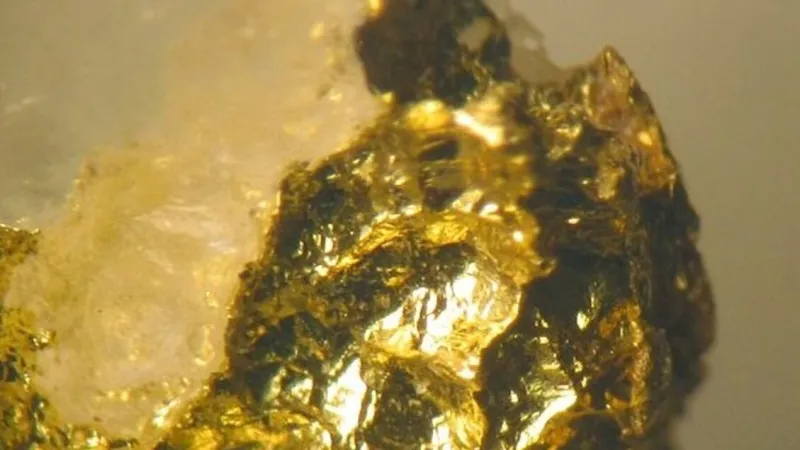
Scientists are now investigating compelling evidence suggesting a colossal meteorite impact over 100 million years ago may have enriched Australia's geological landscape with significant gold deposits. A newly studied 4-kilometer crater in the Australian outback offers key insights into this ancient cosmic event, potentially reshaping understanding of the continent's mineral wealth.
The striking geological features within the 4 km diameter structure, located in a remote part of Western Australia, point to an extraterrestrial collision of immense power. Researchers have identified unique mineral signatures and shock metamorphism, indicators synonymous with high-velocity impacts, aligning with the projected timeline of over 100 million years ago.
The hypothesis posits that the meteorite, in addition to excavating a massive crater, would have either directly delivered gold-rich material to the Earth's surface or, more likely, initiated geological processes that concentrated existing deep-seated gold deposits. The immense energy released could have fractured crustal rocks, creating pathways for hydrothermal fluids to carry and precipitate gold.
Australia is globally renowned for its vast gold reserves, particularly in regions like the Yilgarn Craton. Traditional geological models attribute these deposits largely to ancient volcanic activity and tectonic plate movements over billions of years. This new research introduces a compelling extraterrestrial factor into this complex geological narrative.
The discovery challenges, or at least significantly augments, conventional theories of ore body formation. Geologists have long debated the precise mechanisms by which some of the world's richest gold fields came into being. An ancient meteorite impact provides a powerful mechanism for rapid, localized alteration of crustal chemistry and structure.
While the identified crater is a primary focus, the study opens avenues for re-evaluating other lesser-understood gold-rich areas across the continent. Understanding such a specific, high-energy event could guide exploration efforts toward zones with similar geological profiles that might have experienced related cosmic interactions.
Future research aims to precisely date the impact event and analyze the isotopic composition of gold samples from the region. This detailed analysis could differentiate between terrestrial gold processed by impact-induced events and any potentially extraterrestrial gold delivered by the meteorite itself, a distinction critical for validating the hypothesis.
Geologists familiar with impact dynamics note that while rare, such events possess the energy to profoundly influence planetary geology. They emphasize the need for rigorous peer review and further sample collection to solidify the connection between the impact and gold mineralization.
The implications extend beyond Australia, offering a broader understanding of how early Earth's geological evolution might have been shaped by cosmic bombardment. Planetary scientists continually seek to understand the role of impacts in the distribution of valuable elements on Earth and other celestial bodies.
This ongoing investigation into an ancient Australian crater highlights the intricate and often dramatic interplay between Earth and its cosmic environment. It serves as a potent reminder that the very ground beneath our feet may hold secrets forged in the fires of distant space, millions of years before human existence.