 Debby Wijaya
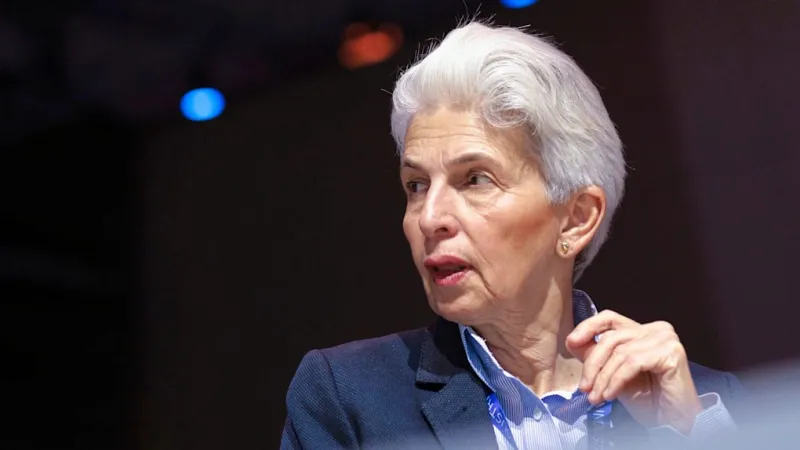
BERLIN – A controversial address by leading Free Democratic Party (FDP) figure Marie-Agnes Strack-Zimmermann at the party's recent Federal Party Congress has significantly damaged the FDP's standing, raising critical questions about its political viability and its potential as a liberal alternative for voters gravitating towards the Alternative for Germany (AfD). Political analysts widely perceive her performance as a misstep that could further marginalize the party.
The core issue revolves around whether the FDP can genuinely position itself as a centrist, liberal counterweight to the rising populist AfD, or if its current trajectory will relegate it to a minor political entity. Strack-Zimmermanns remarks, details of which have drawn extensive commentary, are seen as exacerbating internal divisions and alienating potential supporters.
The party has grappled with declining poll numbers and an identity crisis for several years. Recent leadership challenges and internal strife, including discussions surrounding the role of figures like Wolfgang Kubicki, highlight the deep ideological rifts within the FDP. Reports suggest Kubicki secured FDP leadership amidst such internal strife.
Observers suggest that the path for the FDP to become a true liberal alternative for disenchanted AfD voters requires a clear, unified message and a strong, unblemished public image. Strack-Zimmermanns appearance at the Bundesparteitag, however, appears to have undermined these crucial elements, fostering an image of internal disarray rather than decisive leadership.
Her statements, though not explicitly detailed in the RSS, were interpreted by many as either too divisive, out of touch, or failing to resonate with the broader electorate the FDP seeks to attract. This further complicates the party's efforts to differentiate itself from coalition partners while maintaining its distinct liberal profile.
Germany's political landscape remains highly fluid, with mainstream parties struggling to contain the surge of the AfD. The FDP, a traditional force in German politics, faces immense pressure to redefine its appeal, especially in an era of heightened polarization. Pope Francis has also warned that polarization and contempt imperil global peace, reflecting a broader societal concern.
The question of whether the FDP can unite Germanys divided liberals under new leadership, potentially under figures like Kubicki, becomes even more pressing in the wake of Strack-Zimmermanns controversial address. Many wonder if Kubicki can truly unite Germany's divided liberals.
Critics within and outside the party argue that such public missteps impede the FDPs ability to offer credible solutions to complex national issues, from economic challenges to social cohesion. Germany's leaders, including those from the FDP, have been attempting to push a positive narrative amidst a harsh economic reality, a task made more difficult by internal friction.
The party faces a dual challenge: attracting voters from the moderate center who may feel unrepresented by the larger parties, and simultaneously preventing further defection to the AfD. This strategic tightrope walk demands exceptional messaging and internal discipline.
Some political strategists had hoped the FDP could serve as a bulwark against the AfD's influence by offering a compelling liberal alternative. However, incidents like the one involving Strack-Zimmermann weaken this potential, making it harder to convince voters that the FDP offers a stable and principled option.
A cohesive FDP is seen by some as essential for maintaining a strong liberal voice within Germany's governing coalition. Without such cohesion, the party risks losing its distinct identity and bargaining power.
The implications of the latest internal tensions extend beyond party politics, potentially impacting the stability and direction of the broader German political landscape. The ongoing debate surrounding the FDP's future is therefore of national significance.