 Stefani Rindus
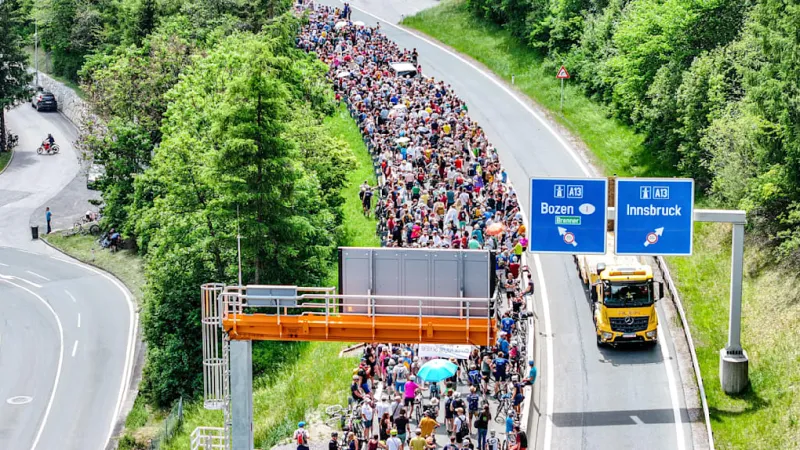
BRENNER PASS – Thousands of environmental activists and local residents converged on the Brenner Autobahn recently, staging a significant protest against the overwhelming transit traffic burden. While authorities anticipated widespread gridlock, Austrian police effectively managed the demonstration, turning back 219 heavy goods vehicles and preventing the feared traffic chaos along the critical European transit route.
The demonstration underscored long-standing frustrations among communities situated along the vital alpine crossing, a conduit for millions of trucks annually between northern and southern Europe. Organizers highlighted the detrimental impact of exhaust fumes, noise pollution, and infrastructural strain on the fragile alpine ecosystem and resident quality of life.
Protestors, many holding banners decrying the unsustainable volume of commercial transit, temporarily halted traffic flow at key points. Their primary demand called for a substantial shift from road to rail freight, advocating for greater investment in sustainable transport alternatives like the Brenner Base Tunnel.
Police forces from both Austrian and Italian sides of the border coordinated efforts to contain the protest and minimize disruption to essential services. Their proactive measures included diverting traffic and establishing checkpoints to manage the influx of vehicles, particularly heavy goods transport.
Specifically, Austrian police intercepted 219 trucks attempting to access the affected sections of the autobahn, rerouting them to alternative holding areas or instructing them to wait out the protest. This strategic intervention proved crucial in mitigating the potential for extensive queues and complete motorway paralysis.
Despite the large turnout, the authorities reported no significant incidents of violence or widespread arrests. The demonstration, though disruptive, remained largely peaceful, reflecting a collective desire to draw attention to a pressing regional issue rather than incite confrontation.
The Brenner Pass, a natural gateway through the Eastern Alps, serves as one of Europes busiest land routes. Its economic significance is undeniable, facilitating trade worth billions of euros annually. However, this economic benefit often comes at a steep environmental and social cost to the local populace.
This recent protest mirrors a recurring pattern of public outcry over transalpine traffic. Local governments and environmental groups have persistently lobbied for stricter regulations on truck traffic, including night driving bans and increased tolls, to encourage a modal shift.
Efforts to alleviate road congestion have long centered on the development of the Brenner Base Tunnel, a massive railway project designed to significantly increase rail freight capacity. While construction progresses, its full operational impact remains years away, leaving communities to contend with current traffic levels.
The incident also brings into sharper focus the vulnerability of the transit infrastructure. Previous disruptions, such as reported acts of Brenner Rail Line Sabotage Cripples Northern Italy Transit, underscore the delicate balance required to maintain smooth passage through the Alps.
Representatives from local councils expressed solidarity with the protestors concerns, emphasizing the need for European Union-level policy changes. They advocate for a comprehensive alpine transit strategy that prioritizes environmental protection and regional well-being alongside economic efficiency.
For now, the Brenner Autobahn has fully reopened, with traffic flowing normally. Yet, the underlying tensions persist. The protest served as a potent reminder to policymakers of the urgent demand for sustainable solutions to the chronic traffic problem plaguing the Brenner region.
The sustained advocacy by residents and environmental organizations highlights a growing impatience with incremental changes. Their message is clear: more radical and immediate action is needed to safeguard the alpine environment and improve local quality of life.
The debate over transit policy at the Brenner represents a microcosm of broader European challenges regarding infrastructure, trade, and environmental stewardship. Balancing these competing interests continues to be a complex task for national and supranational governing bodies.
Observers suggest that without concrete steps towards significant rail expansion and stricter road usage policies, such protests will likely become more frequent and potentially more disruptive in the years to come, reflecting persistent public dissatisfaction.