 Edward DP Situmorang

ROME – The Kremlin reportedly possesses plans for potential sea-based drone attacks targeting Italy, France, and Spain, according to intelligence disclosed by the United States Central Intelligence Agency. This revelation, initially reported by Spanish newspaper El Mundo, suggests a significant escalation in Russia's aggressive posture towards Western European nations, with capabilities that could impact broad swathes of the Mediterranean region.
The Spanish daily El Mundo cited CIA intelligence reports in its exposé, detailing how Moscow has developed strategies to deploy unmanned aerial and naval vehicles from the sea. These purported plans indicate a sophisticated and covert approach to projecting power and potentially causing disruption far beyond Russia's immediate borders.
For Italy, a nation with extensive coastlines and critical maritime infrastructure, the threat is particularly acute. The intelligence suggests that almost the entire Italian peninsula could fall within the operational range of these sea-launched drones, raising profound concerns for national security and economic stability. Italy has historically been a crucial NATO ally, making any direct threat from Russia a matter of serious international alarm.
Similarly, France and Spain, with their vital Mediterranean ports and naval assets, face comparable risks. The prospect of uncrewed vessels or aircraft launching from clandestine positions in international waters complicates traditional defense strategies, demanding enhanced vigilance and anti-drone countermeasures across Southern Europe.
These potential attacks, if executed, would likely involve advanced autonomous systems capable of reconnaissance, surveillance, or even precision strikes. The use of sea-based platforms offers Russia a degree of deniability and operational flexibility, allowing for deployments closer to target areas without requiring overt air or ground incursions.
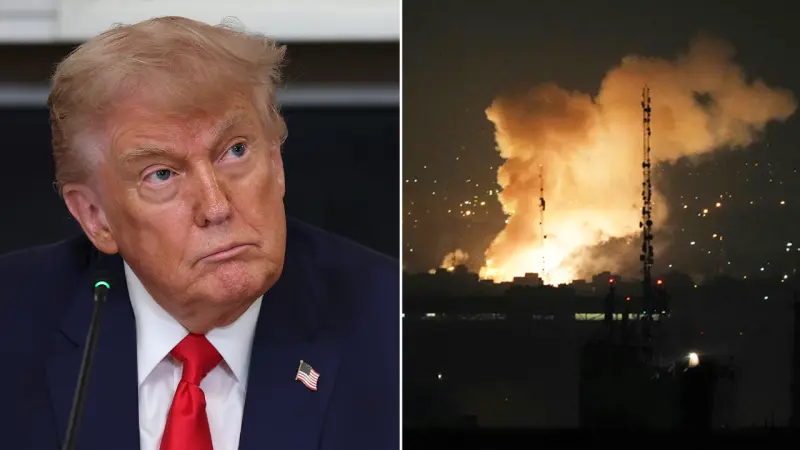
The disclosure surfaces amidst a period of heightened geopolitical tension between Russia and Western powers. Relations have remained strained since Russia's aggressive actions in Eastern Europe, pushing NATO members to re-evaluate their defense readiness. President Donald Trump has consistently addressed Russia's actions on the global stage, often demanding a cessation of hostilities, as he did when he "demanded Putin halt war" at the United Nations.
Intelligence analysts suggest that the Kremlin's motivation for developing such plans could range from intimidation tactics to preparation for potential asymmetric warfare. The ability to launch Russian sea drone attacks remotely from maritime zones presents a significant challenge to conventional naval defenses and border security protocols.
While specific responses from Rome, Paris, or Madrid have not been officially detailed following this particular intelligence leak, European Union and NATO officials have consistently underlined the importance of collective defense and intelligence sharing to counter emerging threats. The news will undoubtedly prompt renewed discussions on bolstering maritime surveillance and cyber defenses.
The threat of Russian sea drone attacks underscores a shifting landscape in modern warfare, where technology offers new avenues for aggression and asymmetric tactics. This paradigm shift necessitates comprehensive security reviews and investments in advanced defensive systems by European nations.
The CIA's reported disclosure highlights the ongoing intelligence efforts by the United States to monitor and preempt potential threats from adversarial states. Such intelligence sharing is crucial for maintaining stability, particularly in regions like the Mediterranean that are vital for global trade and security.
This reported strategy aligns with observed patterns of increased Russian military activity in international waters, including exercises and naval patrols that sometimes approach the territorial boundaries of NATO members. For instance, "NATO Member Poland Scrambles Jets After Russian Airspace Breach" previously, indicating a broader pattern of challenging sovereign airspace and maritime zones.
Defense analysts caution that even the existence of such Kremlin drone plans, whether implemented or not, serves as a powerful psychological deterrent and a tool for geopolitical leverage. It forces Western powers to allocate resources to new defense priorities and adapt to unconventional threats.
Beyond direct security implications, the mere perception of such a threat could have substantial economic repercussions. Maritime trade routes, energy infrastructure, and tourism in the Mediterranean region could be vulnerable to disruption, impacting the economies of Italy, France, and Spain.
This development serves as a stark reminder for European nations of the imperative for unity and a coordinated defense strategy against external aggressors. The collective security framework of NATO and the European Union becomes paramount in deterring and defending against such advanced threats.
The vigilance of intelligence agencies, coupled with robust defensive capabilities, remains the primary bulwark against the realization of such unsettling scenarios. The world watches for further details and the resolute response from the international community.