Gabriella
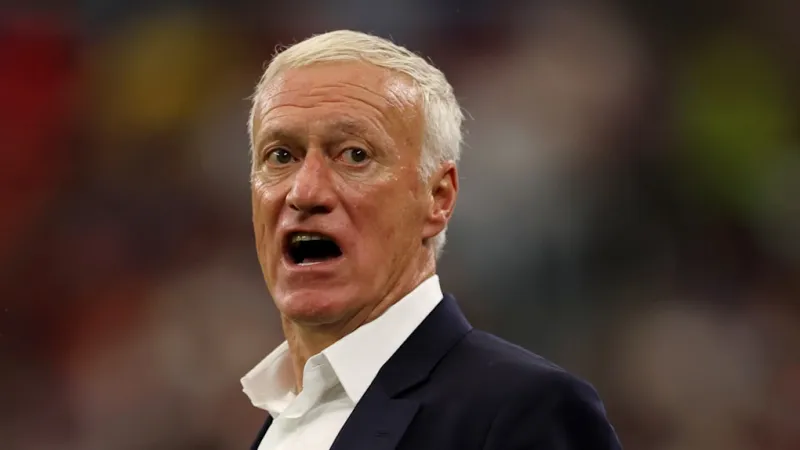
DOHA – Didier Deschamps, the departing coach of the French national football team, publicly challenged the caliber of the officiating after France's World Cup semifinal defeat against Spain in 2026. The veteran manager specifically named Ivan Barton of El Salvador, asserting that the referee lacked the requisite quality for such a pivotal match.
The contentious remarks emerged swiftly following Les Bleus 2-1 loss to a formidable Spanish side, a match that secured Spain a coveted spot in the tournament's final, as reported in Spain Clinches World Cup Final Spot As Legends Watch. While Deschamps initially acknowledged the superior performance of the Spanish squad, his focus quickly shifted to the arbitration.
Deschamps, renowned for his strategic acumen and often measured public persona, did not mince words regarding Barton's performance. He conveyed a distinct impression that the crucial contest, fraught with high stakes and intense pressure, suffered from what he perceived as substandard judgment from the match official.
This dramatic exit for France, a pre-tournament favorite, marked an anticlimactic end to their World Cup aspirations. The semifinal clash, anticipated as a tactical masterpiece, instead concluded with a lingering question mark over the integrity of its management on the pitch.
Ivan Barton, an international referee with a growing reputation, faced immense scrutiny under the bright lights of the World Cup semifinals. His appointment to one of the tournament's most significant fixtures underscored the trust placed in him by the officiating committee, a trust now openly challenged by one of footballs most respected figures.
The French camp, having shifted their squad and ceded favoritism ahead of the Spain semifinal, according to earlier reports like France Shifts Squad, Deschamps Cedes Favoritism Ahead of Spain Semifinal, had prepared meticulously for a challenging encounter. Deschamps prior remarks about Spain being the stronger team now seemed to underscore the perceived injustice of the officiating in his post-match assessment.
Such pointed criticism from a national coach carries significant weight, potentially triggering investigations by FIFA's disciplinary committees into the comments themselves or, conversely, prompting a review of the referee's performance. The incident reignites ongoing debates about referee quality and consistency at the highest echelons of international football.
The discourse surrounding refereeing standards has become a recurring theme in major tournaments, amplified by advancements in technology like VAR. Despite these tools, subjective human error remains a flashpoint for controversy, particularly when national pride and championship dreams hang in the balance.
Observers and pundits across global media outlets immediately seized upon Deschamps statements, fueling widespread discussion about the pressures faced by officials and the expectations from top-tier coaches. The incident adds another layer to the complex narrative of the World Cup, where every decision can alter destiny.
For France, the defeat signals the end of an era under Deschamps, whose tenure as national coach concluded with this semifinal exit. His final public comments as manager, centered on officiating, provide a stark reflection of the deep-seated frustrations that can accompany competitive failure at the pinnacle of the sport.
The questions raised by Deschamps will undoubtedly resonate throughout the football world, prompting renewed calls for rigorous evaluation and continuous training for referees assigned to high-pressure international matches. Ensuring impeccable referee quality remains paramount for the fairness and integrity of the beautiful game.