 Chris Robert
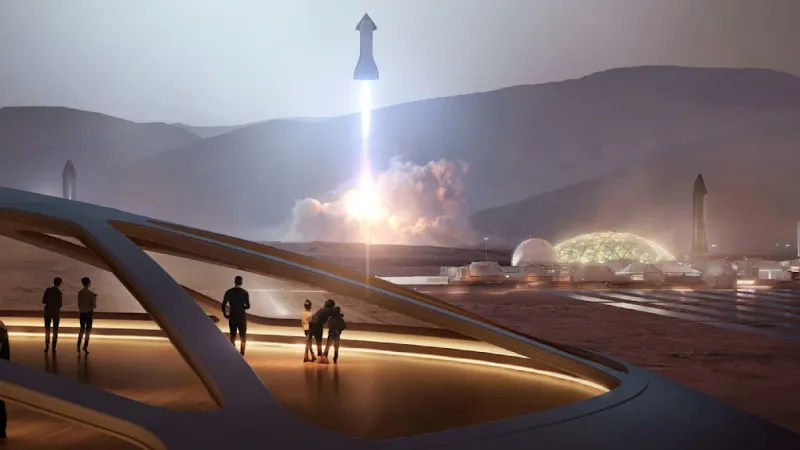
In an unprecedented move within a financial document, Elon Musk, CEO of SpaceX, has starkly outlined what he terms 'existential threats' to Earth in the company's latest stock prospectus, presenting Mars as humanity's ultimate refuge and a critical investment opportunity. This unconventional disclosure signals a fundamental departure from typical corporate transparency, instead leveraging a deeply pessimistic view of our home planet to underscore the imperative of multi-planetary existence.
The document, intended to inform potential investors about the company's future and risks, reveals Musk's long-held philosophical underpinnings for SpaceX's ambitious Mars colonization program. He does not merely allude to future challenges; he directly describes humanity's current trajectory as leading to potentially uncontrollable, planet-wide crises.
Traditionally, a company prospectus meticulously details financial performance, market risks, regulatory challenges, and operational strategies. Musk, however, breaks from this convention by infusing the financial narrative with a powerful, almost apocalyptic, vision of Earth's inevitable decline if humanity remains a single-planet species.
This strategy forces investors to consider not just the monetary returns but also the profound, existential purpose driving SpaceX. By framing Mars colonization as an urgent necessity rather than a speculative venture, Musk reframes the investment proposition as a contribution to humanity's long-term survival.
The language employed is strikingly dualistic. While depicting Earth's future with brutal pessimism, the prospectus also paints a poetic and hopeful picture of Mars as a new frontier, a beacon for civilization's continuation. This contrast serves to amplify the urgency of SpaceX's mission and the scale of its ambition.
Industry analysts are observing how this distinctive approach will influence investor sentiment. Some may view it as an inspiring, albeit dramatic, articulation of a grand vision, while others might question the appropriateness of such philosophical pronouncements within a formal financial disclosure.
Musk's consistent advocacy for establishing a self-sustaining civilization on Mars has been a cornerstone of his public persona and SpaceX's declared mission. Including this conviction in a legally binding financial document, the SpaceX prospectus, elevates it from personal belief to a foundational tenet of the company's value proposition.
The 'existential threats' mentioned remain broad in the prospectus, encompassing potential environmental catastrophes, resource scarcity, societal instability, or unforeseen global events that could render Earth uninhabitable for advanced civilization. The document implicitly argues that diversification across planets is the only viable long-term insurance policy for humanity.
Developing the technology and infrastructure for Mars colonization represents one of the most audacious engineering and financial undertakings in human history. The prospectus highlights the immense capital required and the decades-long commitment necessary to realize Musk's vision.
Ultimately, this unprecedented communication in the SpaceX prospectus challenges the conventional understanding of corporate responsibility, suggesting that for companies like SpaceX, the ultimate fiduciary duty extends beyond quarterly earnings to the very survival of the species. It invites investors to participate in a grand narrative of human perseverance against planetary odds, making the investment case as much about destiny as it is about dollars.