 Angela Stefani
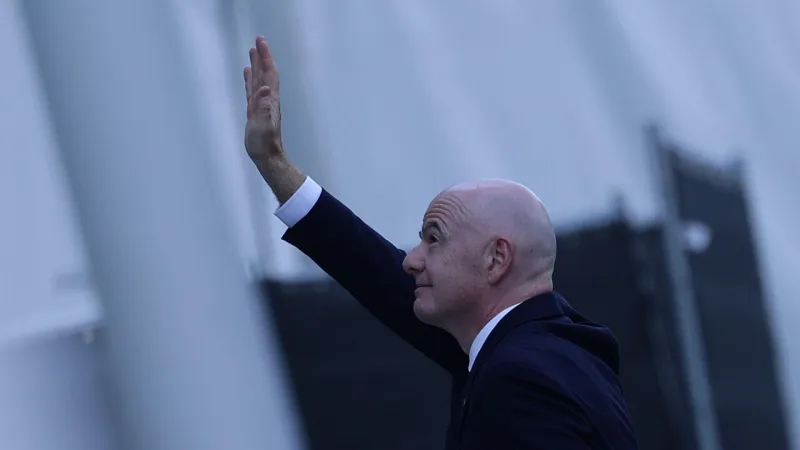
ROME – FIFA President Gianni Infantino recently stated he would consider evaluating a significant expansion of the World Cup to include 64 teams, a move that would dramatically reshape global football’s premier tournament.
Speaking with Swiss media outlet Bluewin, Infantino articulated a vision rooted in broad inclusion, asserting that "everyone must be able to participate" in the pinnacle of international football.
This declaration comes as the tournament already prepares for an expansion to 48 nations starting with the 2026 edition, which the United States, Canada, and Mexico will co-host.
The potential leap to 64 teams signifies an even more ambitious restructuring, proposing an increase of 16 additional national squads beyond the already planned enlargement.
Such a proposition underscores Infantino's persistent advocacy for widening access to the World Cup, a principle he has consistently championed since assuming FIFA's top leadership position.
Observers note that a 64-team World Cup would present considerable logistical and infrastructural challenges for prospective host nations. It would necessitate an even greater number of venues, training facilities, and robust transportation networks.
Economically, the implications could be vast, potentially generating increased revenue through broadcast rights, sponsorships, and ticketing, but also demanding substantial initial investment from organizing committees.
From a competitive standpoint, an expanded field would undoubtedly offer more opportunities for emerging footballing nations to compete on the global stage, aligning with FIFA's stated objective of developing the sport worldwide. For instance, young talents like Spanish stars Nico Williams and Lamine Yamal, who recently celebrated their World Cup birthdays, represent the future of this global tournament.
However, concerns could arise regarding the potential dilution of competitive quality in the early stages of the tournament, a frequent point of debate whenever major sporting events consider expansion.
Player welfare also enters the discussion, as more teams would translate to a greater number of matches overall, potentially increasing the physical demands on athletes already facing rigorous club schedules.
The current 48-team format, set to debut in 2026, will feature 104 matches, a significant jump from the 64 matches played in the 32-team format previously.
A further expansion to 64 teams would necessitate careful consideration of the tournament structure, including group stage formats and knockout rounds, to ensure a manageable schedule and maintain competitive integrity.
Infantino's comments reflect a long-standing FIFA ambition to make the World Cup a truly global celebration, extending its reach beyond traditional football powerhouses.
This move aligns with broader efforts to democratize football, ensuring federations from all continents feel they have a realistic pathway to participate in the sport's most prestigious event.
While an official proposal for a 64-team World Cup has not yet been formalized, Infantino's remarks signal a clear willingness from the organization's leadership to explore such transformative possibilities.
The evaluation process would likely involve extensive consultations with confederations, national associations, and other key stakeholders within the international football community.
Ultimately, the decision to further expand the World Cup beyond 48 teams would represent a pivotal moment for FIFA, shaping the future trajectory of global football for decades to come.
It underscores a commitment to the vision that football's biggest spectacle should offer a chance for every nation, regardless of its current footballing stature, to dream of participation.