 Chris Robert
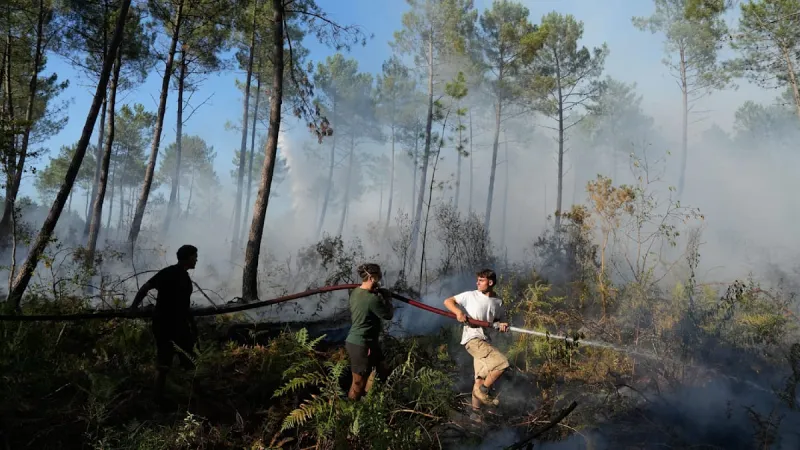
BORDEAUX, France - Uncontrolled and ferocious wildfires are tearing through southwestern France, placing the iconic city of Bordeaux under imminent threat and exposing significant deficiencies in regional emergency preparedness. Authorities grapple with the escalating blazes, which have already necessitated widespread evacuations in surrounding areas, as concerns mount over the potential chaos should Bordeaux itself require a large-scale exodus.
The intense heat and relentless winds are fueling the inferno, making containment efforts exceedingly difficult for thousands of firefighters battling the natural disaster. The fires, described by experts as a display of nature's raw power, have already consumed vast tracts of forest and farmland, pushing smoke plumes high into the atmosphere and casting an ominous shadow over the Gironde department.
Albrecht Broemme, former president of Germany's Federal Agency for Technical Relief (THW), voiced stark warnings regarding the region's readiness for a crisis of this magnitude. Broemme emphasized the lack of a coherent strategy for potential urban evacuations, a critical oversight given the scale of the ongoing environmental catastrophe.
"If evacuation were necessary," Broemme stated, "then that would certainly be a problem, because there is neither a general plan nor individual plans for it." This assessment underscores a significant vulnerability for densely populated areas like Bordeaux, where a rapid, organized departure of residents would be paramount for safety.
The current situation reflects a dire culmination of climate-related challenges that have plagued France in recent years. Prolonged droughts, exceptionally high temperatures, and strong winds create ideal conditions for wildfires to ignite and spread with terrifying speed and intensity, overwhelming conventional firefighting strategies.
Regional officials have called for international assistance, highlighting the strain on local resources. Firefighting crews from across Europe are reportedly being mobilized to aid their French counterparts, who have been working around the clock to establish firebreaks and protect critical infrastructure.
While the immediate focus remains on containing the current blazes and safeguarding lives, the long-term implications for the affected ecosystems and local economies are substantial. Agriculture, tourism, and forestry, vital sectors in the Nouvelle-Aquitaine region, face immense disruption and years of recovery.
The French government, led by President Emmanuel Macron, has acknowledged the severity of the crisis. President Macron previously warned of "hard weeks" ahead for the nation as it confronts the widespread wildfires, signaling a prolonged and arduous battle against the encroaching flames. The full extent of the environmental and economic damage remains undetermined as the fires continue their destructive path. For further context on the national response, readers can refer to Macron Warns of "Hard Weeks" Amid Raging French Wildfires.
Experts suggest that urban planners and emergency services must urgently revisit and update disaster response protocols, particularly concerning mass evacuations in the face of climate change driven events. The unique challenges posed by rapidly advancing wildfires demand adaptable and comprehensive strategies to protect populations.
The call for preparedness extends beyond immediate fire suppression, emphasizing the need for robust communication networks, designated evacuation routes, and clear public information campaigns. The lack of such detailed planning, as highlighted by Broemme, could transform a natural disaster into a humanitarian crisis.
Residents in the immediate vicinity of Bordeaux are monitoring the situation closely, with many on standby for potential evacuation orders. The air quality has significantly deteriorated, prompting health warnings, especially for vulnerable populations, as smoke blankets large areas of the region.
The current wildfires serve as a stark reminder of the increasing frequency and intensity of extreme weather events globally, urging governments and communities worldwide to enhance their resilience and adaptive capacities against the effects of a changing climate.