Debby Wijaya
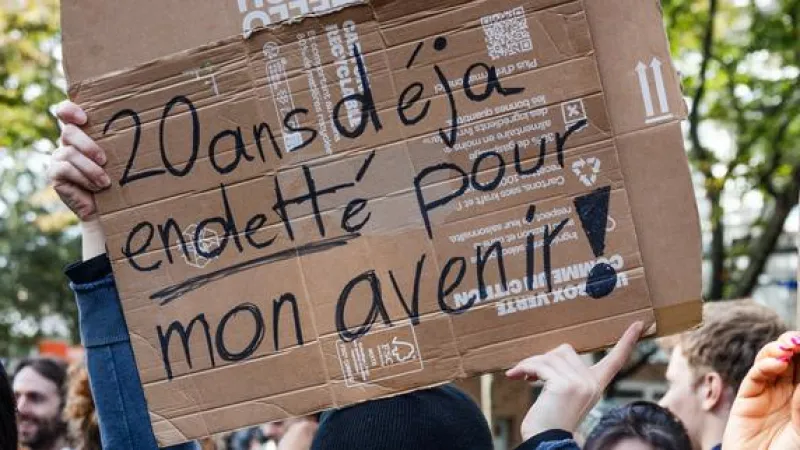
Nicolas Boucaud-Bialchuk, a high school senior from the Nantes region of France, recently articulated the profound frustrations fueling the ongoing French student movement in a compelling op-ed published by Le Monde. He posited that the widespread demonstrations signify a deeply ingrained anger rather than an uncontrollable adolescent crisis, directly challenging the perception of student unrest.
Boucaud-Bialchuks trenchant analysis underscores a pervasive sentiment among students: a profound feeling of abandonment by public authorities concerning the nation's educational system. This perception, he argues, forms the bedrock of the students' collective outcry, transcending mere youthful rebellion.
The student movement, characterized by various forms of protest across France, has consistently sought to draw attention to systemic issues affecting the quality of education and the welfare of students. These actions, often met with skepticism or dismissal, are now being reframed by student leaders as legitimate responses to neglect.
According to Boucaud-Bialchuk, the perceived neglect manifests in several critical areas. Students frequently cite insufficient resources, overcrowded classrooms, inadequate infrastructure, and a lack of support for diverse learning needs as primary concerns.
He detailed how policy decisions by government bodies often appear disconnected from the daily realities faced by students and educators. This perceived disconnect exacerbates the feeling that their voices are unheard and their concerns are unaddressed.
The op-ed highlights a growing weariness with explanations that attribute student activism to typical teenage angst. Instead, Boucaud-Bialchuk contends that the demonstrations are a logical consequence of promises unfulfilled and a future that feels increasingly uncertain.
The sentiment resonates with observations from various educational stakeholders. Teachers, often on the front lines, have also voiced concerns about declining conditions and the pressure on students. For instance, reports have detailed instances where Teachers Condemn 'Wall of Violence' Against French Student Protests, highlighting the intensity of the situation.
Boucaud-Bialchuk stressed that these protests serve as a powerful assertion of students' agency, demanding accountability and meaningful dialogue from decision-makers. The movement aims to shift the narrative from one of disruption to one of legitimate grievance.
Historically, student movements in France have played a pivotal role in national discourse and policy changes, from the May 1968 events to more recent mobilizations against education reforms. The current wave fits into a long tradition of youth activism shaping the country's social and political landscape.
The student leaders call for recognition of their legitimate concerns, urging public authorities to engage in constructive dialogue rather than dismiss their actions. They seek substantive changes that address the structural issues impacting their educational experience.
Observers suggest that ignoring these calls risks further alienating a significant segment of the youth population, potentially leading to more sustained and intensified forms of protest. The future stability of the French education system, and by extension, its society, hinges on addressing these core grievances.
The student's article in Le Monde represents a significant moment for the movement, providing a platform for students to articulate their motivations directly to a wider public and governmental audience. It serves as a stark reminder that young people's discontent can herald broader societal shifts.