 Stefani Rindus
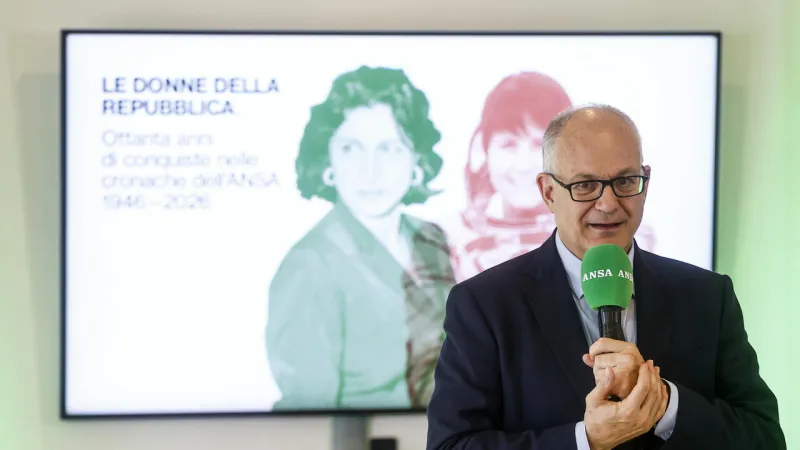
Rome Mayor Roberto Gualtieri, speaking at a prominent ANSA exhibition, critically highlighted a persistent deficit in women's representation across various sectors of Italian society. His remarks underscored the continuing challenge of achieving gender parity and the pivotal role of media in documenting and influencing national progress.
The mayor's observation came during his visit to the news agency's latest display, which chronicles significant aspects of Italian life. He emphasized that despite decades of social evolution, women still face systemic barriers to equal participation in public and professional spheres.
Gualtieri specifically praised ANSA for its comprehensive journalistic endeavors. "I thank the Agency that documents the life of our country in a qualified way," he stated, acknowledging the news organization's vital contribution to public discourse and historical record-keeping.
The exhibition itself provides a rich tapestry of Italy's journey, making Gualtieri's comments particularly pertinent. It serves as a visual and textual archive, inviting reflection on societal transformations and the areas where further advancement is critically needed.
This exhibition aligns with previous efforts by the agency, such as ANSA Chronicles 80 Years of Italian Women's Progress in Rome Exhibition, which meticulously documented the milestones and ongoing struggles faced by Italian women over nearly a century. The continuity of these themes suggests a sustained commitment to highlighting gender dynamics.
Italy, like many European nations, has a complex history regarding women's rights and opportunities. While significant strides have been made since the post-war era, with women gaining access to higher education and entering traditionally male-dominated professions, leadership roles and political representation often lag.
A deficit in women's representation is not merely an issue of fairness; it has tangible societal consequences. When diverse voices are absent from decision-making bodies, policies may fail to adequately address the needs and experiences of half the population, affecting areas from healthcare to economic development.
This underrepresentation is frequently observed in politics, corporate boardrooms, scientific research, and even within media organizations themselves. The lack of female role models in prominent positions can also perpetuate unconscious biases and limit aspirations among younger generations.
The issue of female representation resonates far beyond Italian borders, constituting a global challenge. International reports consistently highlight disparities in political, economic, and social participation for women across continents, underscoring the universal nature of Gualtieri's concerns.
Addressing this persistent gender representation deficit requires multi-faceted approaches, including legislative reforms, educational initiatives, and proactive measures by institutions to promote inclusivity. Media outlets, by shaping public perception and providing platforms for diverse voices, play an indispensable role in this ongoing effort.
Statements from influential public figures like Mayor Gualtieri are crucial in keeping the conversation alive and pressuring institutions to take concrete steps toward greater equity. Such acknowledgments validate the experiences of many and encourage continued advocacy.
As Italy continues to navigate its path in the 21st century, the call for balanced gender representation remains a critical pillar of true societal progress. The ANSA exhibition, framed by Gualtieri's insightful observations, stands as a reminder that the journey towards full equality is still underway.