 Dodi Irawan
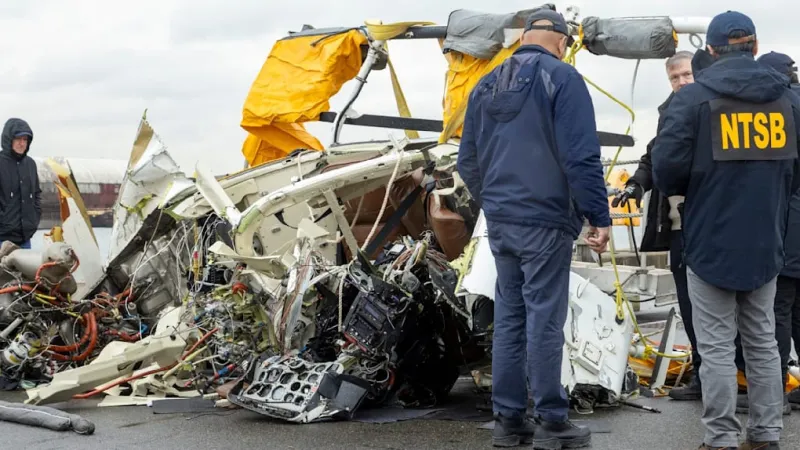
The National Transportation Safety Board (NTSB) on Thursday announced the definitive cause of the tragic 2024 helicopter crash in the Hudson River, which claimed six lives, including a Spanish family on a sightseeing tour and their experienced pilot. The long-awaited findings bring a measure of closure to a more than year-long investigation into the devastating incident that shocked the nation.
The ill-fated flight carried a family of four from Spain, who were experiencing an aerial tour of New York City's iconic skyline. Alongside them was the single pilot, a veteran aviator whose expertise was expected to ensure a safe journey. Their excursion turned catastrophic when the Airbus AS350 B2 helicopter plunged into the waters of the Hudson.
According to the NTSB's comprehensive report, the primary cause of the accident was identified as a catastrophic mechanical failure within the main rotor system. Investigators determined that a fatigue fracture in a critical component led to an uncommanded pitch link separation, compromising the aircraft's control authority instantaneously.
Further analysis indicated that the mechanical failure was exacerbated by a sudden, localized downdraft encountered during the flight. While not the sole cause, this environmental factor significantly reduced the pilot's already diminished ability to recover the aircraft after the primary mechanical fault developed, sealing the helicopter's fate.
The investigation spanned over 15 months, involving meticulous reconstruction of the wreckage, extensive metallurgical analysis of failed components, and detailed review of flight data recorders and air traffic control communications. NTSB Chair Jennifer L. Homendy emphasized the complexity of the inquiry, highlighting the agency's commitment to thoroughness over speed.
As a direct result of these findings, the NTSB issued several urgent safety recommendations to the Federal Aviation Administration (FAA) and helicopter manufacturers. These include enhanced inspection protocols for main rotor components, revised maintenance schedules, and updated pilot training focused on emergency procedures for rapid control loss.
The incident has reignited discussions within the aerial tour industry regarding safety standards and regulatory oversight. Operators of similar aircraft models are expected to implement the NTSB's recommendations swiftly, potentially leading to a temporary grounding of certain fleets for mandatory inspections, ensuring passenger safety remains paramount.
While the NTSB report provides technical answers, it offers little solace to the grieving families. A spokesperson for the Spanish Consulate in New York reiterated the profound sorrow felt by the victims' relatives, stating that they hoped the findings would prevent similar tragedies in the future. The NTSB acknowledged the devastating loss, underscoring its role in improving transportation safety.
The Hudson River has unfortunately been the site of several aviation incidents over the years, though fatal sightseeing helicopter crashes are rare. This latest tragedy underscores the inherent risks, however small, associated with aerial tourism and the critical importance of stringent safety checks.
Aviation experts suggest that advanced monitoring systems and predictive maintenance technologies could play a crucial role in preventing future mechanical failures of this magnitude. The FAA is expected to review the NTSB's recommendations with urgency, potentially leading to new regulations designed to bolster the safety margins for all commercial rotorcraft operations.
The arduous process of uncovering the truth behind such a devastating loss echoes the prolonged inquiries into other major incidents where families sought answers, such as the Family Perishes in Tragic Harz Tower Fall, Inquiry Launched, where investigations also aimed to understand the root causes of sudden, catastrophic events.
Ultimately, the NTSB's detailed report serves not only to identify the specific failure but to guide future preventative actions. It stands as a testament to the ongoing commitment to making air travel safer, even as it closes a painful chapter for the families affected by the Hudson River helicopter crash.