 Debby Wijaya
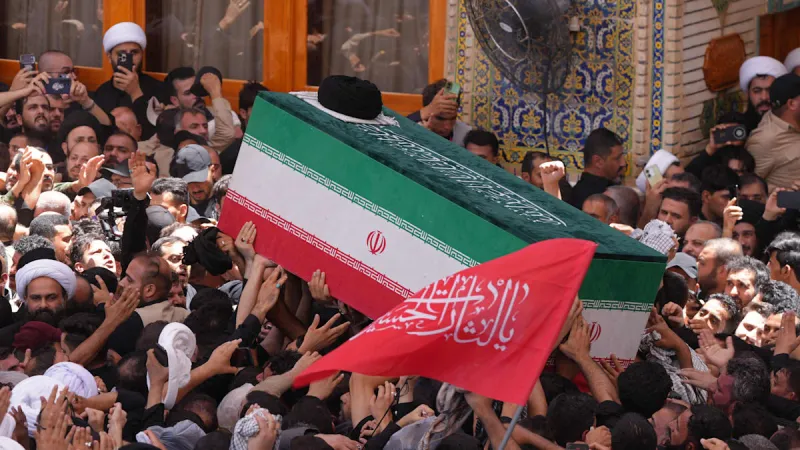
Hundreds of thousands gathered across Iran for multi-day mourning ceremonies honoring a prominent national leader, an event critics like German FDP lawmaker Bijan Djir-Sarai assert the Iranian regime deftly leveraged to project public strength while signaling deep-seated disinterest in pursuing a lasting peace agreement.
The vast public turnout, widely broadcast by state media, transformed the solemn occasion into a potent display of national unity and resilience. Analysts suggest the sheer scale of participation aimed to project an image of unwavering popular support for the ruling establishment amidst ongoing international scrutiny and domestic challenges.
Djir-Sarai, a vocal critic of Tehran's foreign policy, minced no words in his assessment. "For this regime, this is a wonderful opportunity to publicly demonstrate strength," he stated, highlighting the strategic utility of such mass gatherings for internal and external messaging.
Beyond the spectacle of public mourning, Djir-Sarai went further, directly addressing the regime's posture toward diplomatic resolutions. He affirmed, "This regime has no interest in a peace agreement coming about," a statement that casts a shadow over any prospects for de-escalation in regional tensions.
This assertion resonates with long-standing concerns among international observers regarding Tehran's approach to global diplomacy. Critics often point to Iran's robust regional influence operations and its refusal to engage in certain negotiation frameworks as evidence of its reluctance to compromise on strategic objectives.
The broader regional implications of Iran's geopolitical strategies have been a consistent focus for international security dialogues. The possibility of an escalating conflict in the region, for instance, remains a pressing concern for European nations, as noted in previous analyses suggesting that an Iran conflict imperils Europe more than US. This underscores the urgency of understanding Tehran's true intentions regarding peace.
State-organized processions, speeches by high-ranking officials, and televised prayers marked the extensive mourning period. These events typically follow a meticulously planned schedule, emphasizing specific narratives that align with the Iranian regime's ideological foundations and nationalistic appeals.
Historically, similar large-scale public ceremonies in Iran have served as critical moments for the consolidation of power and the reaffirmation of the Islamic Republic's revolutionary ideals. Such events are meticulously choreographed to project an image of an unyielding and divinely sanctioned leadership.
The demonstration of strength, as identified by Djir-Sarai, is not solely for domestic consumption. It also sends a clear message to regional adversaries and international powers about Iran's perceived stability and its capacity to mobilize its populace, reinforcing its position as a significant regional player.
The concept of a peace agreement in the context of Iran's foreign policy is multifaceted. It often involves concessions on its nuclear program, regional proxy support, and human rights issues, all points of contention with Western powers and neighboring states.
Efforts to broker lasting peace in the Middle East have repeatedly encountered significant hurdles, with Iran frequently cited as a key, uncooperative actor by various international bodies. The sentiment expressed by Djir-Sarai underscores the deep chasm that often separates Tehran from international consensus.
The Free Democratic Party (FDP) in Germany, to which Djir-Sarai belongs, typically advocates for robust human rights policies and a critical stance towards regimes perceived as authoritarian. His comments align with a broader European diplomatic effort to encourage dialogue while maintaining pressure on the Iranian regime for accountability.
As the international community continues to grapple with the complexities of Middle Eastern security, statements such as Djir-Sarai's serve as critical reminders of the ideological barriers that often impede diplomatic breakthroughs. The future of regional stability hinges significantly on the evolving posture of the Iranian regime.
Ultimately, the massive mourning events, while ostensibly a tribute, are viewed by some as an orchestrated political maneuver. They provide a powerful visual narrative that, for observers like Djir-Sarai, obscures any genuine commitment to de-escalation or a negotiated peace.
The juxtaposition of public grief and political maneuvering illustrates the intricate interplay between domestic sentiment and foreign policy objectives in the Islamic Republic, leaving many to question the true path forward for peace in the volatile region.