 Chandra Wijayanto
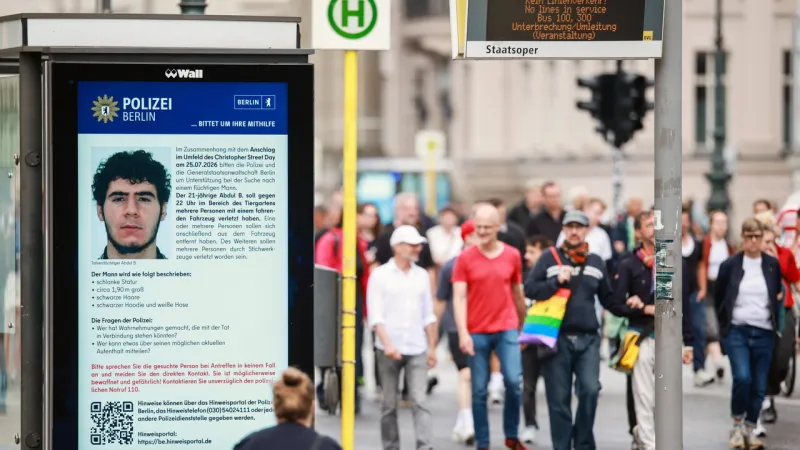
BERLIN – A 21-year-old assailant, identified as Abdul Balut and suspected of Islamist terrorism with alleged ties to ISIS, was fatally shot by police after confronting officers with a knife. The confrontation occurred following a deadly attack on a Pride event in the German capital, which left one person dead and 29 injured, sending shockwaves through the nation.
Authorities confirmed that Balut engaged police officers in Spandau, a district of Berlin, where he was neutralized after presenting a direct threat. This decisive action brought an end to a tense manhunt that began after the perpetrator initiated a vehicle attack targeting participants of the annual Christopher Street Day (CSD) parade, Berlin's prominent Pride celebration.
The attack unfolded with brutal efficiency, transforming a vibrant celebration of diversity into a scene of chaos and profound grief. Emergency services quickly descended upon the area, treating the wounded and securing the site amidst widespread panic. The sheer scale of casualties underscored the malevolent intent behind the assault.
Investigations rapidly pointed toward a motive rooted in Islamist extremism. Law enforcement officials, working in concert with intelligence agencies, swiftly classified the incident as an act of Islamist terrorism. Evidence gathered indicated the assailant possessed a deep-seated radical ideology, reportedly expressing support for the Islamic State group, or ISIS.
German Interior Minister Nancy Faeser condemned the attack unequivocally, stating, "This horrific act of violence against innocent people celebrating their freedom will not be tolerated. Our resolve to combat all forms of extremism, especially Islamist terrorism, remains unshaken." She commended the swift and courageous response of the Berlin police force, whose actions prevented further fatalities.
The tragic event prompted widespread outrage and renewed calls for heightened vigilance against radicalization. Political leaders across Germany united in their condemnation, emphasizing the importance of protecting democratic values and the rights of all citizens, regardless of their identity. The German government reaffirmed its commitment to providing comprehensive support to the victims and their families.
Security measures in Berlin and across major German cities have been significantly enhanced in the wake of the attack. Police presence at public gatherings and sensitive locations has been visibly increased, with authorities urging citizens to remain alert and report any suspicious activities. The aim is to reassure the public while maintaining a robust defense against future threats.
Previously, German authorities had been tracking potential threats linked to radical elements. The neutralization of the Berlin CSD terror suspect Abdul Balut in Spandau brings closure to one chapter but opens another regarding the ongoing struggle against extremist networks within Europe. For more details on the earlier hunt for the suspect, readers can refer to our article on the intensifying hunt for ISIS-linked suspect Abdul Ballout.
The incident serves as a stark reminder of the persistent danger posed by individuals radicalized by extremist ideologies. It underscores the critical need for continued international cooperation in intelligence sharing and counter-terrorism efforts to safeguard open societies from such heinous acts. The resilience of Berliners and the broader LGBTQ+ community, however, remains resolute, determined not to let fear dictate their lives.
As the city mourns, discussions are underway regarding memorial services and long-term support for those affected. The Berlin Pride organizers have issued a statement of profound sadness but also one of defiance, vowing to continue their advocacy for equality and peace, ensuring that love and solidarity ultimately triumph over hatred.
The full scope of Balut's network and radicalization path is now the focus of an extensive investigation. Authorities are working to determine if he acted alone or if he was part of a broader conspiracy. This inquiry seeks to uncover any potential accomplices or facilitators who may have aided his horrific plot, further solidifying Germany's resolve against terrorism. The swift action of the police in neutralizing the assailant was a critical factor in mitigating further casualties, a point acknowledged by multiple security analysts in their assessments of the incident. This critical event also follows other instances where a deadly van attack shattered Berlin Pride, prompting intensified security responses.