 Demian Sahputra
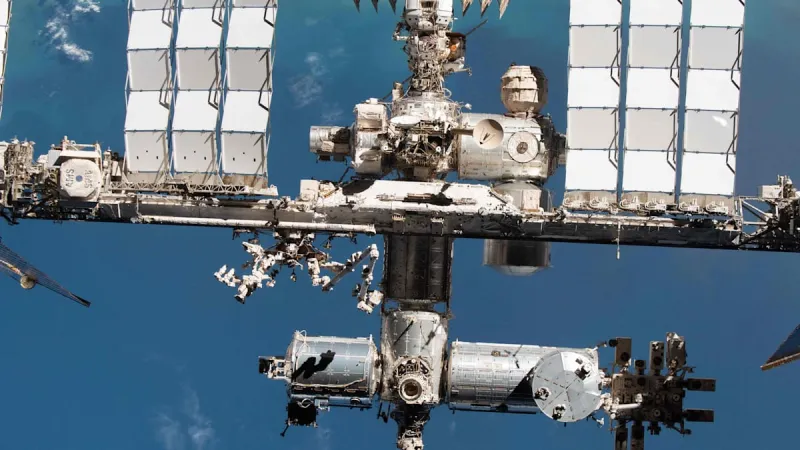
A critical leak detected aboard the International Space Station (ISS) has prompted an immediate emergency response, with the resident crew directed to evacuate into their designated safety capsules as engineers on Earth and orbiting astronauts coordinate efforts to seal the breach. This incident underscores the inherent risks of space exploration and the paramount importance of swift emergency protocols to safeguard human life in orbit.
The alarm was raised when telemetry indicated a pressure drop within a section of the orbital outpost, signaling a potential breach in the station's hull. Ground control teams swiftly analyzed the data, confirming the presence of an unwanted outflow of air.
Following established safety directives, the ISS crew immediately commenced procedures to isolate the compromised module and relocate themselves to the secure Soyuz or Crew Dragon spacecraft, which double as lifeboats in such critical situations. This action ensures their safety and readiness for an emergency return to Earth if the situation escalates.
Expert analysis suggests the leak, though concerning, is being systematically addressed. Former astronaut Ulrich Walter, a veteran of space missions, offered insights into the potential repair methodologies. "It is best done from the inside – the internal pressure then pushes the sealant into the crack," Walter explained, highlighting a common strategy for such repairs.
Walter’s statement emphasizes the physics at play in the vacuum of space. By applying a sealant from the interior, the differential pressure between the station’s atmosphere and the outer vacuum actively draws the material into the minuscule breach, creating a plug.
This internal sealing method is often preferred due to its efficiency and the avoidance of complex external spacewalks, which carry their own set of risks and require extensive preparation. External repairs are typically reserved for larger, more visible damage or components not accessible from within.
Reminiscing about historical approaches to orbital leaks, Walter also recalled less sophisticated, albeit sometimes effective, measures. He noted that in earlier days, "one always used chewing gum," illustrating the ingenuity and often improvisational nature of early space repairs. While modern solutions are far more advanced, the principle of sealing a breach remains fundamental.
The International Space Station, a marvel of international collaboration, continuously faces the challenges posed by orbital debris and micrometeoroid impacts. Its extensive operational history means that minor wear and tear, or the occasional impact, can lead to such pressure fluctuations, demanding constant vigilance.
Such an ISS leak event highlights the rigorous training astronauts undergo for emergency scenarios. Every crew member is thoroughly versed in depressurization procedures, module isolation, and the deployment of contingency plans, ensuring a calm and coordinated response under extreme pressure.
As repair efforts continue, engineers on Earth are providing real-time guidance and support, utilizing the station's sophisticated diagnostic tools to pinpoint the exact location and size of the breach. The priority remains the full restoration of the ISS to its optimal operational state and the continued safety of its inhabitants.
This incident closely mirrors past challenges faced by space agencies, including a notable event from 2018 when a small drill hole was discovered in a Soyuz spacecraft docked to the ISS, requiring similar urgent attention and repair. For more details on historical incidents, refer to ISS Leak Forces Astronauts Into Emergency Retreat.
The current situation serves as a stark reminder of the fragile environment in which the ISS operates, constantly exposed to the harsh realities of space. Vigilance and rapid problem-solving are integral to maintaining humanity's continuous presence beyond Earth's atmosphere.