 Robert Andrison
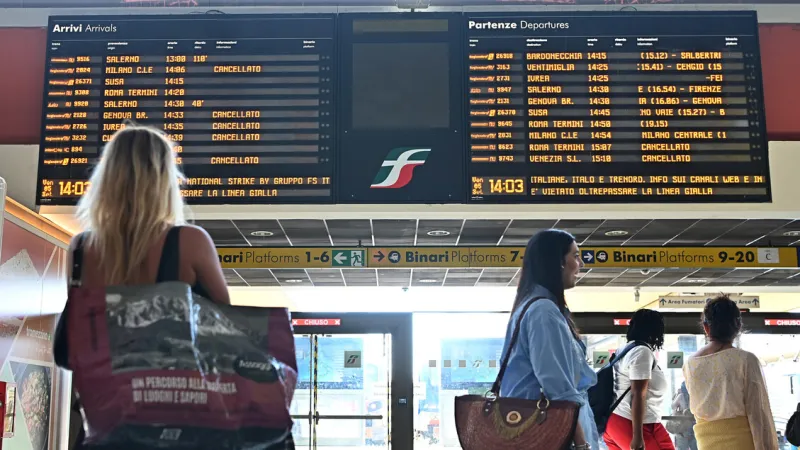
Rome - A nationwide train strike is poised to paralyze Italy's rail network from the early hours of June 11 until the morning of June 12, as grassroots labor unions confirmed their intent to proceed despite major confederal unions suspending their participation. The 23-hour stoppage, scheduled from 3 AM on Tuesday, June 11, to 2 AM on Wednesday, June 12, threatens widespread disruption for millions of commuters and travelers across the country.
The decision by several base unions, representing various segments of the rail workforce, sets the stage for significant travel chaos. This action underscores a growing divergence within Italy's labor movement, where smaller, more radical factions are increasingly challenging the negotiating strategies of established confederations.
While larger, national unions often engage in last-minute negotiations with government and rail operators to avert or mitigate strikes, the grassroots organizations involved in this current action appear resolute. Their confirmation comes even as other unions reportedly rescinded their own planned stoppages, highlighting a fractured approach to industrial relations within the sector.
The imminent train strike is expected to severely impact intercity, regional, and high-speed rail services. Trenitalia and Italo, Italy's primary rail operators, have advised passengers to check updated schedules and prepare for significant delays or cancellations. Essential services during peak commuter hours are typically guaranteed by law during strikes, but their scope often remains limited, leaving many routes unsupported.
The underlying grievances fueling this grassroots action are believed to stem from persistent disputes over working conditions, wage demands, and the broader implications of recent labor reforms. Unions have frequently voiced concerns regarding staff shortages, safety protocols, and the impact of inflation on workers' purchasing power.
Such disruptions are not uncommon in Italy, where strikes are a recognized, if often contentious, means of industrial protest. Rail strikes, in particular, frequently trigger public debate about the balance between workers' rights and the public's right to mobility, often prompting government intervention to ensure minimum service levels.
The Italian government has previously attempted to mediate such disputes, sometimes issuing requisitions to force workers back to their posts in cases of extreme public inconvenience. However, the efficacy of such measures against determined grassroots movements can be limited, potentially escalating tensions rather than resolving them.
This latest industrial action also occurs against a backdrop of complex national discussions on labor policy. Recently, significant debate has surrounded the Italy Labor Decree, which faced considerable opposition backlash over its provisions on contract equivalence and worker protections. The broader climate of labor unrest suggests a heightened sensitivity to issues of worker representation and rights across various Italian sectors.
Commuters are advised to seek alternative transportation, such as buses or car-sharing services, and to consult official rail operator websites and apps for the most current information regarding train cancellations and rescheduled services. International travelers planning to use Italy's rail system during this period should also factor in potential delays to their itineraries.
The economic ramifications of such a widespread train strike extend beyond mere inconvenience. Tourism, a cornerstone of the Italian economy, could suffer, especially as the summer travel season approaches. Businesses relying on rail logistics for supply chains also face potential slowdowns, adding to the cumulative economic pressure.
As the strike date approaches, public attention will focus on whether any last-minute negotiations can be brokered to avert some of the anticipated disruptions. However, given the confirmed stance of the grassroots unions, significant impacts on Italy's rail system appear unavoidable for June 11 and 12.
The persistent nature of these labor conflicts highlights the ongoing challenges Italy faces in balancing economic competitiveness with robust worker protections. The outcome of this specific train strike will likely inform future strategies for both labor organizations and government policymakers grappling with these intricate issues.