 Edward DP Situmorang
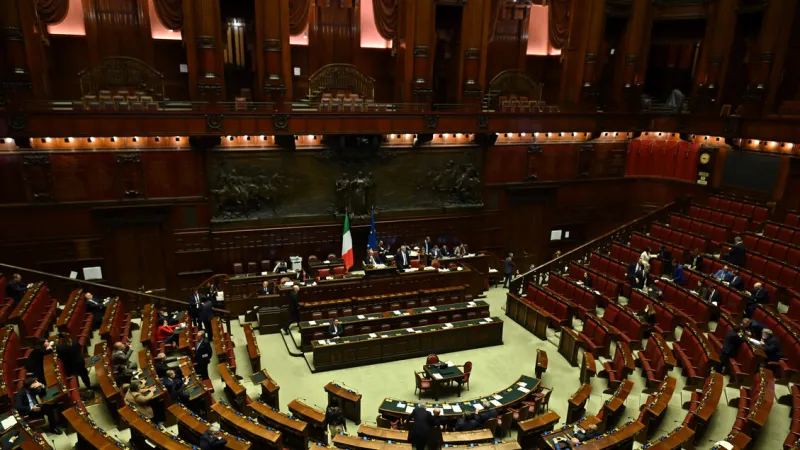
ROME – The Italian government faces a critical parliamentary showdown tomorrow as its new labor decree, designed to remove references to equivalent contracts, heads for a confidence vote. Opposition parties have fiercely condemned the measure, labeling it "a gift to pirate agreements" and warning of severe consequences for worker protections.
The controversial legislation, formally known as the "Decreto Lavoro," is a key initiative of the ruling coalition, aiming to streamline certain aspects of labor relations. Its most significant alteration involves deleting language that previously mandated adherence to collective bargaining agreements for similar contractual conditions.
Historically, this specific phrase served as a crucial benchmark. It implicitly guided employers to align their contractual offerings with national collective bargaining agreements (CCNLs) that covered comparable sectors or job roles, thereby encouraging fair wages and established benefit standards.
Opposition factions have swiftly denounced these proposed changes, articulating deep concerns that the removal of this benchmark will open the door to what they characterize as "pirate agreements." These are contracts often stipulated by less representative, or even shell, unions that provide significantly inferior terms compared to mainstream national agreements.
A leading voice from the Democratic Party stated, "This is nothing short of a gift to pirate agreements, undermining decades of struggle for worker rights and fair compensation." The official emphasized that the move risks creating a downward spiral in wages and protections, particularly for the most vulnerable segments of the workforce.
While proponents of the decree assert it aims to foster greater flexibility for businesses and stimulate employment by reducing bureaucratic hurdles, their rationale has largely failed to assuage the fears of labor unions and opposition lawmakers. The government contends that simplifying contractual frameworks can encourage hiring, especially among small and medium-sized enterprises.
The decision to attach a confidence vote to the decree underscores the government's determination to pass the legislation swiftly and with minimal amendments. This procedural move limits parliamentary debate and restricts the opposition's ability to introduce substantial changes, forcing a straightforward up-or-down vote on the entire package.
Italy has a long history of contentious labor reforms, with successive governments attempting to strike a balance between worker protections and calls for increased market flexibility. Past legislative efforts, such as the Jobs Act under former Prime Minister Matteo Renzi, similarly sparked widespread debate and protests, highlighting the deeply sensitive nature of labor law in the nation.
This impending vote also serves as a critical test of the ruling coalition's cohesion and its capacity to push through key reforms. Facing a unified opposition front on this issue, a successful passage would reinforce the government's mandate, even as it draws further criticism regarding its approach to social dialogue. For context on broader political dynamics, recent developments saw the Italian Local Runoffs yielding mixed results.
Economists and labor experts express varied opinions on the potential impact. Some suggest that greater contractual freedom could indeed boost employment by making it easier for companies to adapt to market fluctuations. Others warn that, without the safeguard of equivalent contracts, the door opens wide for exploitation, potentially suppressing wages and increasing precariousness for millions of workers.
With the confidence vote scheduled for tomorrow, all eyes turn to the Italian Parliament. The outcome will not only determine the future of this specific labor decree but also signal the government's resolve in implementing its broader economic agenda, setting a precedent for future legislative battles.
The opposition remains steadfast in its objection, asserting that the government's approach prioritizes business interests over worker welfare. This fundamental ideological divide continues to define much of the political discourse surrounding economic policy in Italy, particularly concerning the delicate balance between flexibility and protection. The government's relationship with the opposition has been fraught, as seen when the Italian Opposition Abandons Covid Commission over another contentious issue.
The impending vote is more than a procedural formality; it represents a pivotal moment for Italy's labor market. The decision to remove the equivalent contracts clause could reshape the landscape of employment, with long-term implications for both employers seeking greater agility and employees striving for secure and equitable working conditions.