 Demian Sahputra
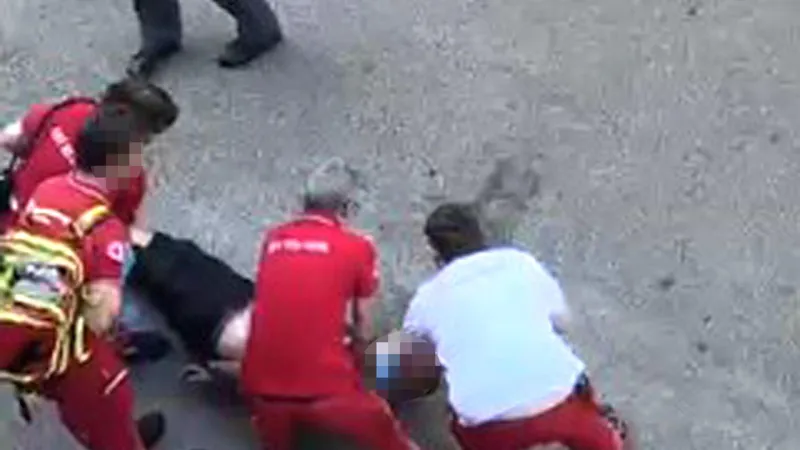
Six individuals, reportedly law enforcement personnel, are now operating under the protection of Italy's controversial officer shield law following the rapid death of Fakir, a man who perished in custody mere minutes after his arrest. The incident, captured partially on video, has ignited scrutiny into police practices and the application of newly enacted legal protections.
The exact circumstances surrounding Fakir's swift demise remain the subject of an intensive investigation. Emergency medical services, known as 118 in Italy, have initiated a detailed reconstruction of the events leading to his death. This reconstruction aims to ascertain precise timings and interventions during the approximately five-minute window following his apprehension.
The application of the officer shield law, a recent legislative measure designed to protect state agents during investigations, marks a pivotal moment in this unfolding tragedy. Critics argue the law potentially hinders transparency and accountability, particularly in cases involving deaths in police custody.
A crucial piece of evidence is the video footage reportedly depicting Fakir's arrest. Investigators are meticulously analyzing this recording to understand the interaction between the involved parties and the deceased, seeking to clarify what transpired from the moment of apprehension until his sudden death.
Public sentiment regarding deaths in police custody in Italy has been increasingly volatile. Previous incidents have often led to accusations against the state and calls for greater oversight. As documented previously, the family accuses the state after handcuffed man dies in police custody, highlighting a recurring pattern of concern.
Prosecutors are examining all aspects of the incident, including the initial reasons for Fakir's arrest, the methods used during his apprehension, and the immediate medical response. The six individuals now shielded by the law are central to this inquiry.
The officer shield law, often colloquially referred to as scudo in Italian legal discourse, aims to prevent what some perceive as overly aggressive or politically motivated prosecutions against law enforcement personnel. However, its use in a fatality case draws sharp contrasts between protection and accountability. This follows other similar instances where Italy applies officer shield law in handcuffed death probe.
The 118 emergency services reconstruction will be critical in determining the medical cause of death. Paramedics and medical experts will review protocols, response times, and any interventions performed on Fakir at the scene, offering a medical perspective on the tragic events.
Human rights organizations and civil liberties advocates have swiftly voiced concerns, emphasizing the necessity for complete transparency. They argue that shielding officers too early in an investigation can erode public trust and hinder the pursuit of justice for the deceased.
This incident resonates with other recent cases involving law enforcement. For instance, reports detailing how officers shielded under new law after handcuffed man dies illustrate a pattern of the law's application in sensitive circumstances, maintaining public debate over its efficacy and fairness.
The legal ramifications of this case are significant. Should the investigation reveal misconduct, the application of the shield law will undoubtedly face intense scrutiny, potentially setting a precedent for future police accountability cases in Italy.
Beyond the immediate legal proceedings, the incident contributes to a broader societal discourse about state power, individual rights, and the delicate balance between maintaining order and safeguarding citizens.
Authorities have yet to release the names of the six individuals involved, citing the ongoing investigation and the protections afforded by the shield law. Further details are anticipated as the inquiry progresses, with potential for legal challenges to the application of the controversial statute.