 Chandra Wijayanto
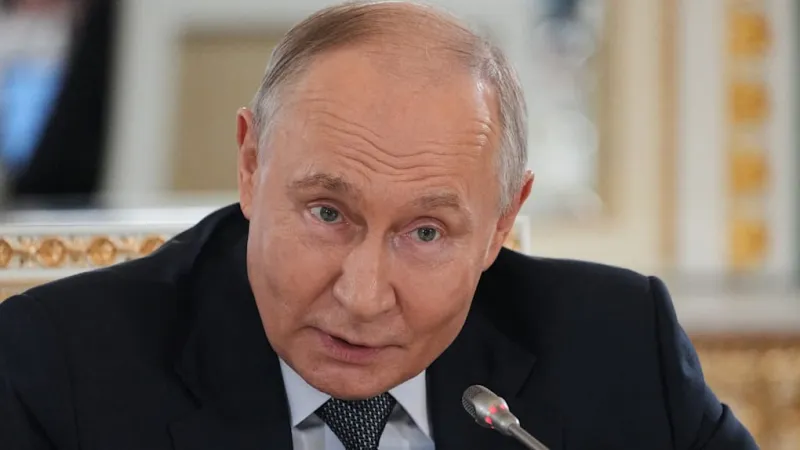
ST. PETERSBURG – Russian President Vladimir Putin used a high-profile platform at the International Economic Forum in St. Petersburg to commend Germany's Alternative for Germany (AfD) party. His remarks came during a session with international journalists, where he also fielded questions regarding recent Ukrainian drone attacks, placing the German opposition party firmly within a significant geopolitical discussion in mid-2026.
The annual St. Petersburg International Economic Forum serves as Russia's premier gathering for business and political leaders, offering a carefully curated environment for President Putin to project his views to a global audience. His decision to engage directly with a panel of foreign journalists underscored the Kremlin's intent to shape narratives, particularly concerning European political alignments.
During the exchange, President Putin expressed what was interpreted as significant approval for the AfD, noting its pragmatic stance on certain international issues. While specifics of his praise were not immediately detailed, the sentiment conveyed a clear endorsement of the party's platform, which often challenges mainstream European consensus on matters ranging from energy policy to sanctions against Russia.
The AfD, a rapidly ascending force in German politics, has gained considerable traction by advocating for stricter immigration controls, a more nationalistic foreign policy, and a recalibration of Germany's relationship with Russia. This alignment contrasts sharply with the official German government policy, which remains a staunch supporter of Ukraine and maintains a critical posture toward Moscow.
Putin's comments arrived amidst heightened tensions stemming from the ongoing conflict in Ukraine. Journalists at the forum pressed him on escalating Ukrainian drone attacks, which have increasingly targeted Russian territory. The Russian leader utilized the opportunity to frame his country's actions and selectively acknowledge political forces in Europe perceived as more amenable to dialogue with Moscow.
Such an endorsement from a foreign head of state, particularly one embroiled in a major international conflict, carries considerable weight within German domestic politics. It could potentially bolster the AfD's narrative of being a legitimate, alternative voice to the established parties, even as it opens the party to renewed accusations of being overly sympathetic to Russian interests.
The timing of these remarks is particularly salient as Germany navigates complex economic and social challenges, including ongoing debates surrounding its care reform and evolving regional fiscal policies, as highlighted in discussions like those concerning Thuringia's budget cuts. The political landscape in Germany remains fluid, with various parties vying for public support and defining their stances on critical national and international issues.
Historically, mainstream German political parties have maintained a unified front against Russian aggression, aligning closely with NATO and European Union partners. The AfD's sometimes contrarian positions, however, have provided a different voice within the German Bundestag, often mirroring or at least aligning with certain Russian critiques of Western policies.
Observers suggest that Putin's praise serves a dual purpose: to legitimize the AfD on the international stage and to sow discord within the European Union by highlighting internal divisions. This strategy seeks to weaken unified European responses to Russian actions and potentially foster a more fragmented political environment across the continent.
The AfD, having seen a significant surge in recent regional elections and opinion polls, particularly in eastern Germany, presents itself as the only true opposition party capable of addressing the concerns of a segment of the German electorate. Its rise has prompted considerable debate and concern among centrist and left-leaning parties.
The incident underscores Russia's persistent efforts to engage with populist and euroskeptic movements across Europe, leveraging their platforms to challenge the geopolitical order. This approach often seeks to empower voices that question multilateral institutions and advocate for national sovereignty over supranational cooperation, echoing themes prevalent in the AfD's agenda.
President Putin did not elaborate on the specific AfD politicians present at the forum or the nature of their interactions beyond his general commendation. However, the presence of AfD representatives at such a high-profile Russian event signals continued engagement between the party and Moscow, reinforcing perceptions of their unique relationship within the German political spectrum.